Special programme honours fallen soldiers and the mission to bring them home

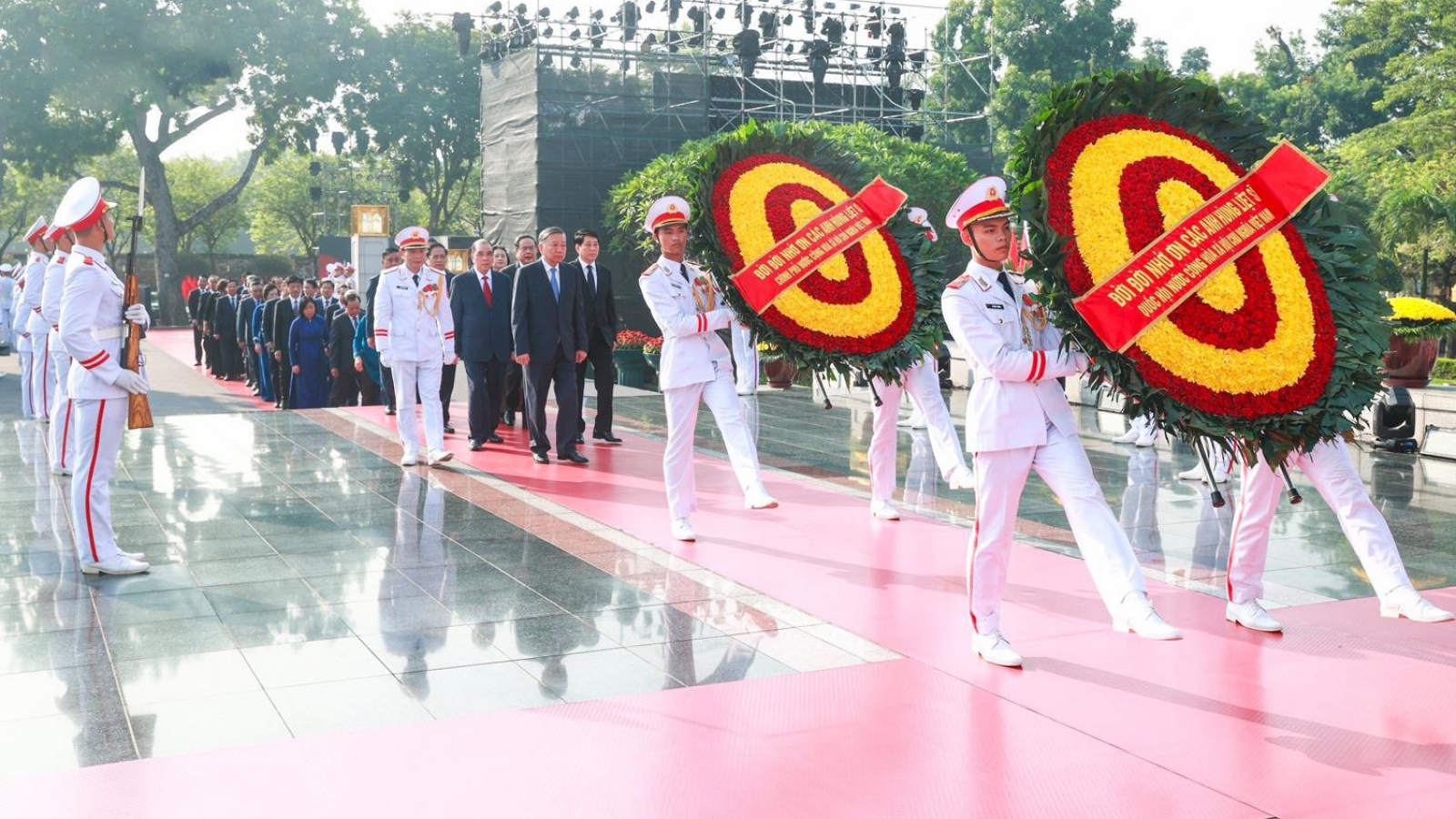
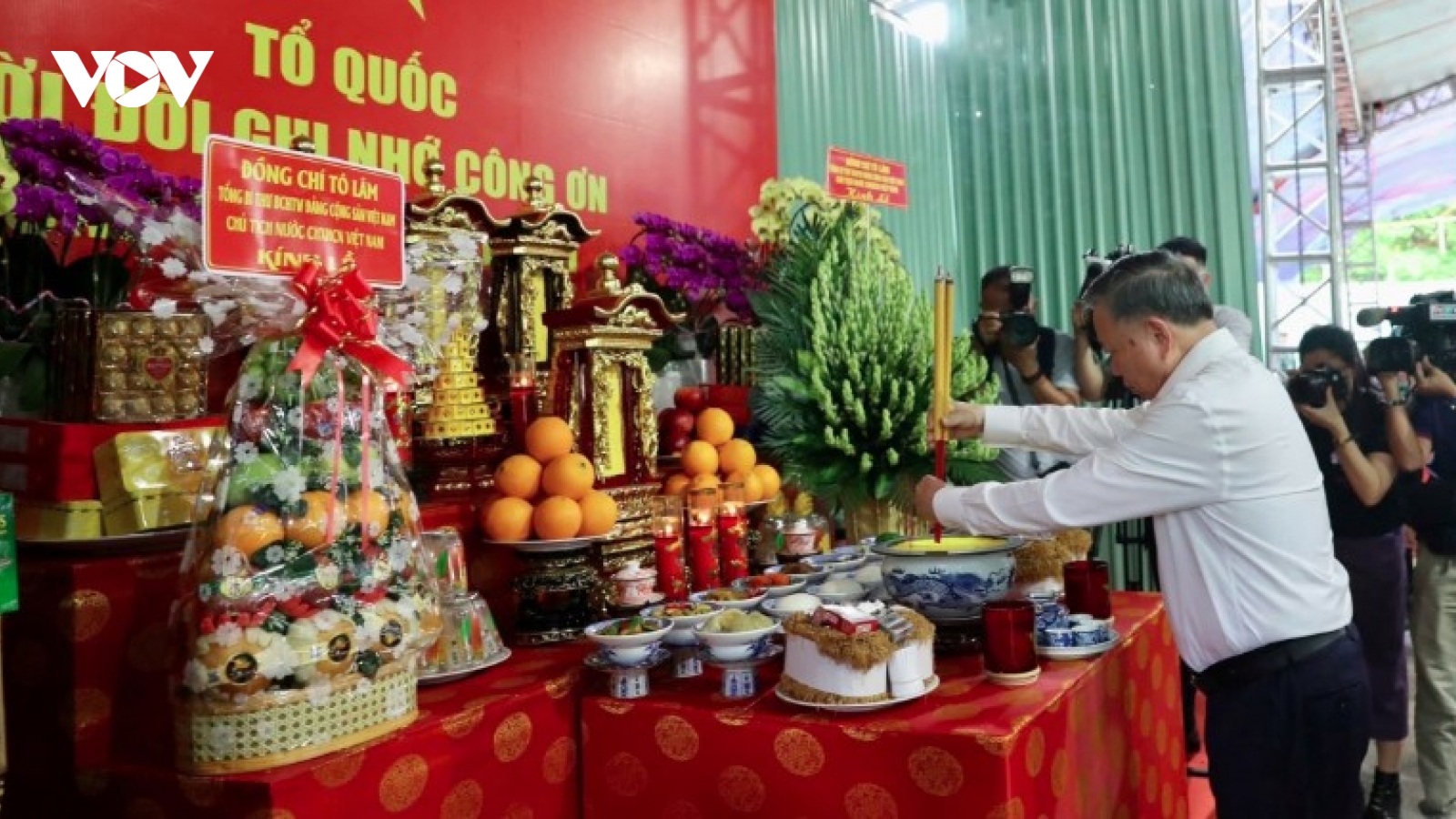
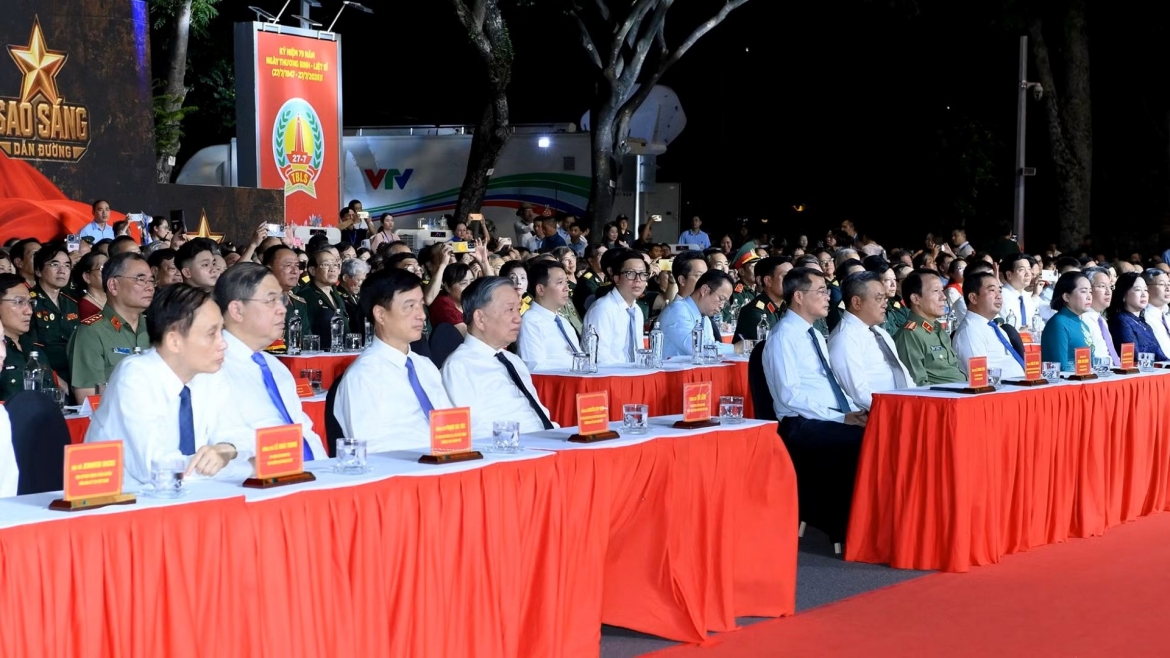
VOV.VN - Party General Secretary and State President To Lam joined other senior Party and State leaders at the live television programme Starlight Leads the Way on July 26 to commemorate the 79th anniversary of Vietnam's War Invalids and Martyrs' Day.
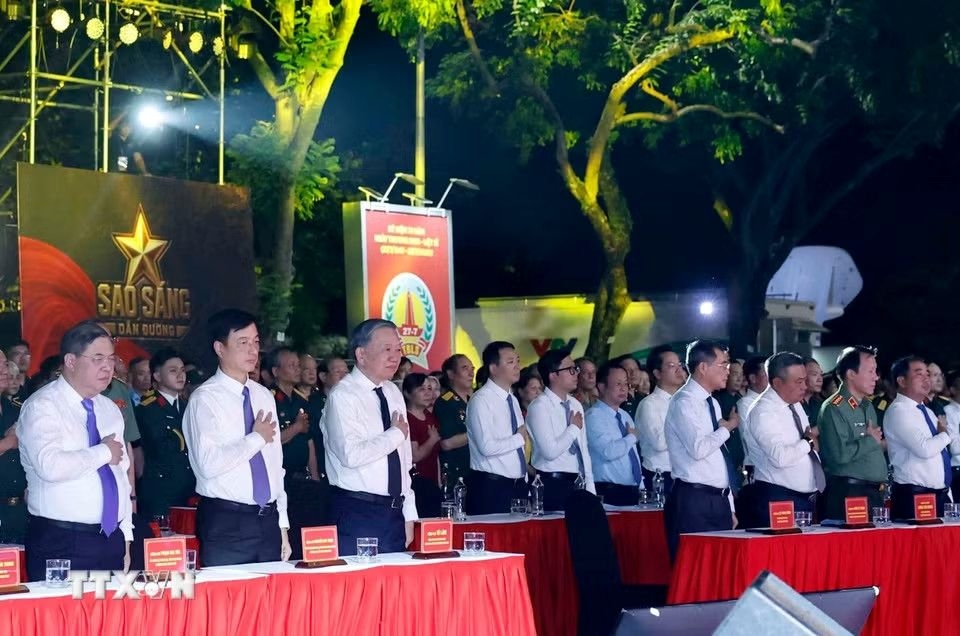
More than a commemorative arts programme, the nationwide broadcast highlighted Vietnam's ongoing campaign to search for, identify and bring home fallen soldiers whose remains have been unidentified for decades, reflecting the country's enduring commitment to honouring those who sacrificed for national independence.
The programme, produced by Vietnam Television (VTV), was held simultaneously at four historically significant locations, namely Bac Son Monument in Hanoi, the Memorial Stele for Fallen Heroes in Thanh Thuy Commune of Tuyen Quang province, the Road 9 National Martyrs' Cemetery in Quang Tri province, and Le Thi Rieng Park in Ho Chi Minh City.
Attending at different venues were Party General Secretary and State President To Lam, Prime Minister Le Minh Hung, National Assembly Chairman Tran Thanh Man, together with current and former senior Party and State leaders.
A mission driven by gratitude
Unlike a conventional commemorative performance, Guiding Stars was built around Vietnam's nationwide 500-Day Campaign to accelerate the search, recovery and identification of fallen soldiers' remains.
Although millions of martyrs have been recovered and laid to rest since national reunification, around 175,000 fallen soldiers are unaccounted for, while nearly 300,000 graves have yet to be identified, according to official figures.
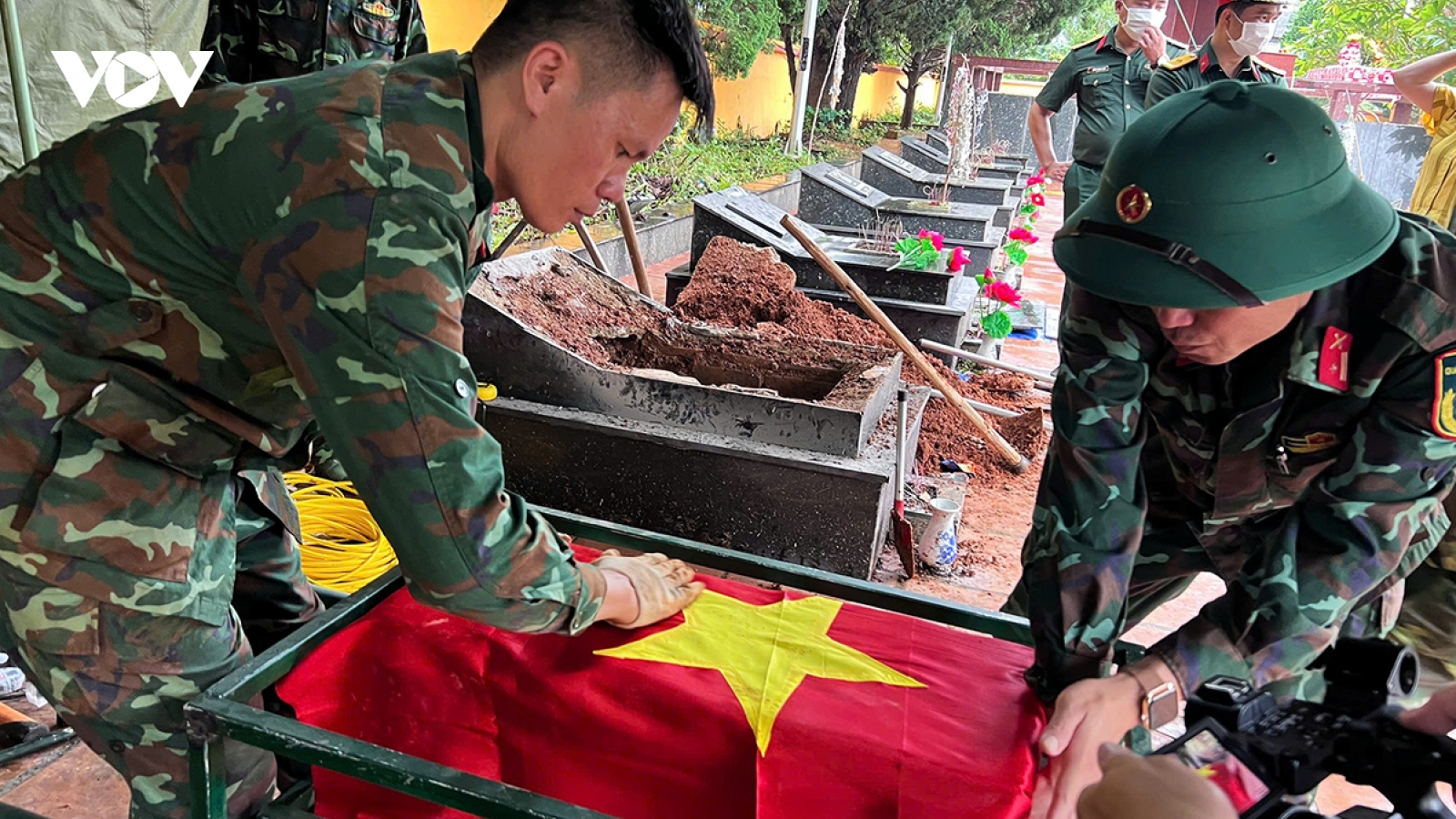
As time gradually erases battlefield traces and eyewitnesses become fewer, the campaign represents a nationwide effort involving military forces, scientists, local authorities and communities to reunite as many martyrs as possible with their families.
The campaign aims to recover approximately 7,000 sets of remains, collect DNA samples from around 230,000 unidentified graves, analyse about 18,000 DNA samples, and build a comprehensive genetic database of martyrs' relatives to facilitate identification.
Those who never truly fell
Structured around three thematic chapters, the programme intertwined stories of sacrifice with the relentless efforts of those continuing the search today.
Viewers met soldiers clearing unexploded ordnance, recovery teams searching former battlefields, scientists decoding degraded DNA, and researchers painstakingly tracing wartime records and personal belongings to identify unknown martyrs.
Emotional reunions between families and long-lost loved ones, letters recovered from former battlefields and personal mementoes preserved for generations illustrated the profound human significance behind Vietnam's long-standing policy of honouring those who served the nation.
One of the programme's most moving elements was the appearance of war veterans, wounded soldiers, bomb disposal personnel and DNA specialists who are directly involved in the recovery effort.
A particularly poignant moment came when letters written by fallen soldiers, described as "letters from beneath the earth" were read simultaneously at all four broadcast sites while accompanied by the song My Memories, creating a powerful reminder that many stories of sacrifice remain unfinished.
A nationwide landscape of remembrance
Each broadcast location symbolised a different chapter of Vietnam's remembrance journey.
Bac Son Monument in Hanoi represents the nation's enduring commitment to honouring those who sacrificed for independence.
The Road 9 National Martyrs' Cemetery in Quang Tri is the resting place of thousands of unidentified soldiers, highlighting the ongoing effort to restore their identities.
Near the memorial site in Thanh Thủy Commune, bomb clearance and recovery teams continue working in former battlefield areas where unexploded ordnance and missing remains are still being discovered.
Meanwhile, Le Thi Rieng Park in Ho Chi Minh, once the site of a mass grave containing soldiers killed during the 1968 General Offensive and Uprising, symbolises Vietnam's continuing determination to return every possible martyr to their family, homeland and rightful name.
As the programme concluded, Starlight Leads the Way conveyed a message extending far beyond the annual observance of War Invalids and Martyrs' Day.
For Vietnam, remembrance is not confined to ceremonies or memorials. It continues through scientific research, painstaking recovery missions and the determination to identify every possible fallen soldier.
Each identified grave, each successful DNA match and each family reunion represents another step towards completing a historical responsibility, ensuring that those who gave their lives for the nation are remembered not as unknown soldiers, but by the names they carried in life.

DNA identification race helps bring Vietnam's fallen soldiers home
VOV.VN - Vietnam's nationwide DNA identification campaign is helping restore the identities of thousands of unnamed war dead, as scientists race against time to match decades-old remains with surviving family members and bring fallen soldiers home.