DNA identification race helps bring Vietnam's fallen soldiers home

VOV.VN - Vietnam's nationwide DNA identification campaign is helping restore the identities of thousands of unnamed war dead, as scientists race against time to match decades-old remains with surviving family members and bring fallen soldiers home.
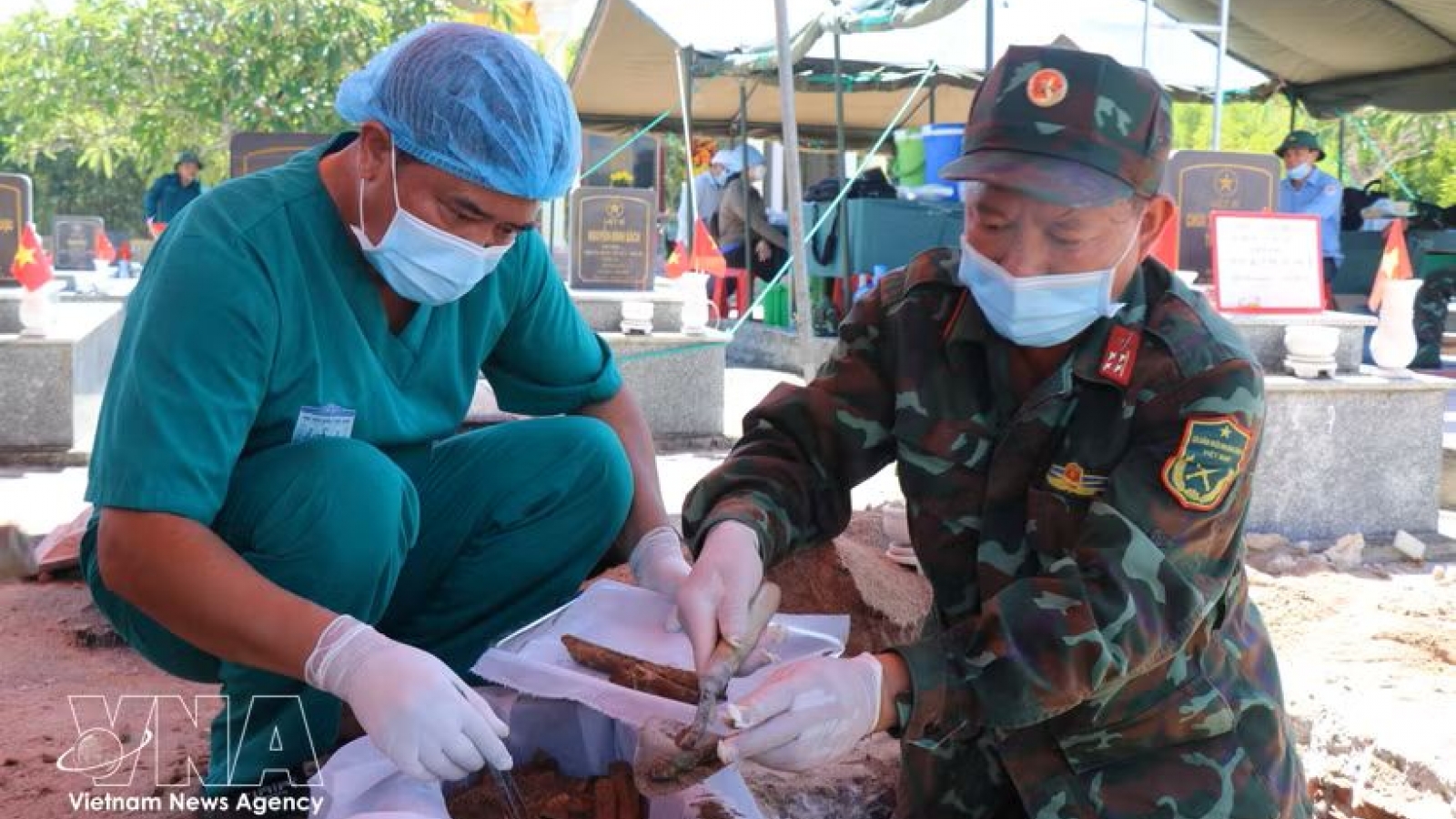
Inside a laboratory no larger than 10 square meters, rows of carefully labeled bone fragments rest on metal shelves. Each sample is only a small piece of human remains recovered from battlefields or military cemeteries across Vietnam. Yet behind every fragment lies an unfinished story - a fallen soldier whose name has been unknown for decades.
More than 10,000 sets of unidentified remains are currently being processed at the Centre for DNA Identification under the Institute of Biotechnology, part of the Vietnam Academy of Science and Technology. Working almost around the clock, scientists are racing against time to restore identities to those who sacrificed their lives for the country's independence.
A race against time
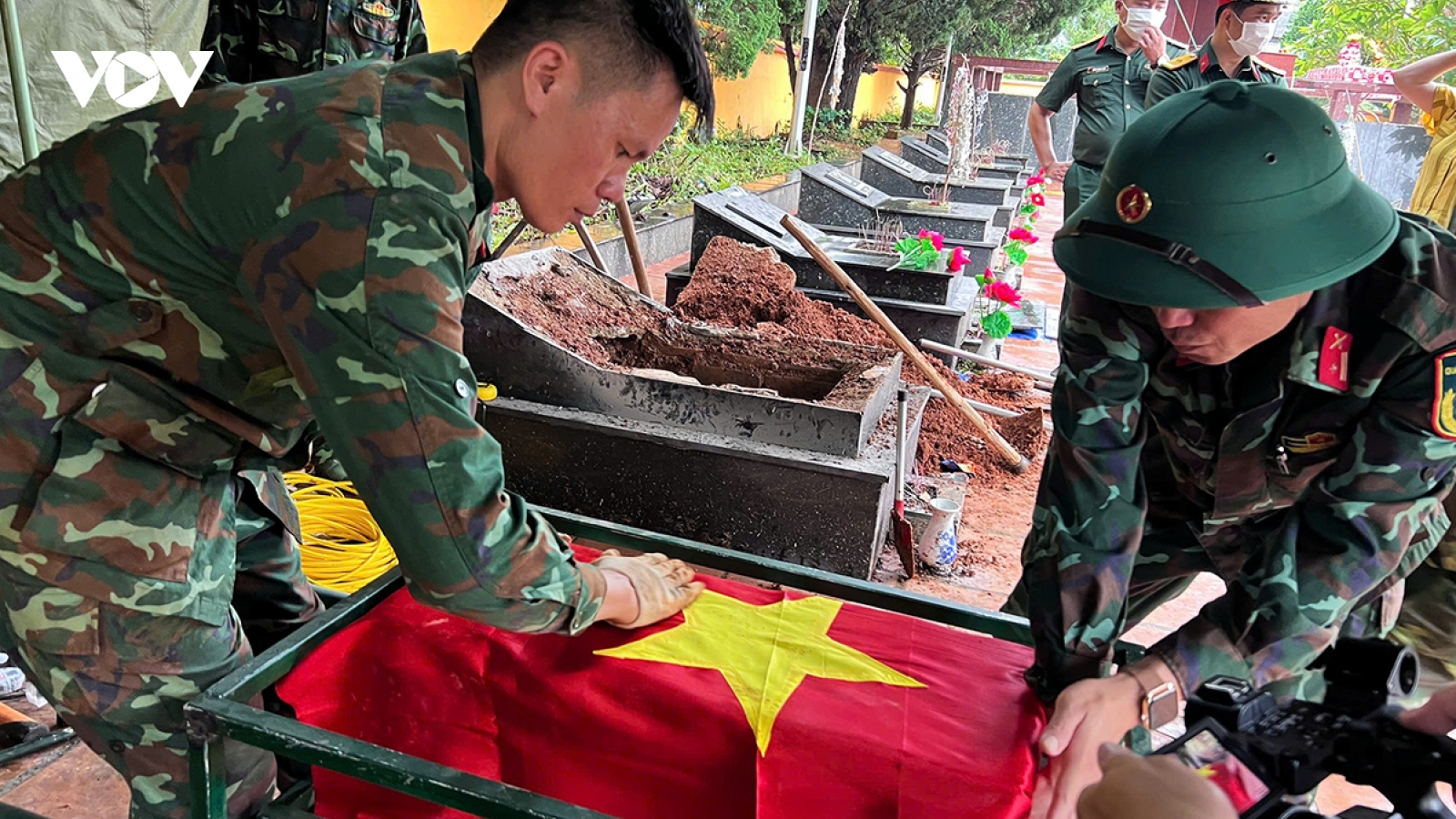
At a recent national ceremony marking the 79th anniversary of Vietnam's War Invalids and Martyrs Day (July 27), Prime Minister Le Minh Hung said Vietnam has around 1.2 million war martyrs.
Despite decades of search efforts, about 175,000 sets of remains have yet to be recovered, while another 230,000 graves are unidentified, leaving thousands of families still waiting for answers more than half a century after the war ended.
The figures underscore why the government launched a nationwide 500-day campaign to search for, recover and identify fallen soldiers through advanced DNA technology.
As one of the campaign's leading scientific institutions, the Centre for DNA Identification was initially assigned more than 6,600 samples. However, the number of remains delivered to the laboratory has already exceeded 10,000, pushing researchers to operate almost continuously.
Scientists said their greatest challenge is not technology, but time. After lying underground for 50 to 70 years, DNA inside many bone samples has severely degraded, surviving only as tiny, fragmented strands of genetic material. Soil conditions, humidity, microorganisms and environmental contamination have all accelerated the deterioration, making every successful DNA extraction increasingly difficult.
Searching for a genetic trace
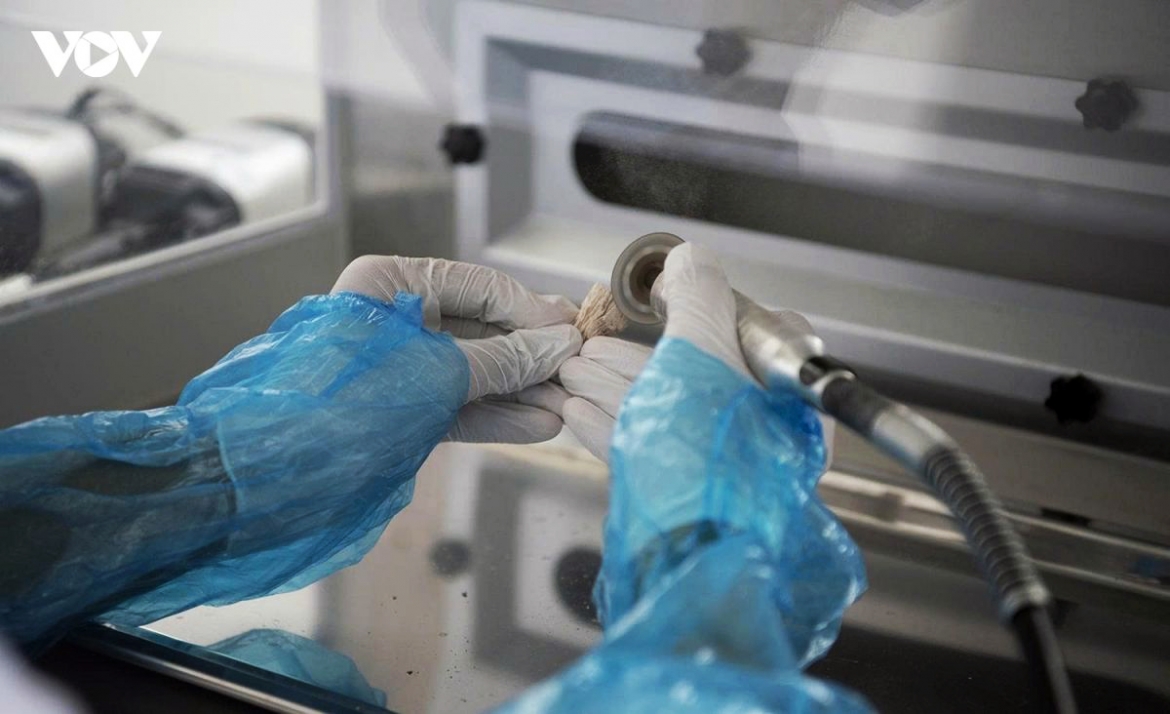
Before any DNA can be analysed, researchers must first remove every possible source of contamination.
Nguyen Hoang Vu, a quality management specialist at the center, carefully examines a newly arrived tibia recovered from a military cemetery.
"The outer surface of the bone has been exposed to soil, bacteria, fungi and foreign DNA for decades," he explained. "If those contaminants are not completely removed, the analysis could produce inaccurate results."
Technicians therefore grind away the entire outer layer before preserving only the clean inner core. The remaining bone is then crushed into a fine powder, allowing scientists to begin the painstaking process of extracting DNA.
Finding usable genetic material from these decades-old remains is often compared to searching for a needle in a haystack.
In many cases, only microscopic fragments of DNA survive. A single technical error during extraction may leave too little material for sequencing, forcing the entire process to begin again.
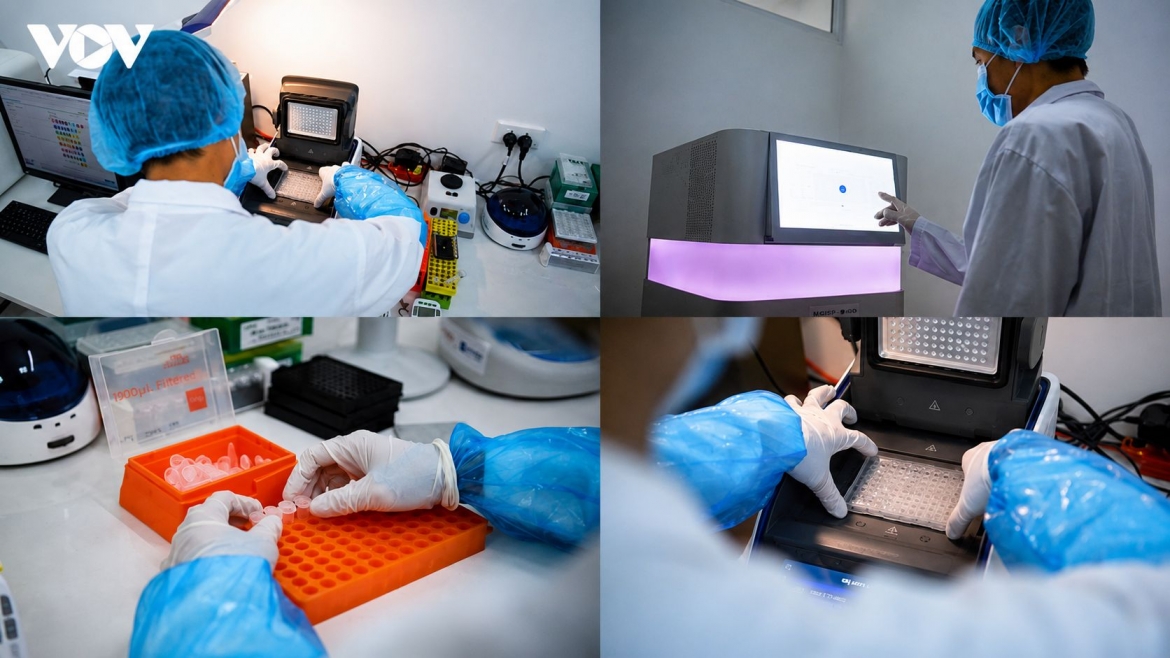
To minimise that risk, every stage, from receiving and storing samples to cleaning, DNA extraction, genome sequencing and data preservation, follows strict laboratory protocols.
Each set of remains is assigned a unique identification code and photographed at every stage, ensuring complete traceability throughout the process.
Every DNA match brings a family home

According to Dr. Tran Trung Thanh, director of the Center for DNA Identification, the most important requirement is not speed but absolute accuracy.
"Every result directly affects an entire family," he affirmed.
Each sample undergoes a series of highly specialised procedures, including bone preparation, DNA extraction, DNA quantification, library construction, genome sequencing, bioinformatics analysis and finally comparison with genetic information provided by relatives through the National Population Data Centre under the Ministry of Public Security.
Completing one batch of samples typically takes three to four weeks. For scientists, the final report is far more than a laboratory result.
Each confirmed DNA match restores a fallen soldier's name, allowing a once-unidentified grave to bear its rightful identity. For families who have spent decades searching for missing relatives, it offers long-awaited closure and the chance to light incense before the correct grave for the first time.
Science serving remembrance
Under the Government's 500-day campaign, the Vietnam Academy of Science and Technology aims to complete and transfer advanced DNA sequencing technologies to laboratories nationwide by early 2027, with a target of identifying around 18,000 sets of remains.
Behind sophisticated sequencing machines, bioinformatics software and carefully controlled laboratory procedures lies a simple but deeply human goal, ensuring that those who gave their lives for the nation can finally return home with their names restored.
Each successful DNA identification represents not only a scientific achievement but also a continuation of Vietnam's enduring tradition of honoring those who sacrificed for the country's independence.
More than fifty years after the war, science is helping complete journeys left unfinished for decades by allowing fallen soldiers to return to their families, not as unknown graves, but by the names they carried throughout their lives.
Vietnam is home to approximately 1.2 million war martyrs, according to official figures. Around 175,000 sets of remains are unrecovered, while another 230,000 graves have yet to be identified. Through the Government's nationwide 500-day campaign, scientists aim to identify approximately 18,000 sets of remains using next-generation DNA sequencing technology by early 2027. The effort combines advances in genomics, forensic science and national population databases to help restore the identities of Vietnam's fallen soldiers and bring long-awaited closure to thousands of families.

DNA technology brings new hope of identifying Vietnam’s fallen soldiers
VOV.VN - DNA identification is becoming a crucial part of Vietnam’s nationwide 500-day campaign to recover and identify the remains of fallen soldiers, offering new hope of restoring their names and reuniting them with their families decades after the war.