Vietnam puts heritage authenticity at the heart of sustainable development

VOV.VN - Vietnam is placing heritage authenticity at the heart of its approach to sustainable development, emphasising respect for historical truth, cultural diversity and community participation as key principles for safeguarding heritage and supporting long-term development.
For Vietnam, heritage conservation is not simply about preserving sites and objects, but about keeping the historical, cultural and social values they embody alive for future generations. This means ensuring that development does not come at the expense of cultural identity, but creates conditions for heritage to continue contributing to people's lives and sustainable growth.
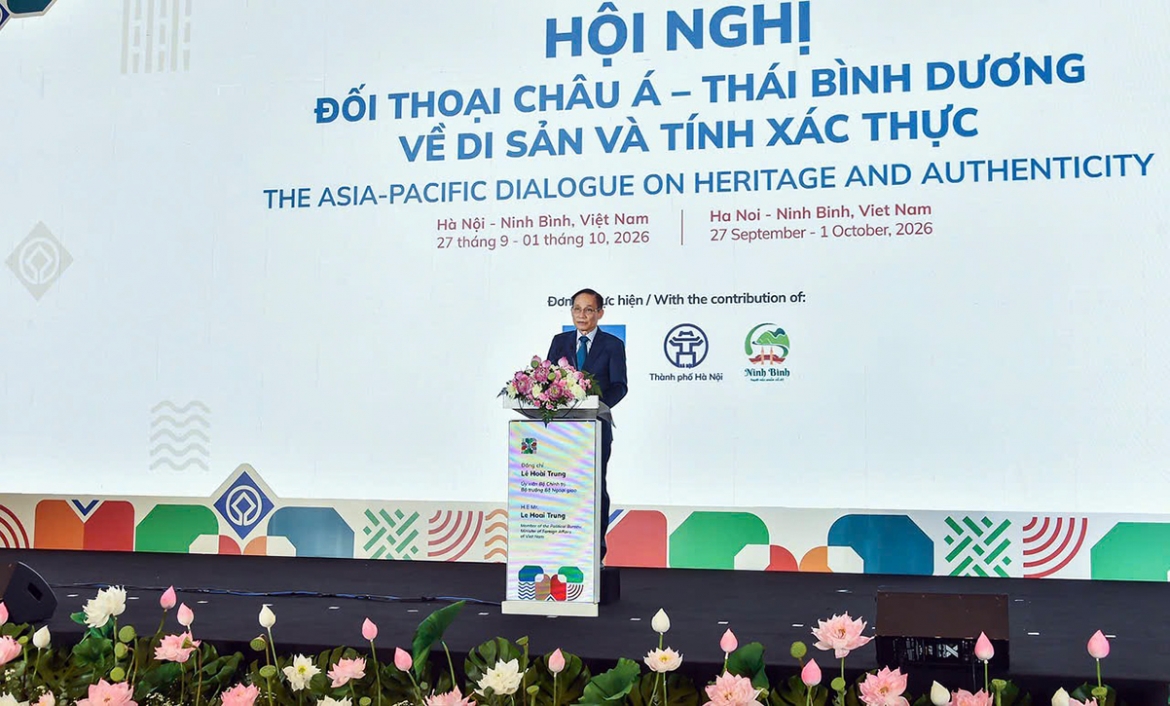
Foreign Minister Le Hoai Trung set out this approach at the opening ceremony of the Asia-Pacific Dialogue on Heritage and Authenticity in Hanoi on September 28, describing heritage as “the memory of humanity” and a link between the past, present and future. He said safeguarding authenticity ultimately meant respecting historical truth and the values preserved and transmitted by successive generations.
Respecting diversity in understanding authenticity
Vietnam’s approach places cultural diversity at the centre of discussions on authenticity. Rather than applying a single formula to different heritage sites, each property should be understood within the cultural context in which it emerged and developed, Trung said.
This approach is particularly relevant in the Asia-Pacific, a region with diverse cultural traditions and a rich heritage landscape, but also one facing growing pressures from urbanisation, infrastructure development and climate change.
He believed that finding a workable balance between conservation and development would benefit not only the region but also contribute experience to the wider international community.
He also stressed that conservation decisions should be grounded in scientific evidence, open dialogue and responsible use of technology. As digital technologies and artificial intelligence become increasingly relevant to heritage management, he proposed developing principles for their responsible application so that technology supports historical evidence rather than replacing it.
Putting communities at the centre
Another key element of Vietnam’s approach is to place people and communities at the centre of heritage conservation.
According to the Foreign Minister, artisans, elders, women and ethnic communities should have a meaningful voice because they are directly involved in preserving, practising and transmitting heritage. Young people also have an important role in carrying heritage values forward while contributing new forms of creativity.
This community-centred approach reflects Vietnam's broader view that heritage should be connected to people’s lives rather than being treated solely as physical sites or objects of preservation.
The same principle extends to development. Vietnam's policy is to use conservation as a foundation for development, while ensuring that development creates better conditions for conservation. The country does not support trading cultural identity and heritage for economic growth alone, with investment in culture regarded as investment in people, development and the future.
From principles to regional cooperation
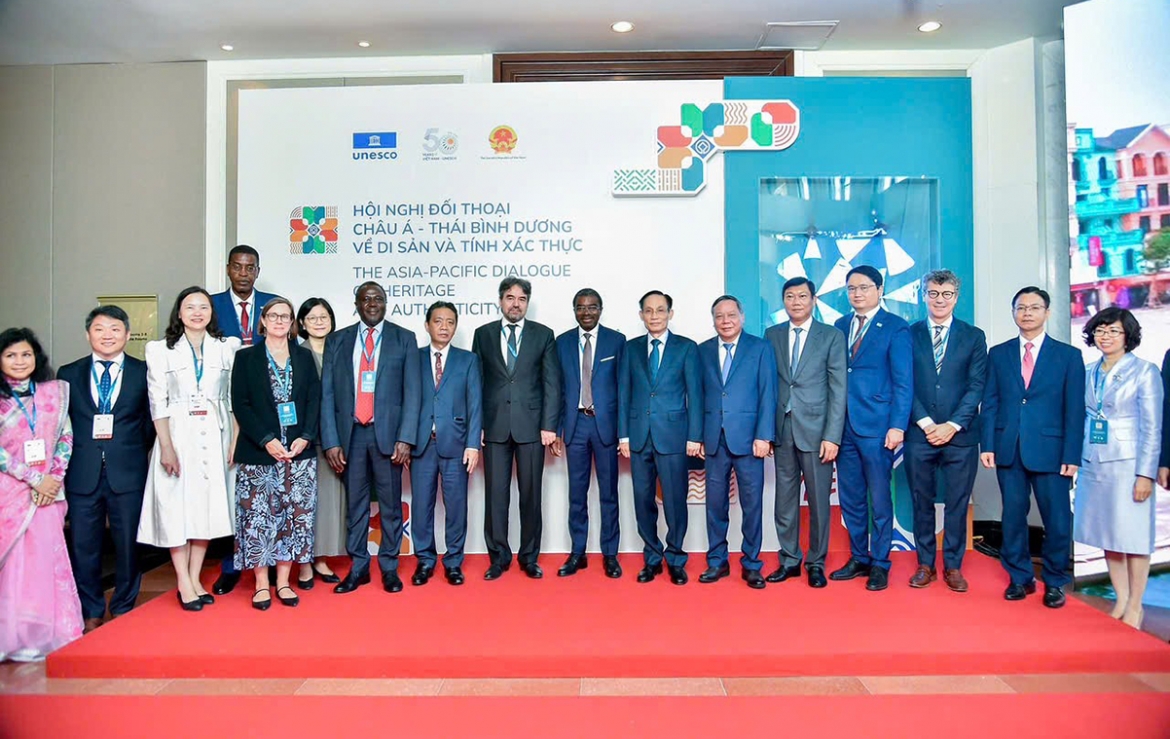
Vietnam is seeking to translate these principles into practical cooperation across the Asia-Pacific. The diplomat proposed establishing an Asia-Pacific heritage cooperation network, working with UNESCO to organise regular regional training programmes for young heritage professionals and maintaining the dialogue as a regular regional forum.
He also hoped that the Hanoi Outcome Document on Heritage and Authenticity to de adopted at the meeting would move beyond a statement of shared understanding and provide practical direction for conservation and heritage management.
The proposed document is expected to contribute Asia-Pacific perspectives to the international discussion on authenticity, while encouraging the sharing of experience, technology and expertise and supporting developing countries.
As host country, Vietnam will work to translate the document’s recommendations into institutions, policies and heritage management practice, while continuing to prioritise resources for conservation, digital transformation and specialist training, he said.
The approach is also linked to Vietnam’s wider international cultural agenda. With Vietnam set to host APEC in 2027, he added culture and heritage could serve as a bridge between economies and contribute to a peaceful, prosperous and sustainable Asia-Pacific.
Deepening cooperation with UNESCO
Vietnam’s position was also reflected in the Foreign Minister’s meetings with international heritage partners on the sidelines of the dialogue.
Ahead of the opening session, Trung met the Chair of the 49th session of the World Heritage Committee, the Director of the UNESCO World Heritage Centre, ambassadors accredited to UNESCO, representatives of the International Council on Monuments and Sites (ICOMOS) and other international delegates.
He reaffirmed Vietnam's commitment to working closely with UNESCO and its Advisory Bodies on the Central Sector of the Imperial Citadel of Thang Long and the Kinh Thien Palace project, while seeking technical support for the Oc Eo - Ba The archaeological site and other Vietnamese heritage dossiers under preparation.
Lazare Eloundou Assomo, Director of the UNESCO World Heritage Centre, welcomed Vietnam's active and responsible engagement with UNESCO and highlighted its experience in linking heritage conservation with sustainable socio-economic development and local livelihoods.
He pointed to the management of heritage sites including the Imperial Citadel of Thang Long, Trang An, Hoi An, Hue, Ha Long Bay and the Yen Tu Complex as experiences that could provide lessons for the international community.
Ihsan Mustafa Yurdakul, Chair of the 49th session of the World Heritage Committee, also welcomed Vietnam's efforts to promote Asia-Pacific dialogue, saying that greater attention to cultural diversity could help strengthen the inclusiveness and sustainability of the World Heritage system.
Hanoi hosts Asia-Pacific dialogue on authenticity and heritage conservation
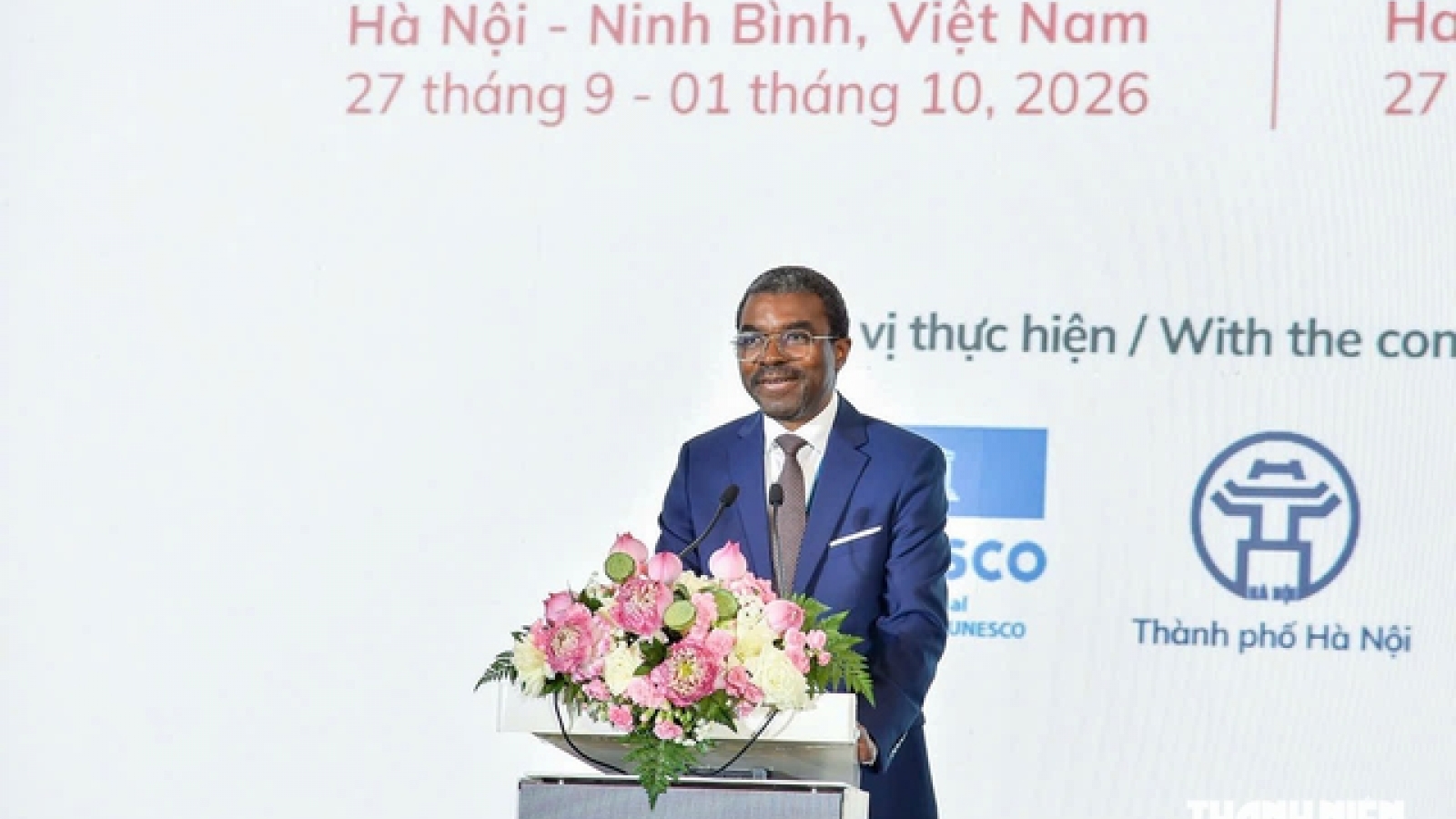
VOV.VN - The Asia-Pacific Dialogue on Heritage and Authenticity opened in Hanoi on September 28, drawing leading experts and heritage officials for policy discussions on conservation and heritage authenticity.