Young artists give Hanoi’s musical heritage a contemporary voice

VOV.VN - Young artists are giving Hanoi’s musical heritage a contemporary voice through the “Connecting Heritage – Creating the Future” programme, which traces the capital’s musical journey and explores new ways to reinterpret traditional values.

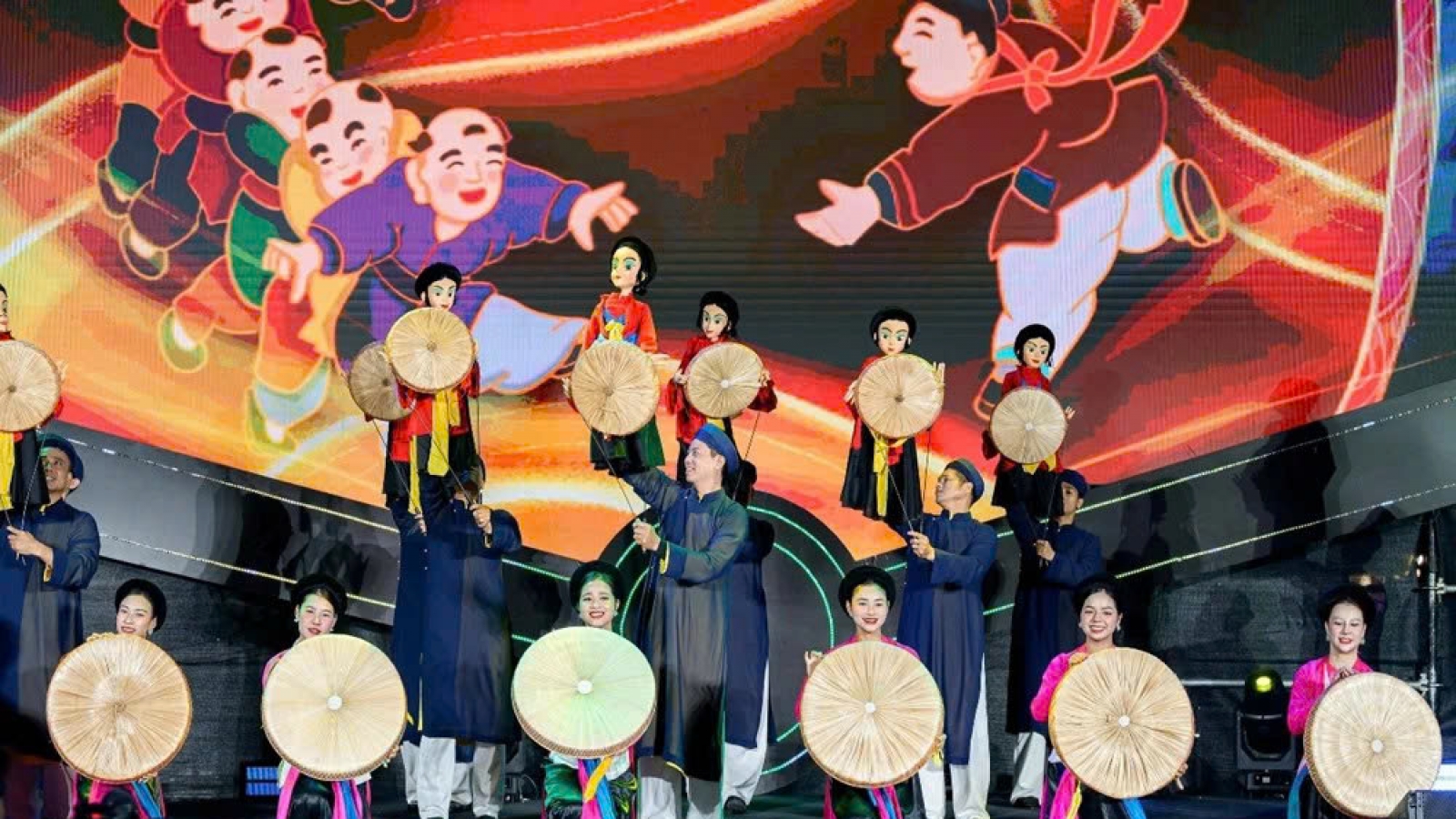
Held on September 19 as part of the Thang Long-Hanoi Festival 2026, the contemporary art programme retraced the evolution of Hanoi’s music through different periods, from the Xẩm singing (a traditional Vietnamese folk art form) and Ca Trù singing (a traditional Vietnamese chamber music genre) of old Thang Long to New Music, wartime music, Vietnamese rock and contemporary multimedia music.
Built around the idea of a “journey through space and time”, the programme took audiences through nine artistic stages, connecting layers of musical memories that have emerged and evolved alongside the capital over more than a century.
Rather than simply recounting musical history through performances, the programme placed works and musical materials from earlier generations in a new creative setting, allowing young artists to engage with them directly and experiment with different forms of expression.
Nguyen An Khanh, a resident of Hoang Mai Ward, was impressed by the way the programme combined stage performance, sound and lighting with a journey through different periods of music.
“Moving through different eras while giving familiar musical materials a contemporary treatment made them more accessible to younger audiences,” she told VOV.
When young artists become a bridge between generations
For the young artists taking part in the performances, reinterpreting works that have resonated with generations of audiences is not merely an artistic experiment but also a way of connecting the past with contemporary life.
Tran Thai Duong, 21, a member of one of the bands performing in the programme, said he initially felt under pressure to perform works that have had an impact on generations of audiences.
However, Duong and his bandmates wanted to bring “a touch of youthfulness” to older songs, creating performances more suited to contemporary tastes while preserving their historical values.
Meanwhile, Nguyen Phuong Uyen, electric guitarist of the band Beo, had the opportunity to work directly with Xẩm artists during the programme. The experience gave Uyen a clearer perspective on how traditional folk music can connect with younger audiences.
“Folk music remains closely connected to contemporary life. Combining modern and traditional instruments can create new works with a contemporary spirit and help preserve the values and historical significance of traditional musical genres,” Uyen said.
The interaction between generations of artists therefore became one of the programme’s notable features. Young performers did not simply reproduce older works on stage but took part directly in exploring new ways to express familiar musical materials.

Heritage retold through musical “witnesses”
Another highlight of the programme was the presentation of objects associated with milestones in Hanoi’s musical life, including a drum set once used during Boney M’s tour in Hanoi and a guitar used to record the debut album of the band Bứ Tường (Wall).
These “witnesses” were brought directly into the performance space and became part of the musical narrative. Hundreds of young artists, pupils and students from arts clubs across the capital also took part in working with these materials, creating a connection between musical memories and contemporary forms of expression.
From Xẩm and Ca Trù to Vietnamese rock and multimedia music, the programme did not place different genres in separate compartments. Instead, it presented them as part of a continuous musical journey, in which older values can become materials for new forms of creativity.
“Connecting Heritage – Creating the Future” therefore not only recounts the journey of Hanoi’s music but also reflects how young people approach heritage, not simply by preserving it but by engaging with and reinterpreting it so that the sounds of the past can continue to resonate in contemporary life.
Thang Long - Hanoi Festival opens with impressive AR-enhanced heritage performance
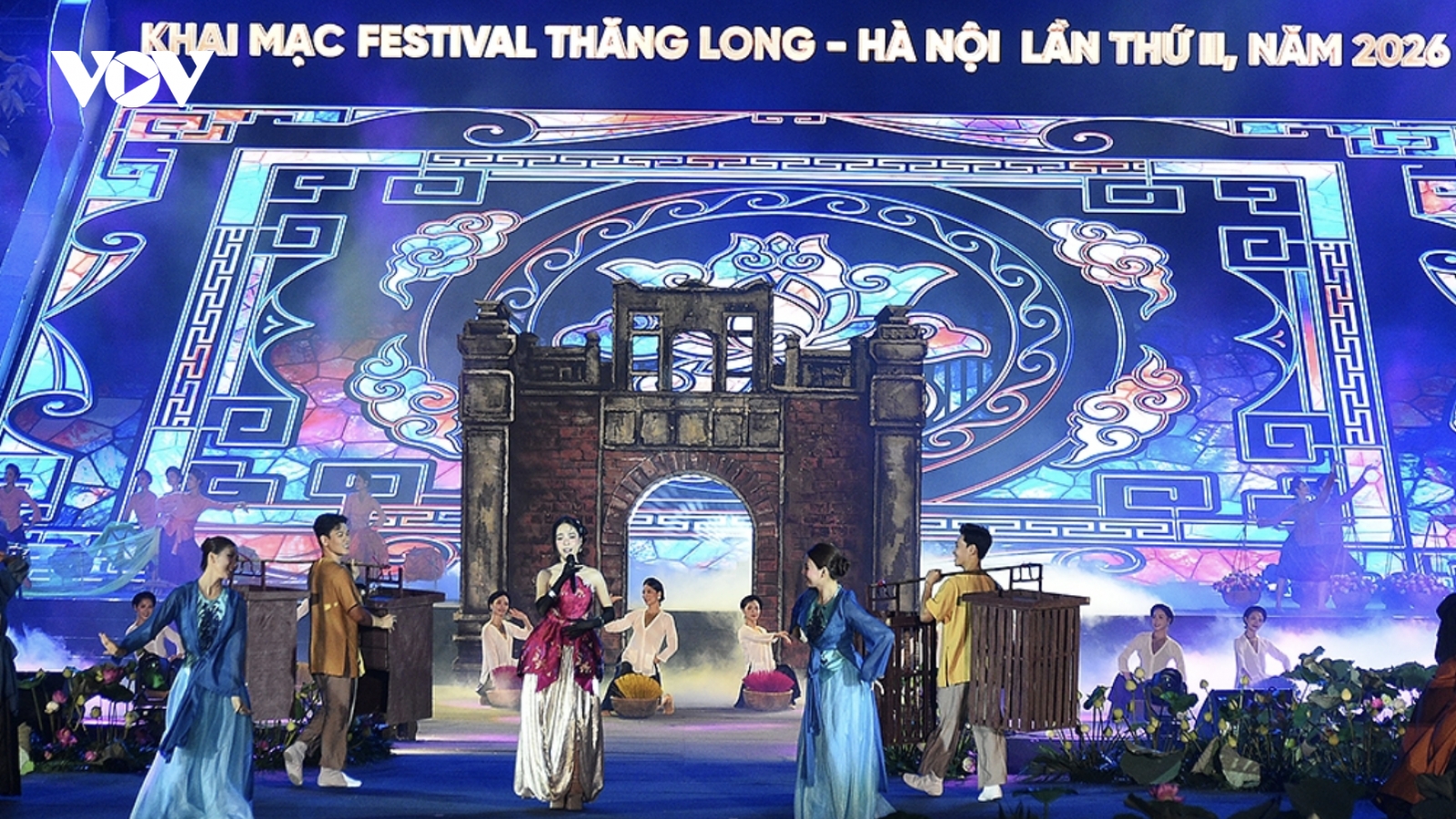
VOV.VN - The second Thang Long - Hanoi Festival opened on the evening of September 11 at the Imperial Citadel of Thang Long, featuring a three-act live-action performance that integrated augmented reality (AR) technology to present traditional heritage through contemporary artistic language.