Vietnam and Cambodia deepen ties with focus on economic connectivity

VOV.VN - Vietnam and Cambodia will strengthen economic connectivity by expanding cooperation in infrastructure, trade, investment and innovation, as the two countries seek to deepen practical cooperation and promote sustainable long-term growth.
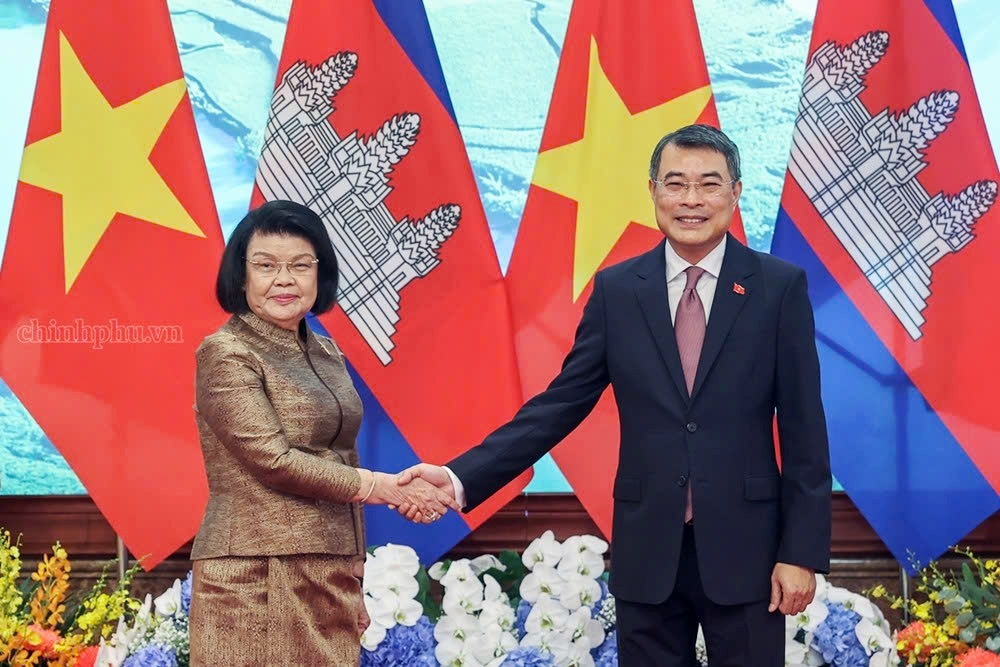
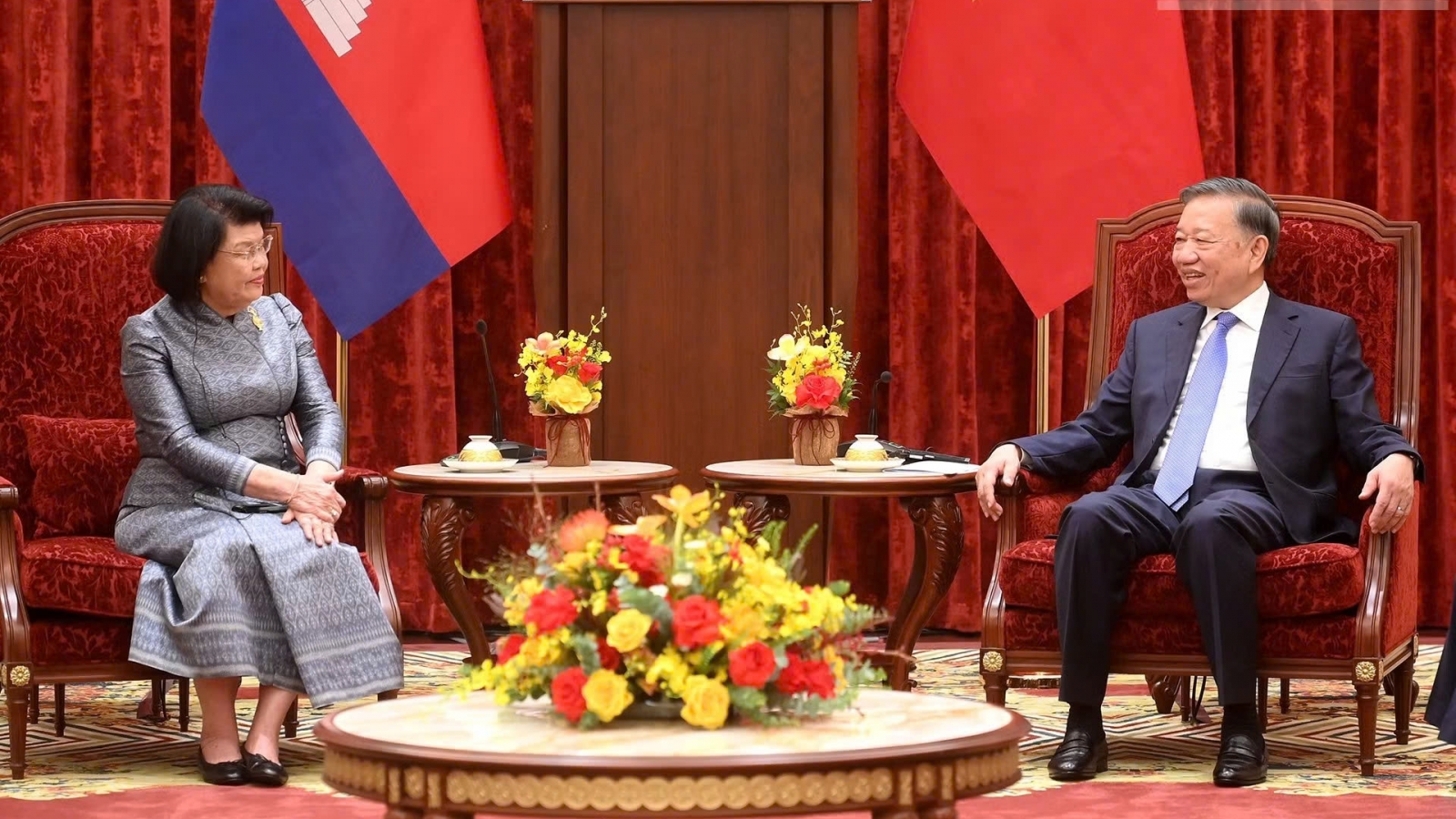
The agreement was reached during a meeting in Hanoi on July 28 between Vietnamese Prime Minister Le Minh Hung and Cambodian National Assembly President Samdech Khuon Sudary, as part of her official visit to Vietnam.
Prime Minister Hung described the visit as an important milestone in reinforcing political trust and strengthening cooperation between the Communist Party of Vietnam (CPV) and the Cambodian People's Party (CPP), as well as between the two states and their peoples, adding fresh momentum to the continued development of Vietnam–Cambodia relations.
Congratulating Cambodia on its recent development achievements, the Prime Minister expressed confidence that, under the leadership of the Cambodian People's Party, together with the Government, the National Assembly and the Senate, Cambodia would continue to enjoy peace, stability and prosperity.
Looking ahead, he stressed the importance of translating high-level agreements into concrete outcomes by further strengthening economic connectivity between the two countries.
He said both sides should expand cooperation in transport infrastructure, telecommunications, finance and banking, establish new cooperation mechanisms to facilitate economic integration, accelerate the development of the Ho Chi Minh City–Moc Bai and Bavet–Phnom Penh expressway corridor, and expedite the revision and signing of agreements that would facilitate cross-border trade and border management.
Responding to Cambodia's proposal to enhance cooperation in science, technology and innovation, the Prime Minister shared Vietnam's new development orientation following the 3rd plenum of the 14th Party Central Committee, under which science, technology and innovation have been identified as key drivers of future growth.
He said the two countries possess complementary strengths in these sectors and welcomed greater investment by Vietnamese enterprises in Cambodia.
For her part, National Assembly President Khuon Sudary congratulated Vietnam on its socio-economic achievements, describing the country's development as not only a source of pride for Vietnam but also an inspiration and valuable experience for Cambodia.
She also welcomed the growing momentum in bilateral relations, noting that recent high-level exchanges, including Cambodian Prime Minister Hun Manet's visit to Vietnam, have further strengthened cooperation between the two countries.
The Cambodian leader reaffirmed Cambodia's commitment to working closely with Vietnam to deepen cooperation in economic development, innovation and people-to-people exchanges.
Both leaders expressed satisfaction with the steady progress in bilateral relations, underpinned by growing political trust and frequent high-level exchanges between the two parties and governments.
They also agreed to continue implementing high-level commitments, maintain regular exchanges of delegations, strengthen defence and security cooperation, enhance coordination in combating transnational crime, and uphold the principle of not allowing any hostile forces to use one country's territory against the other.
The two sides further agreed to accelerate land border demarcation and marker planting, build a peaceful, friendly and cooperative border, and continue creating favourable conditions for people of Vietnamese origin living in Cambodia to contribute to bilateral friendship.
Ahead of the 60th anniversary of diplomatic relations between Vietnam and Cambodia in 2027, both sides pledged to coordinate commemorative activities and promote public awareness, particularly among younger generations, of the long-standing friendship between the two countries.
On regional and international issues, Prime Minister Hung and National Assembly President Sudary agreed to maintain the two countries’ close coordination within ASEAN, the United Nations and Mekong cooperation mechanisms, support ASEAN centrality and promote the peaceful settlement of disputes in accordance with international law, contributing to peace, stability and sustainable development in the region.
Top leader says Vietnam–Cambodia ties are a priceless shared asset
VOV.VN - Party General Secretary and State President To Lam has reiterated Vietnam's commitment to strengthening comprehensive relations with Cambodia, describing bilateral ties as a shared asset that should continue to be nurtured for future generations.