A proactive, constructive and responsible Vietnam

VOV.VN - General Secretary of the Communist Party of Vietnam Central Committee and President To Lam’s policy speech at the US Foreign Policy Association (FPA) went beyond bilateral Vietnam-US relations to outline a broader perspective on Vietnam’s role in a changing international environment, with responsibility emerging as a central theme.
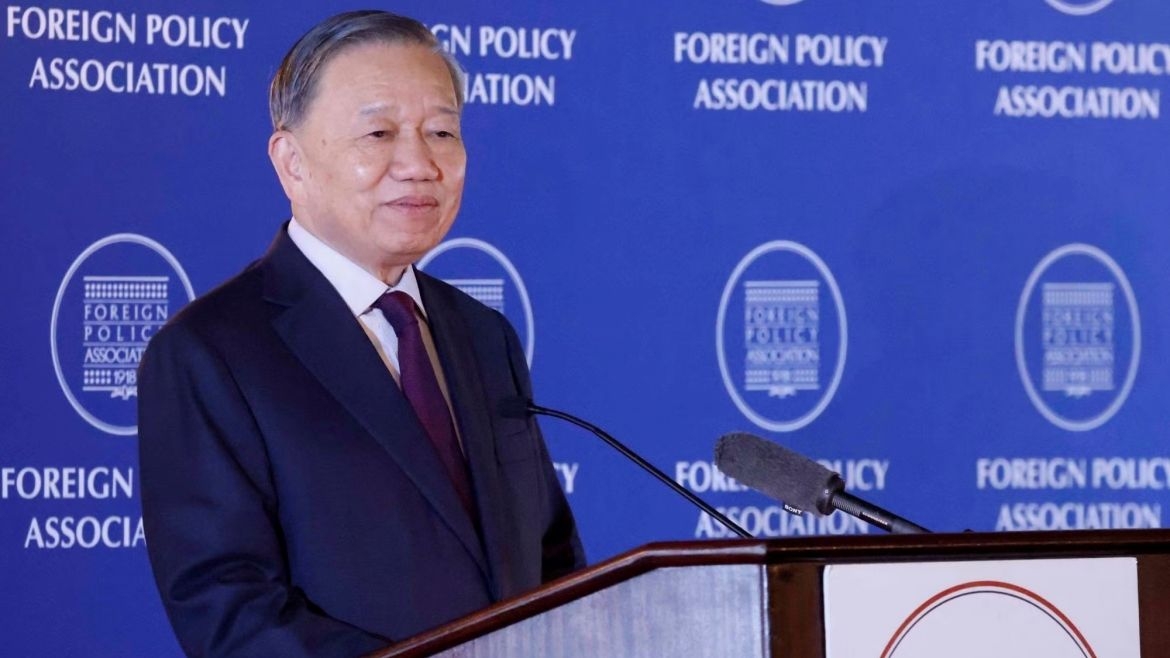
The speech was structured around three questions: how Vietnam views the changes taking place in the world; what brought Vietnam and the US from a difficult past to their relations today; and what responsibility the two countries share in taking those relations further.
Taken together, these three strands point to a broader approach that Vietnam does not see itself merely as adapting to changes in the international environment, but as an active participant in addressing common challenges and contributing to international cooperation.
Responsibility in a changing world
The world is undergoing profound changes, creating major opportunities for development but also placing pressure on international cooperation. Geostrategic competition, economic fragmentation, armed conflicts and inequalities in development opportunities are being accompanied by non-traditional security challenges, from climate change and cybercrime to water and food security.
Against this backdrop, the Vietnamese leader stressed that all countries, large and small, share responsibility for peace, stability and development. Major powers, with their greater influence, have a commensurate responsibility, while smaller and medium-sized countries also have a role to play by putting forward initiatives and participating in efforts to address common challenges.
For Vietnam, this approach does not diminish the importance of national interests. Protecting national interests, maintaining independence and self-reliance, and creating a peaceful environment for development remain fundamental. At the same time, Vietnam sees these interests as increasingly linked to peace, stability and development in the region and the wider world.
This is reflected in its emphasis on an independent, self-reliant foreign policy, multilateralisation and diversification of external relations, and its stated aspiration to be a friend, a trusted partner and an active, responsible member of the international community.
The same approach applies to emerging technologies. As artificial intelligence and other technologies rapidly reshape economies and societies, questions of governance, access and responsibility are becoming increasingly important. Vietnam’s emphasis on international cooperation in addressing emerging challenges reflects an understanding that technological development cannot be separated from the broader task of ensuring that its benefits contribute to human development.
Responsibility for the past, and for the future
The second dimension of responsibility emerges from the history of Vietnam-US relations.
The two countries travelled a long and difficult path from war and deep differences to normalisation and, ultimately, a Comprehensive Strategic Partnership. That transformation was not achieved through declarations alone. It was built gradually through dialogue, mutual respect and concrete acts of cooperation.
The search for US servicemen missing in action during the war became an important part of that process. On the US side, figures including former Senators John McCain and John Kerry and veteran Bobby Muller also played active roles in promoting normalisation and fostering friendship between the two countries.
The experience offers a broader lesson that differences that once appeared profound can be addressed when countries choose dialogue, cooperation and a forward-looking approach. Responsibility, in this sense, is not only about responding to current challenges. It also means preserving and strengthening what previous generations have built.
That lesson provides a foundation for the next stage of Vietnam-US relations. General Secretary and President To Lam called for the two sides to maintain the momentum of their partnership, build a stable and lasting political foundation, enhance dialogue, address differences appropriately, and continue defence and security cooperation in line with the needs, capabilities, policies and interests of both sides.
The economic and technological dimensions of the relationship also offer considerable room for further development. Vietnam has identified science and technology, innovation and digital transformation as important drivers of development and has highlighted the US as one of its foremost important partners.
The challenge, therefore, is to translate political trust into practical cooperation. Stronger economic, trade and investment ties, deeper cooperation in science and technology, and continued efforts to address the consequences of war can give the Comprehensive Strategic Partnership greater substance.
For Vietnam, that also means continuing to improve the domestic conditions that enable cooperation to deliver concrete results, including strengthening institutions, ensuring policy consistency and responding effectively to the legitimate concerns of businesses and investors.
Ultimately, the three dimensions of responsibility outlined in the leader’s speech converge on a single point: Vietnam’s role is not defined only by how it responds to change, but also by what it contributes to addressing that change.
Responsibility towards a changing world means not standing aside from common challenges. Responsibility towards history means dealing with the past through sincerity, mutual respect and concrete action. Responsibility towards the future means turning political trust into practical cooperation and new opportunities.
This is the broader significance of the message delivered at the FPA: not forgetting the past, not standing outside the present and not remaining passive about the future. For Vietnam-US relations, the task ahead is to translate the trust built over decades into tangible results for the two countries and their people, while contributing to peace, stability, cooperation and development in the region and beyond.
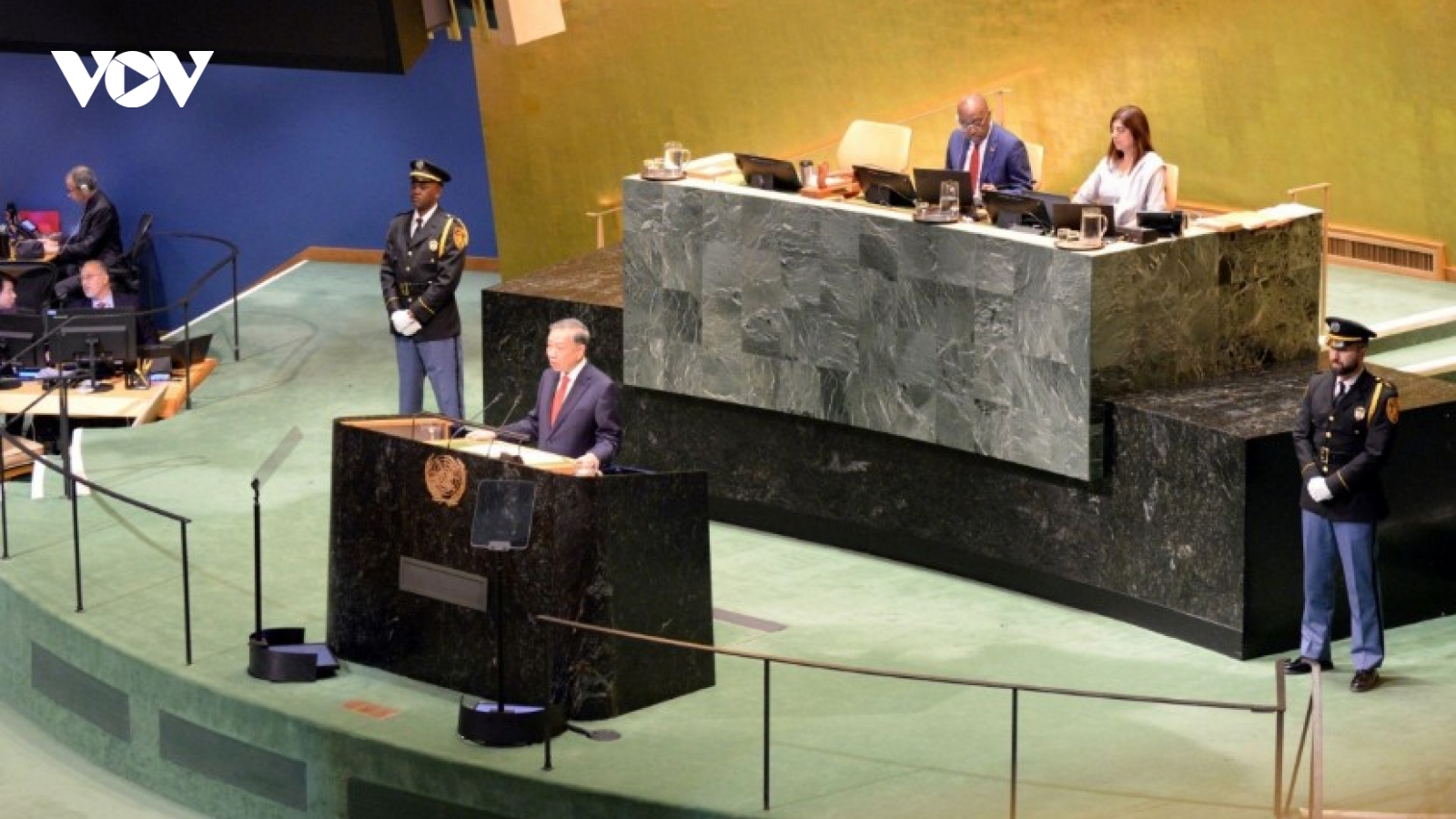
Top leader highlights four key pillars showing international community's shared vision
VOV.VN - Professor Dr. Cheng Hanping, Executive Dean of the Institute of Regional and Country Studies and Director of the Vietnam Research Center at Zhejiang University of Technology, has noted that the viewpoints outlined in the address delivered by General Secretary of the Communist Party of Vietnam Central Committee and President To Lam at the General Debate of the 81st Session of the United Nations General Assemb