Science ministry focuses on eliminating mobile signal dead zones in 273 villages

The Ministry of Science and Technology is stepping up efforts to eliminate mobile signal dead zones and improve weak-signal coverage in 273 villages, the ministry said at its regular monthly press briefing on September 30 in Hanoi.
The ministry announced that in October it will work to complete four draft laws: the law amending and supplementing several articles of the Law on Metrology, the revised Law on Post, the law amending and supplementing several articles of the Law on Intellectual Property, and the law amending and supplementing several articles of the Law on Science, Technology and Innovation. It will also wrap up a decree that amends and supplements five existing decrees related to the implementation of the Law on Science, Technology and Innovation.
The ministry will also launch a project to develop a system of national key research and testing centres and laboratories in October, while continuing to restructure national science and technology programmes towards more focused resource allocation.
It will keep sharing data, launch the National Digital Architecture Framework, offer guidance on digital architecture frameworks at ministerial and provincial levels, and broaden the use of artificial intelligence to support public administration, focusing on safety, data quality, efficiency, and scalability.
The ministry will implement the National Strategy on Artificial Intelligence through 2030, with a vision to 2045, under Decision No. 1671/QD-TTg dated August 28, 2026, with a focus on strengthening capacity in AI research, development, mastery, and application.
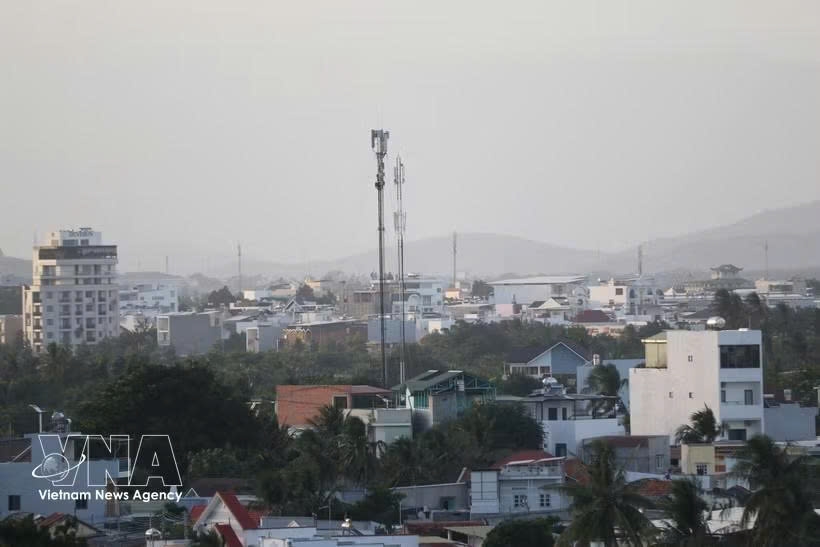
In telecommunications, the ministry and relevant agencies will focus on addressing mobile signal dead zones in 273 villages and weak or no-signal coverage at 209 offices of State agencies and public education and healthcare facilities. They will also study the temporary deployment of satellite solutions combined with BTS stations in particularly disadvantaged areas.
Revenue from the digital technology industry in September was estimated at VND770.77 trillion (US$29.69 billion), up 36% year-on-year. The figure for the first nine months of the year was estimated at VND5.387 quadrillion, up about 32.1% year-on-year.
In data and digital transformation, the total number of transactions conducted through the National Data Exchange Platform (NDXP) reached 4.86 billion from its launch in 2020 to September 15, 2026.
Meanwhile, 34.575 million digital signature certificates were issued as of September. The ministry said 49.96% of the population aged 15-65 had digital signatures, equivalent to 34.575 million people out of a total of around 69.2 million.
Internet infrastructure has kept up its impressive growth. By September 15, the number of registered “.vn” national domain names hit 703,236, marking a 5.7% increase from the same time last year. IPv6 adoption reached 67%, placing Vietnam second in Southeast Asia and seventh in the world.
In the postal sector, September revenue was estimated at VND9.26 trillion, up 22% year-on-year.
Vietnamese researchers produced 3,131 international publications indexed in the Scopus database in September. In industrial property, the Intellectual Property Office of Vietnam received 16,205 applications, processed 17,525, and granted 8,096 protection titles during the month.

Vietnam opens digital transformation market to Russian tech firms
The Vietnamese Government has introduced a new mechanism enabling foreign technology companies, including Russian IT developers, to participate more deeply in national digital transformation projects through public-private partnerships (PPP), opening up significant opportunities for technology exports.