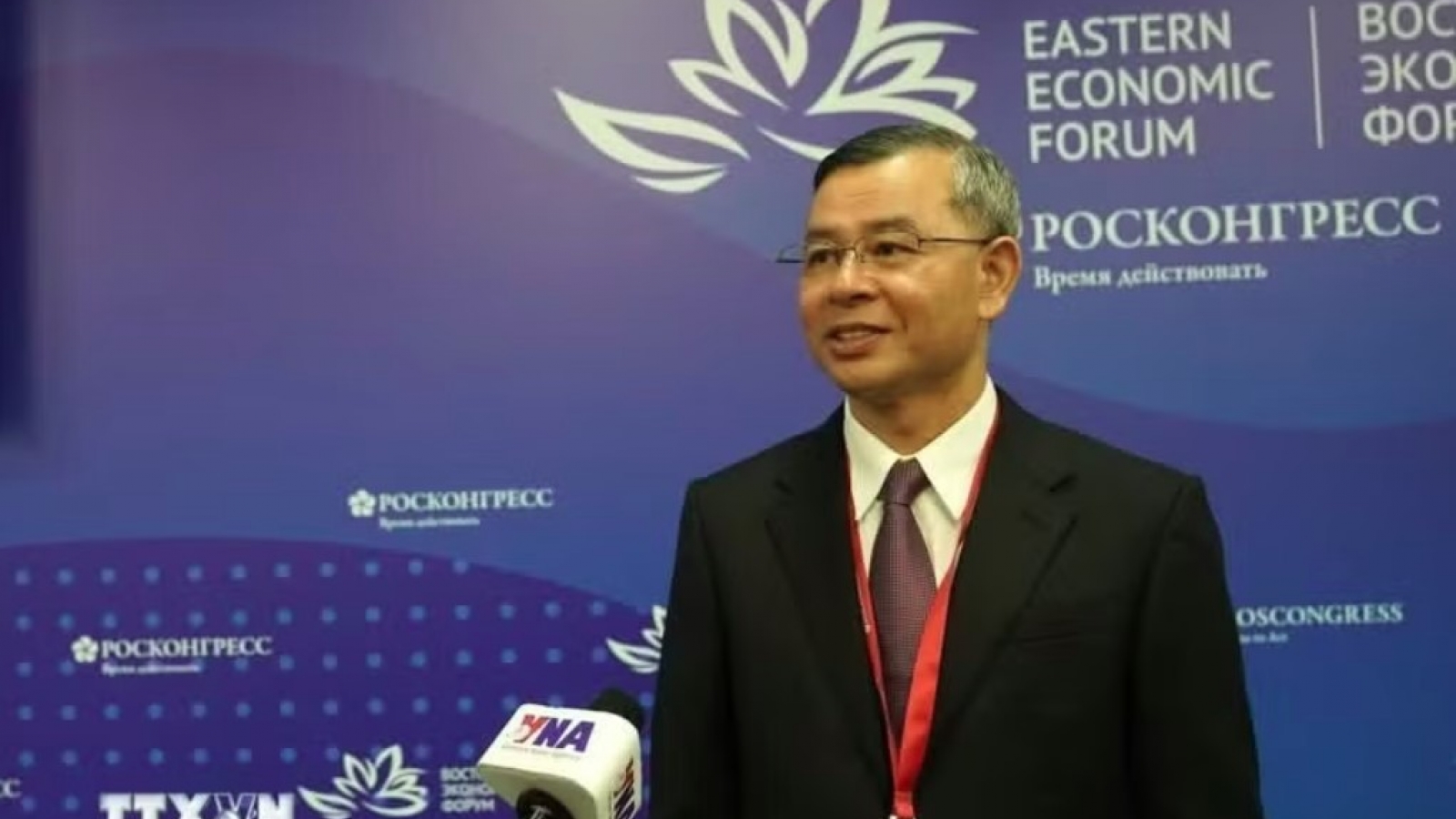
New directions for Vietnam-Russia cooperation in science, education

Politburo member and Secretary of the Communist Party of Vietnam (CPV) Central Committee Nguyen Duy Ngoc, who is also Chairman of the Party Central Committee’s Commission for Organisation, held a working session with Russian Deputy Prime Minister Dmitry Chernyshenko on September 9.
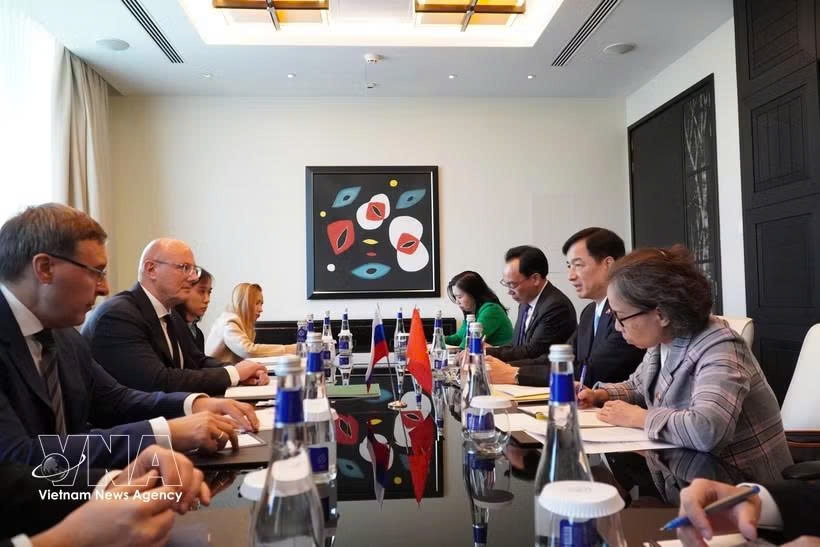
The event took place within the framework of General Secretary of the CPV Central Committee and President To Lam’s state visit to Russia.
Chernyshenko said high-level visits by Vietnamese leaders provide strong impetus for bilateral ties, noting that science and education have long been pillars of Vietnam-Russia relations. More than 3,000 Vietnamese students are currently studying in Russia, and many people have made significant contributions to Vietnam after graduating in Russia.
He also highlighted the compatibility between Vietnam’s priorities under Politburo Resolution No. 57 on breakthroughs in science and technology development, innovation and digital transformation and Russia’s development priorities.
The two sides plan to prepare a comprehensive roadmap for discussion at the Vietnam-Russia Intergovernmental Committee on Economic, Trade, Scientific and Technical Cooperation, scheduled to meet in Hanoi in November.
On new areas of cooperation, Chernyshenko noted that the Vietnam Academy of Science and Technology and Russia’s Rosatom State Atomic Energy Corporation are discussing cooperation in quantum technology. He said Russia is one of only three countries in the world to have developed quantum computers based on all four physical platforms and is currently working to further develop quantum computing.
For his part, Ngoc stressed that science, education and training are important components of the top Vietnamese leader’s visit, particularly as Vietnam prepares high-quality human resources for its two centenary goals in 2030 and 2045.
He called on Russia to support Vietnam’s vision of building a strategic partnership in human resources training through 2035, especially in areas where Russia has strengths, including information and communications technology, quantum technology, artificial intelligence, peaceful nuclear energy, biotechnology and biomedicine. He also urged universities and research institutes of the two countries to develop practical joint products and projects.
At the meeting, Vietnamese Minister of Education and Training Hoang Minh Son highlighted cooperation among technical universities, while Deputy Minister of Foreign Affairs Le Thi Thu Hang proposed expanding training in Russian-Vietnamese interpretation and offering scholarships for Russian students to study in Vietnam.
The meeting underscored the two sides’ determination to translate agreements reached by General Secretary and President Lam and Russian President Vladimir Putin into concrete cooperation, bringing bilateral collaboration in science and education to a new level and contributing to the Vietnam-Russia Comprehensive Strategic Partnership.
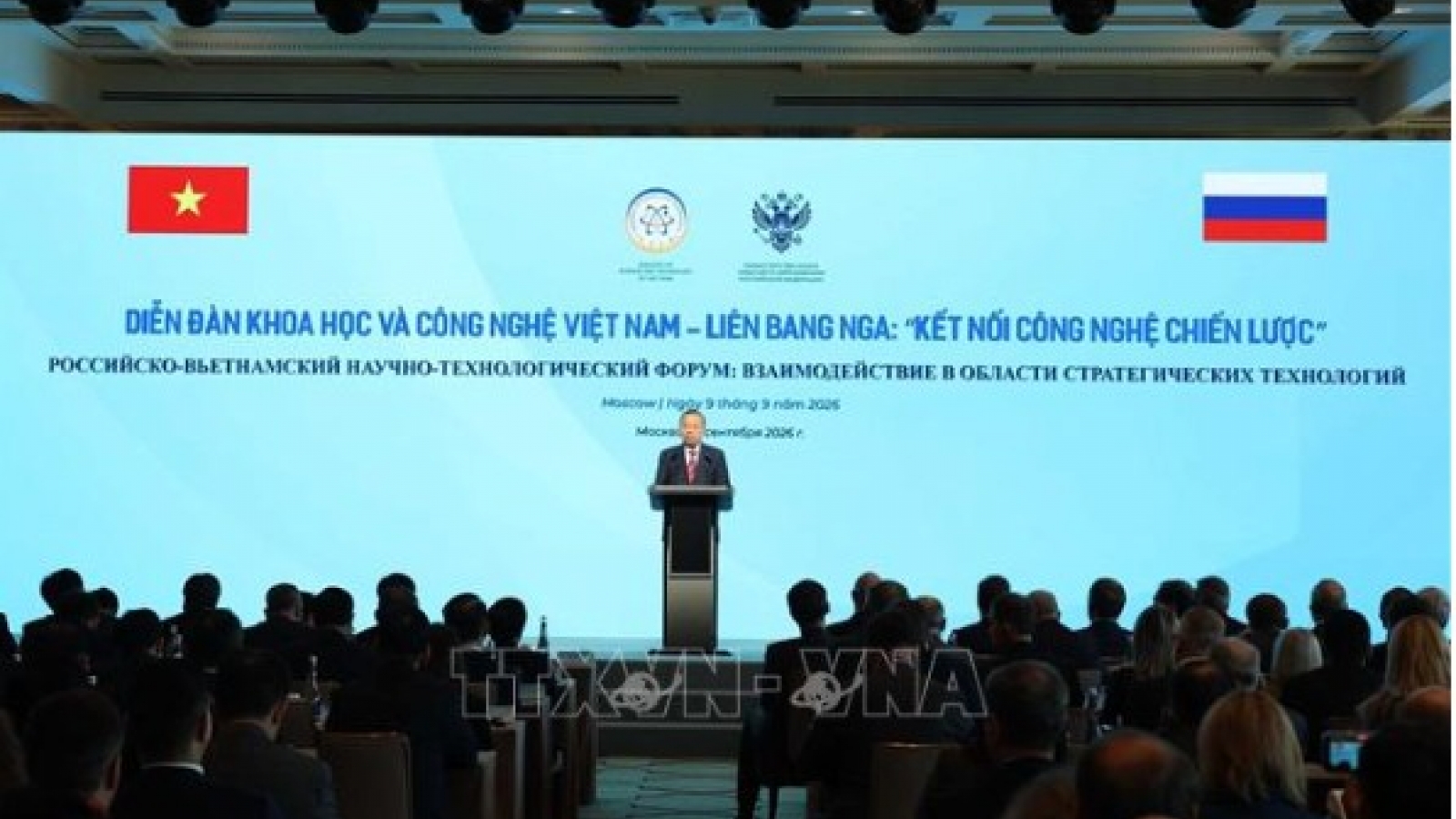
Top leader attends Vietnam-Russia Science and Technology Forum in Moscow
VOV.VN-General Secretary of the Communist Party of Vietnam Central Committee and State President To Lam and a high-ranking Vietnamese delegation attended the Vietnam-Russia Science and Technology Forum themed "Connecting Strategic Technologies" in Moscow on September 9 local time.