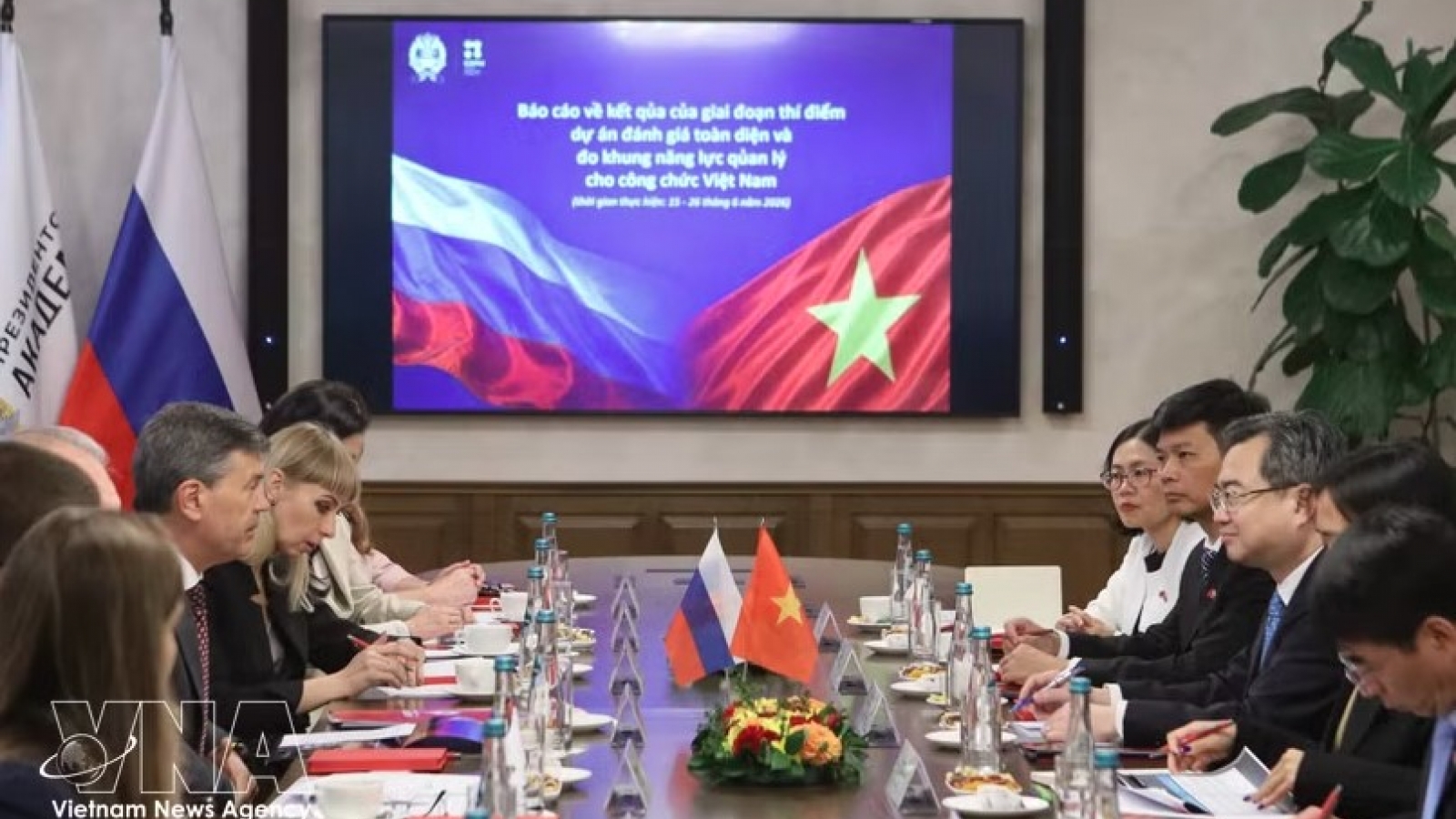
Top leader attends Vietnam-Russia Science and Technology Forum in Moscow

VOV.VN-General Secretary of the Communist Party of Vietnam Central Committee and State President To Lam and a high-ranking Vietnamese delegation attended the Vietnam-Russia Science and Technology Forum themed "Connecting Strategic Technologies" in Moscow on September 9 local time.
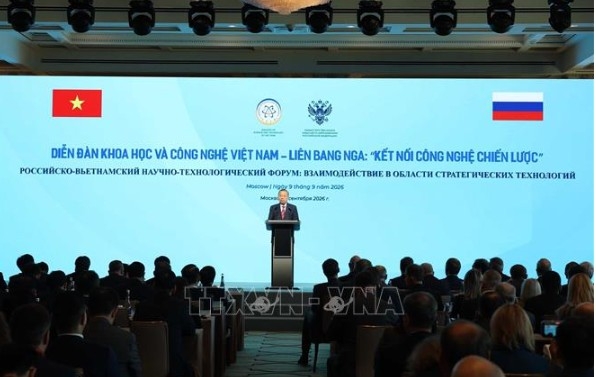
Russian Deputy Prime Minister Dmitry Chernyshenko, Minister of Science and Higher Education Valery Falkov, and nearly 500 delegates representing policy-making bodies, research institutes, technology business associations, experts, scientists, and investors from both countries attended the event.
Opening the forum, Deputy Prime Minister Chernyshenko stated that Vietnam has long been a reliable partner of Russia, with bilateral relations rooted in traditional friendship and mutual support spanning multiple key areas, particularly science and education.
Under a joint statement, the two countries designated 2026 as the Year of Education, Science, and Technology Exchange.
Chernyshenko noted huge potential for bilateral cooperation in high technologies, announcing the launch of new joint research grant selections organized by the Russian Science Foundation and the National Foundation for Science and Technology Development of Vietnam (NAFOSTED), alongside other cooperative projects.
Emphasizing that artificial intelligence, advanced and new materials, new energy, and space technologies will shape the future technological landscape, he called for pooling capabilities to foster mutual advancements and strengthen the comprehensive strategic partnership.
Addressing the forum, To Lam stated that Vietnam is entering a new development phase with the goal of becoming a developing country with modern industry and high middle-income by 2030, and a developed high-income nation by 2045.
To achieve these targets, Vietnam identifies science, technology, innovation, and digital transformation as primary drivers for restructuring growth and enhancing economic autonomy, in line with Resolution No. 57.
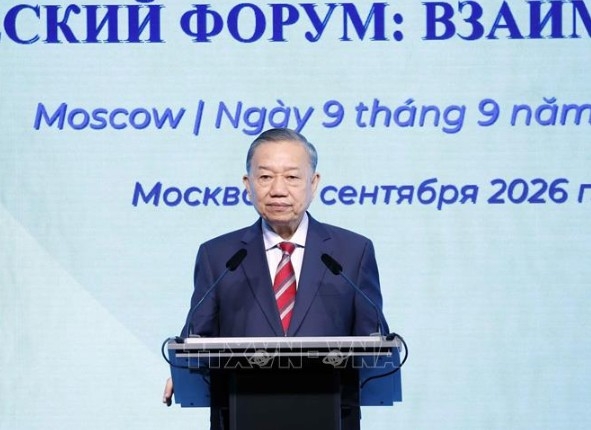
Noting that bilateral ties have stood the test of time with education and science as foundational pillars, the top leader proposed a renewed mindset, fresh approaches, and higher targets for cooperation in the upcoming phase, moving beyond expert exchanges and training toward joint technology mastery, product co-creation, and shared market participation.
The two countries should establish strategic technology cooperation as a new pillar of bilateral ties, focusing on priority fields such as nuclear energy, new energy, space and satellite technology, semiconductors and microelectronics, quantum technology, and artificial intelligence. He urged Russian technology and energy corporations to increase investment and technology transfer in Vietnam while encouraging Vietnamese technology enterprises to seek investment and cooperation opportunities in Russia.
Furthermore, both sides should facilitate interactions between scientists and businesses while investing heavily in the younger generation of scientists and experts through expanded educational programs, researcher exchanges, and joint research tasks for young teams.
The governments and relevant agencies must promote the role of the Vietnam-Russia Intergovernmental Commission on Education, Science, and Technology cooperation, and study a mechanism to regularly review key projects with clear targets, resources, and timelines.
The top leader stressed that future evaluations of bilateral technological cooperation should measure outcomes by concrete achievements: the number of technologies jointly mastered, products created, enterprises investing together, and young scientists developed, rather than merely tallying delegations and signed documents. He expressed confidence that deep political trust and technological potential will turn science, technology, and innovation into a new driver, a new pillar, and a new symbol of bilateral relations in the 21st century.
At the forum, both sides launched the Vietnam-Russia Knowledge Network and exchanged cooperation documents on science, technology, and education.
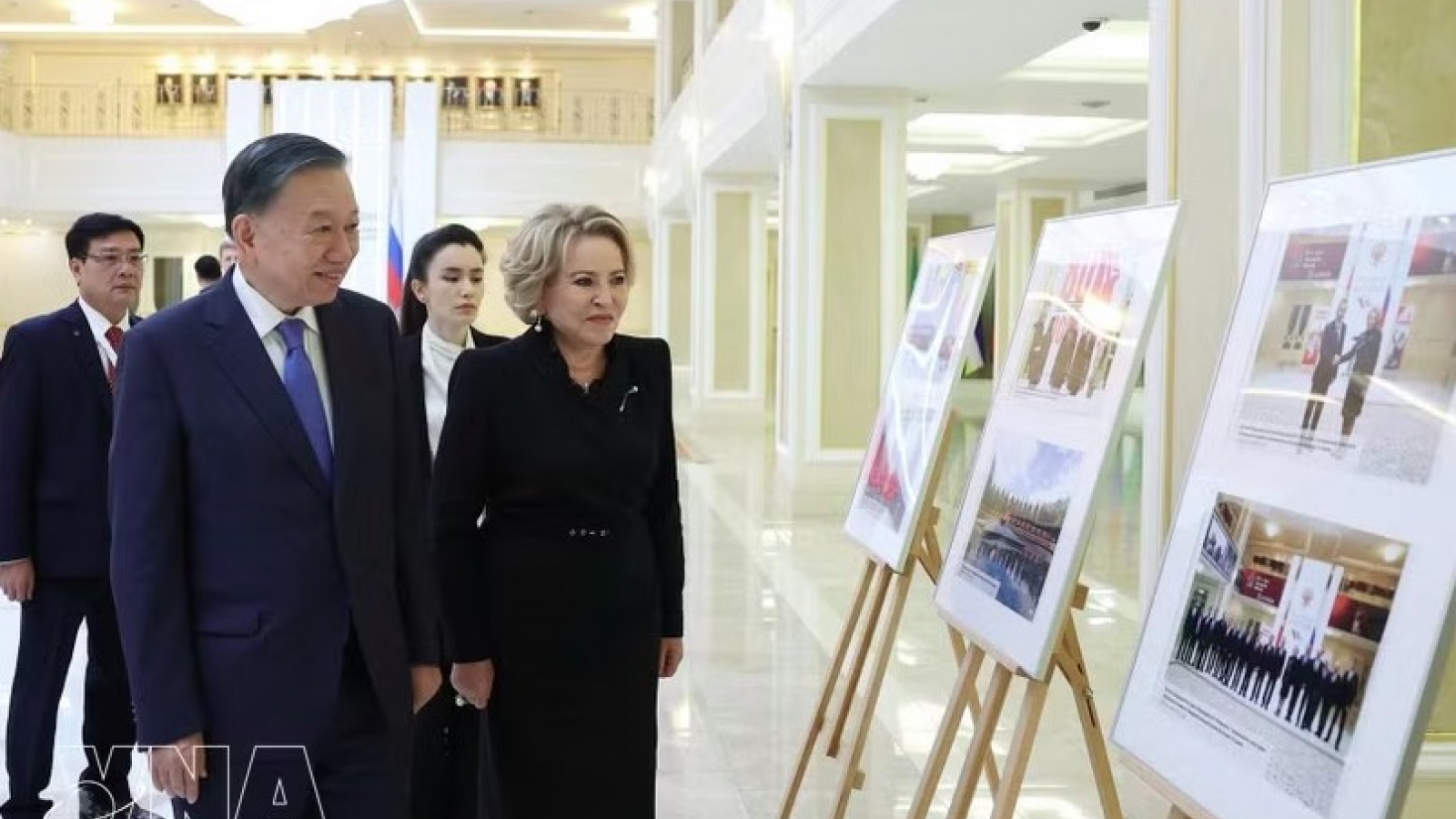
Top leader meets with Chairwoman of Russia’s Federation Council
General Secretary of the Communist Party of Vietnam (CPV) Central Committee and President To Lam held a meeting with Chairwoman of the Federation Council of the Federal Assembly of Russia Valentina Matvienko in Moscow on September 8 (local time).
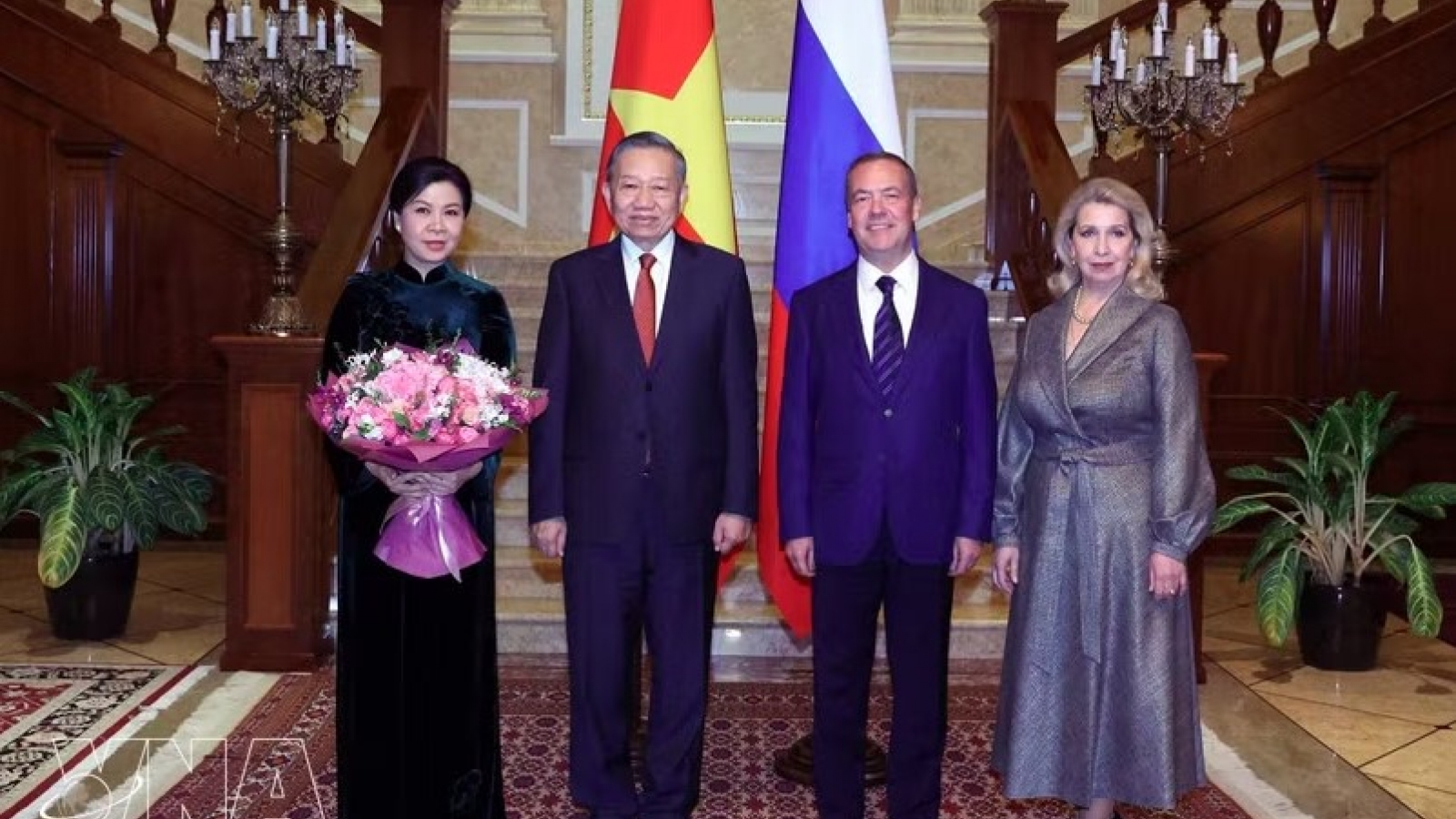
Vietnam treasures comprehensive strategic partnership with Russia
Vietnam consistently attaches importance to its traditional friendship and comprehensive strategic partnership with Russia, considering the relationship one of its top priorities in implementing its foreign policy of independence, self-reliance, multilateralisation and diversification, said top leader To Lam.