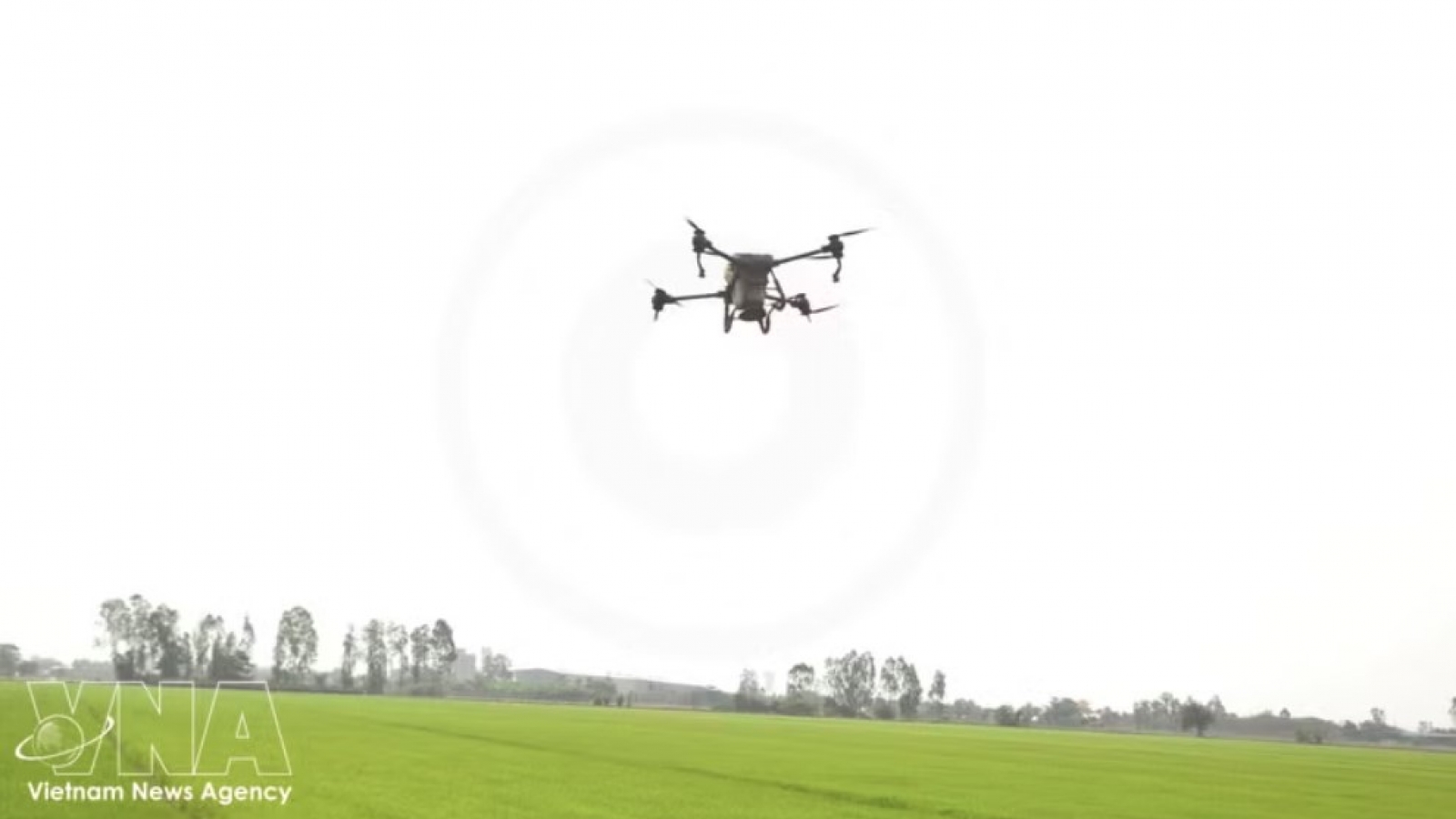
Three national UAV flight-testing zones to take shape by 2030

VOV.VN - Vietnam plans to put three national UAV flight-testing zones and at least one national research and testing centre into operation by 2030 under a new Politburo conclusion on developing and managing low-altitude airspace.
The targets are set out in Conclusion No. 99 on the exploitation, management and protection of low-altitude airspace to serve national development in the new situation.
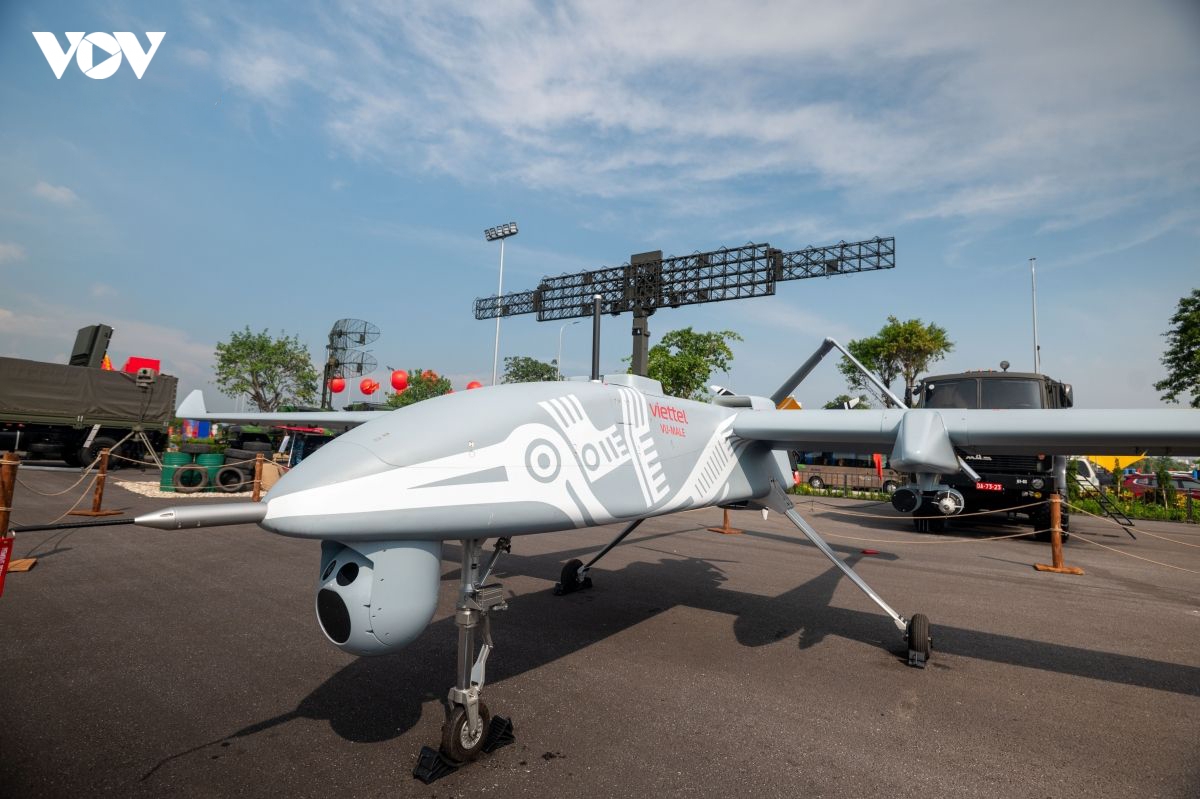
The Politburo identifies low-altitude airspace as a national resource and a new space for development. It also considers it a special sovereign space linked to airspace sovereignty, data sovereignty, cybersecurity, key targets, borders, seas, islands and major urban areas.
The development and management of low-altitude airspace will be linked to greater technological, infrastructure and strategic data self-reliance, as well as the development of semiconductors, artificial intelligence and space technology.
Building a national UAV testing and development ecosystem
By 2030, Vietnam aims to put three national UAV flight-testing zones into operation and establish at least one national research and testing centre for unmanned aerial vehicles.
The country also aims to raise the domestic content ratio of key UAV lines serving production to more than 30–40% by 2030 and over 85% by 2045.
A key priority is to complete the legal framework for exploiting, managing and protecting low-altitude airspace across economic, civilian, defence and security activities.
Requirements for low-altitude airspace management will be incorporated into national and urban planning, including the designation of flight-testing areas, restricted zones and no-fly zones.
The national management model will be developed in a unified and modern direction, based on data, digital platforms and risk management. Flight activities will be regulated according to zones, altitude levels, types of operation and risk levels, covering registration, identification, licensing, operation, monitoring, inspection and enforcement.
National technical standards and regulations for infrastructure, equipment and management technologies are to be developed and completed in 2027 in line with international standards.
The State will provide direction and help lead the initial market through public procurement, pilot projects and applications in the public sector. Businesses, research institutes and universities will be encouraged to participate in UAV research, development, production and commercialisation.
UAVs prioritised for logistics, agriculture and medical services
Vietnam will develop the low-altitude industry with dual-use applications, gradually mastering core technologies including low-altitude air traffic management, aircraft manufacturing and control, automated flight-data processing, connectivity, positioning, materials, safety and security.
Policies on tax, credit and land incentives will be developed to support businesses in researching, producing, testing and commercialising UAV products and services for both domestic and export markets.
The country will establish technology complexes, UAV manufacturing clusters and national UAV flight-testing zones, in addition to developing an innovation ecosystem involving the State, research institutes, universities, businesses and defence and security agencies.
Low-altitude airspace will be used for a range of applications, with priority given to logistics, agriculture, resource management, environmental protection, infrastructure monitoring, disaster prevention and response, search and rescue, emergency medical services and smart cities.
New technologies, products, services and business models will be eligible for controlled testing mechanisms with defined scopes, durations, evaluation criteria and monitoring arrangements.
Vietnam will also develop training programmes covering UAVs, the low-altitude economy and related emerging occupations, alongside training facilities, practical centres and systems for certification and licensing.
International cooperation will be expanded selectively in research and development, technology transfer, human resources training, technical standards, flight management and market development. At the same time, the country will maintain technological and data autonomy, safeguard critical infrastructure and strengthen national management capacity.
Low-altitude economy targeted as new growth driver by 2045
By 2045, Vietnam aims to develop the low-altitude economy into an important economic and technical sector and one of the country’s new growth drivers, with strong regional competitiveness.
The sector is targeted to contribute about 1.5% of national GDP, alongside the broader goal of turning Vietnam into a developed, high-income country.
The long-term targets reflect a shift from treating UAVs mainly as individual technologies to building a broader ecosystem covering infrastructure, regulation, data, manufacturing, testing, applications and human resources.
Under Conclusion No. 99, this ecosystem is expected to support both economic and public-service applications, and strengthen Vietnam's capacity to develop and manage its low-altitude airspace.

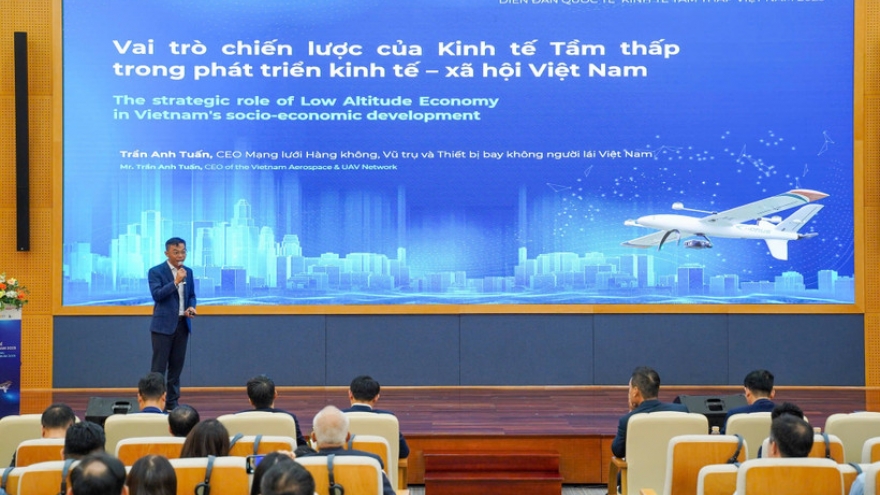
Low-altitude economy opens new space for technology applications in Vietnam
VOV.VN - The rapid development of unmanned aerial vehicles, artificial intelligence, satellite data and digital platforms is opening up a new economic space in Vietnam, but turning these technologies into economic value requires coordinated progress in regulation, infrastructure, human resources, standards and testing mechanisms.