Low-altitude economy opens new space for technology applications in Vietnam

VOV.VN - The rapid development of unmanned aerial vehicles, artificial intelligence, satellite data and digital platforms is opening up a new economic space in Vietnam, but turning these technologies into economic value requires coordinated progress in regulation, infrastructure, human resources, standards and testing mechanisms.
From agriculture and logistics to transport and disaster prevention, such technologies are gradually moving from research and experimentation into practical applications, creating new opportunities for economic activity and public services.
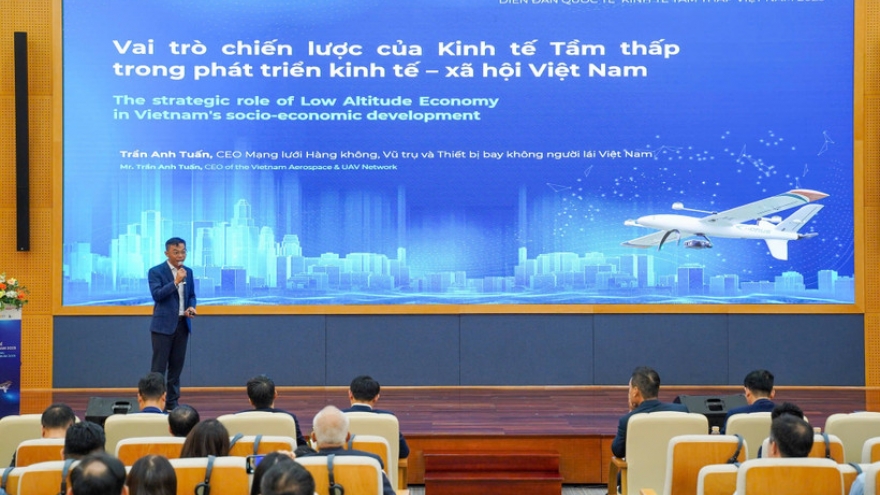
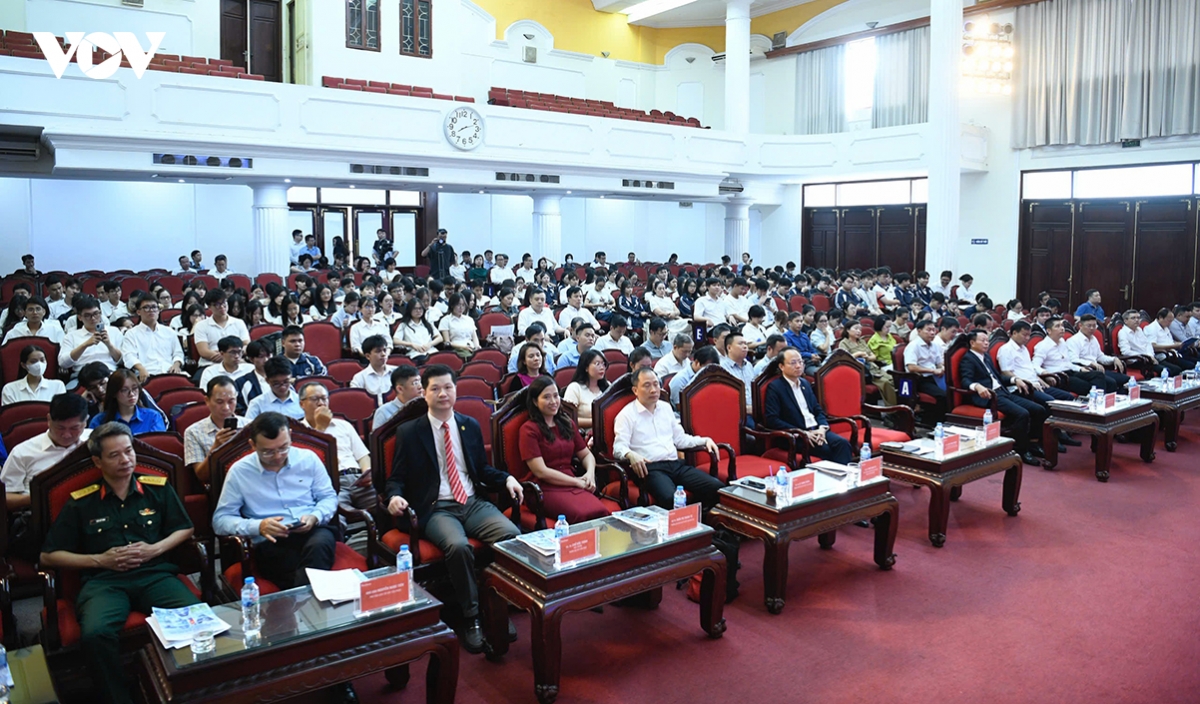
These issues were discussed at a forum on developing the low-altitude economy and promoting space technology applications in Vietnam, jointly organised by Vietnam National University, Hanoi and Tien Phong Newspaper in Hanoi on October 2.
From technology to economic value
The year 2026 marks an important shift, with aviation and space technology identified as one of Vietnam’s strategic technology groups. The Government has also assigned specific tasks related to UAV development, UAV management systems, satellites, Earth-observation satellite constellations and space-data infrastructure.
According to a 2026 report by the World Economic Forum and Deloitte, Earth-observation applications currently contribute around US$440 billion to global GDP each year. A further US$263 billion in potential value could be unlocked by improving the collection, processing and practical use of Earth-observation data.
The global UAV market is also projected to grow from more than US$26 billion in 2025 to over US$40 billion by 2030.
Associate Professor and Dr Bui The Duy, president of Vietnam National University, Hanoi, noted the low-altitude economy is creating a new space for advanced technologies to be brought into everyday life.
“We are now hearing more about the new concept of the low-altitude economy. It integrates the latest technologies in unmanned aerial vehicles with applications in logistics, agriculture and smart transport, creating a new space for bringing advanced technologies into everyday life,” he said.
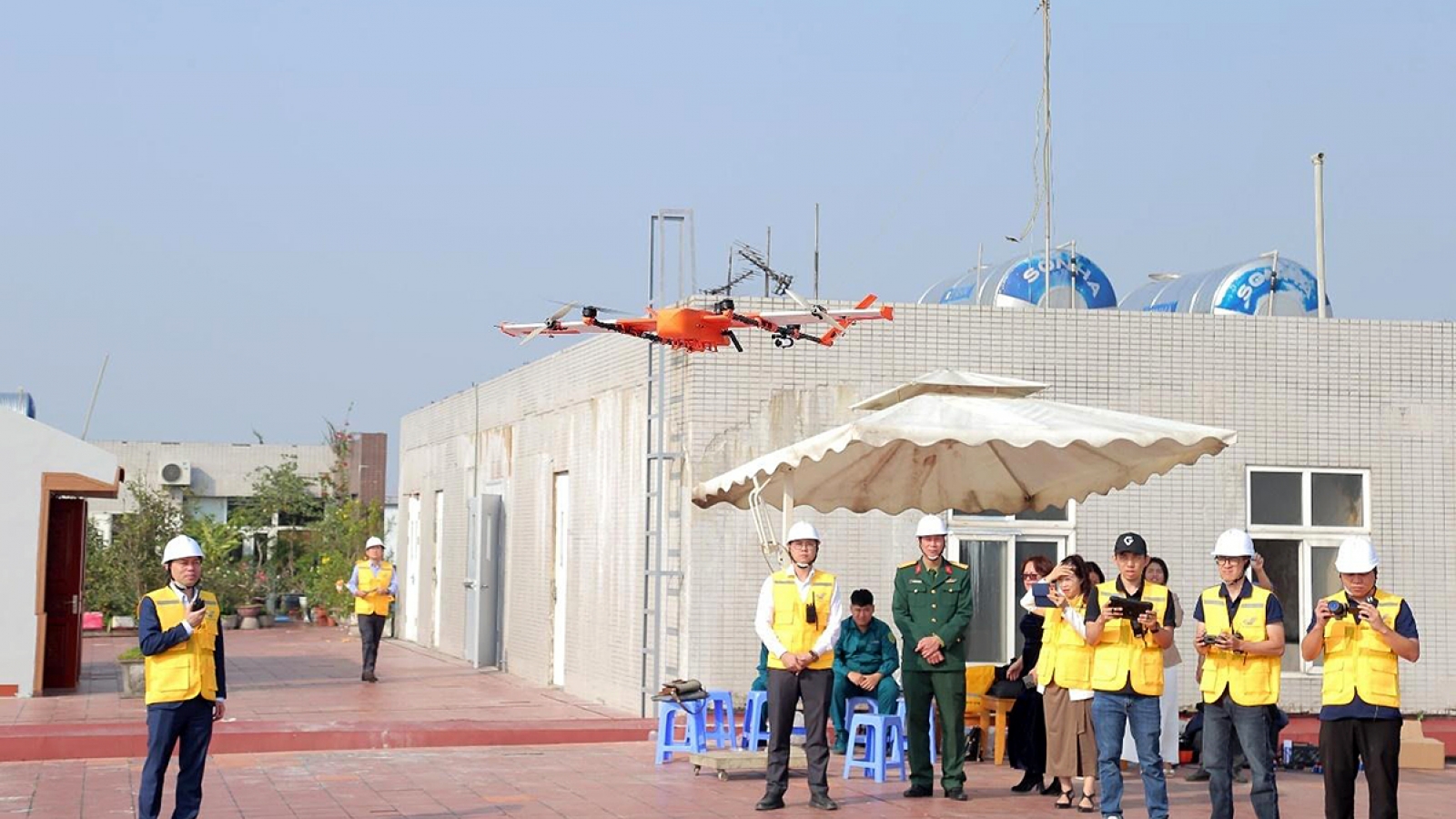
Vietnam’s experience shows that the low-altitude economy is no longer limited to research or pilot projects. UAVs are already being used in agricultural production, the transport of medical supplies, search and rescue operations, and disaster prevention and response.
In many rural areas, UAV applications are developing particularly quickly as they fit local production conditions and respond to practical needs.
Nguyen Van Thuat, deputy director-general of the Department of Digital Economy and Digital Society under the Ministry of Science and Technology, described the low-altitude economy as an ecosystem based on aerial devices operating from the ground to an altitude of around 1,000 to 3,000 metres, depending on how individual countries define the sector.
By 2035, the global low-altitude economy could be worth around US$488 billion when services such as agriculture, logistics and other traditional economic activities are taken into account. In Vietnam, the sector is still in its infancy, with annual growth projected at around 13% and the domestic market potentially reaching about US$500 million by 2035.
The economic value, however, does not lie in the aircraft alone.
“UAVs themselves do not directly create value. The value lies in the flights, the data collected and the ability to use that data to solve real-world problems,” Thuat argued.
Vietnam currently has no separate regulatory framework specifically governing the development of the low-altitude economy, he noted. Establishing an appropriate regulatory framework is important, but development should not have to wait until the entire legal system is completed.
“We need to create the space and mechanisms for businesses to test, operate under control and gradually bring these models into practice,” he said.
Building an ecosystem for low-altitude services

The challenge therefore goes beyond manufacturing aircraft. Vietnam needs an ecosystem covering design, production, maintenance, physical infrastructure, charging stations, frequency resources, management systems, flight services and data exploitation.
Regulations, technical standards, frequency resources and human resources also need to be developed in parallel.
The Ministry of Science and Technology is working towards creating the necessary space and mechanisms for businesses to conduct controlled trials and gradually bring low-altitude economic models into practical use.
The experience of Dien Bien province provides an example of how such testing can be carried out at local level.
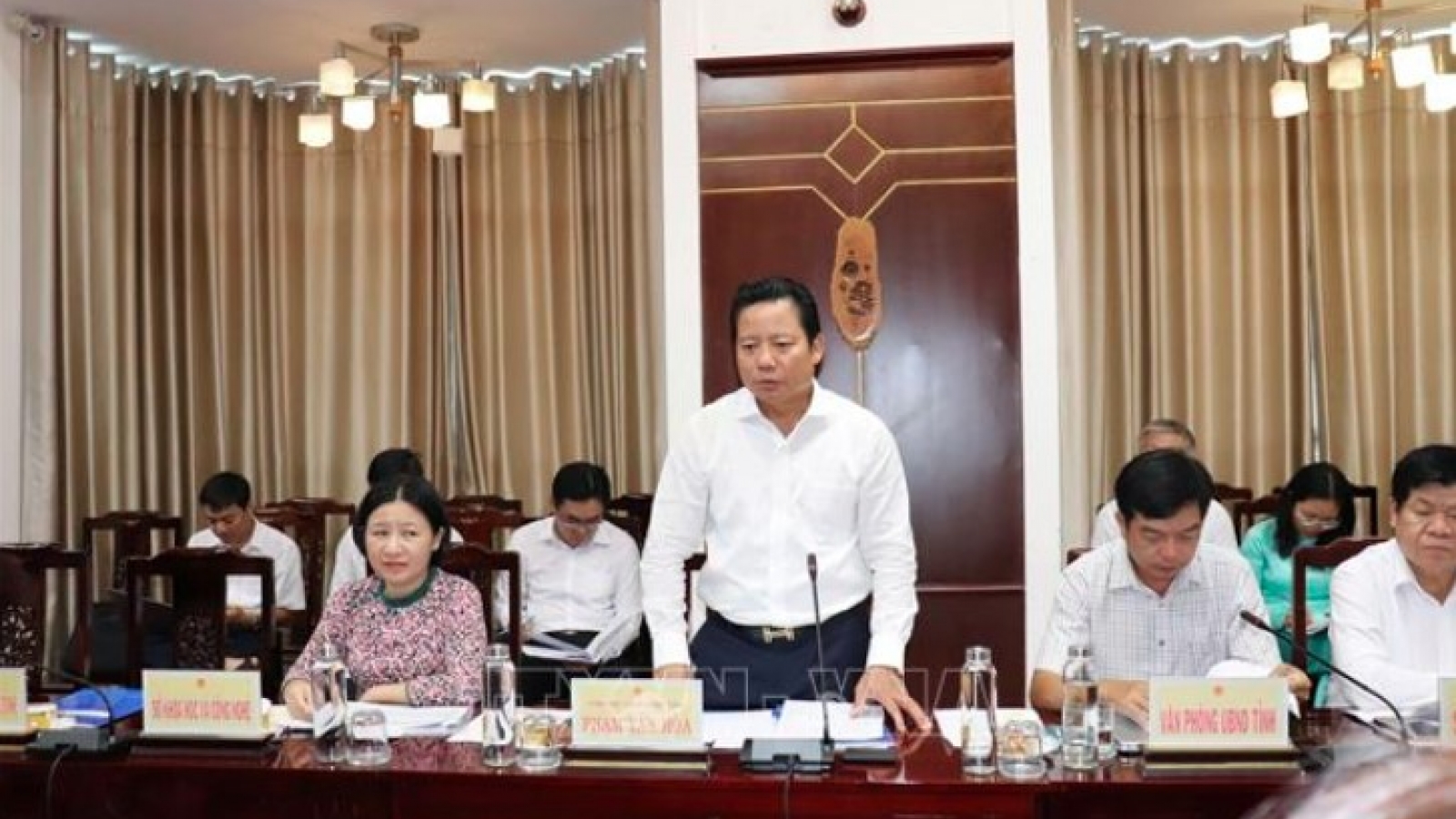
Nguyen Ba Anh, deputy director of the provincial Department of Science and Technology, said Dien Bien is implementing a controlled pilot scheme for developing the low-altitude economy through UAV applications.
With its challenging terrain, fragmented geography and uneven population distribution, the province sees potential for UAVs to address practical needs in agriculture, medical logistics, the transport of essential goods, terrain surveying and natural-resource management.
The 24-month pilot project is expected to include 6,000 test flights, with a targeted safety rate of more than 99%.
“After more than a month of implementation, from September 15 till now, 118 flights have been conducted to transport coffee, with a payload of 50kg per flight, in Muong Ang commune,” he told the forum.
The trials have helped identify applications with significant socio-economic value. In the next phase, the province will focus on transporting agricultural products and production materials, medical logistics and essential goods, as well as surveying and digital mapping.
The experience from these flights, together with research, training and UAV development activities elsewhere, is gradually bringing the low-altitude economy into practical use.
Further progress will depend on the simultaneous development of regulations, infrastructure, standards and human resources. Pilot projects such as those in Dien Bien can provide valuable operational data and management experience, helping policymakers refine the regulatory framework and create the foundations for a broader low-altitude economic ecosystem linked to space technology applications in Vietnam.
Low-altitude economy emerges as new growth driver for Vietnam
Vietnam’s low-altitude economy is emerging as a promising growth driver, underpinned by technology and data, as unmanned aerial vehicles (UAVs) are among six prioritised strategic technology products and some supporting technologies for this economy are also named among the 11 groups of national strategic technologies.