Lawmakers call for wider room for urban development

VOV.VN - National Assembly deputies have called for a flexible legal framework to give cities greater autonomy in development while tying decentralisation to accountability, power control and adequate resources.
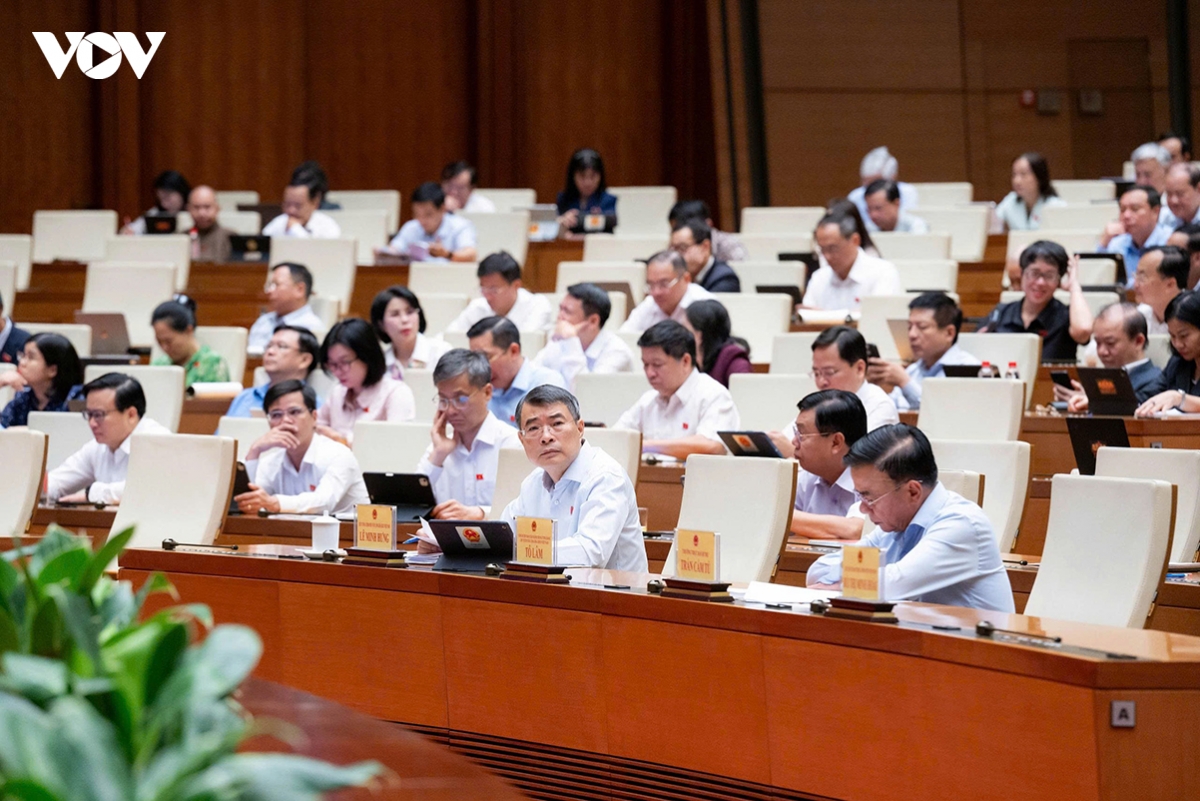
Discussing the draft Urban Development Law in a plenary session on August 11, deputies suggested a shift from administrative management toward modern urban governance and development-oriented policymaking.
Creating a flexible framework for cities
Deputy Trinh Xuan An from Dong Nai province said the draft law should establish a common framework for urban development and at the same time provide appropriate mechanisms for cities with different roles, characteristics and development needs.
To help Ho Chi Minh City and other cities make breakthroughs, he proposed a tiered framework based on the scale, position, role and governance capacity of each city.
Mechanisms that have been tested in Ho Chi Minh City and Hanoi, if shown to have broader applicability, should gradually become general policies for cities that meet the necessary conditions, rather than requiring each locality to seek separate resolutions or special mechanisms, he suggested.
The law should clearly define the levels of application, conditions, principles and limits of such mechanisms to prevent a situation in which the law provides an opening but local authorities still have to wait for specific decisions before they can use it.
Such an approach would create a flexible legal framework allowing eligible cities to make greater use of mechanisms suited to their development needs and governance capacity.
Decentralisation must go hand in hand with accountability
Decentralisation and delegation of powers to urban administrations were among the issues that drew considerable attention from deputies.
Deputy Nguyen Dai Thang from Hung Yen province supported stronger decentralisation, highlighting it would give local authorities greater flexibility and initiative while requiring them to assume greater responsibility.
However, he stressed that the stronger the decentralisation, the tighter power control must be.
He called for clearer rules on the accountability of heads of agencies, as well as oversight mechanisms involving the National Assembly, Government and People's Councils, together with specific criteria and conditions for other cities to apply mechanisms provided under the law.
Deputy Thach Phuoc Binh from Tra Vinh province also stated that decentralisation, delegation or authorization must clearly identify the responsible authority, the form of implementation and the corresponding legal responsibility.
A single task should have one clearly designated lead authority, he said, to avoid situations in which responsibility is unclear when decisions need to be made or problems arise.
He also stressed that meaningful decentralisation requires adequate financial and human resources, data, digital infrastructure and other necessary conditions.
Responding to the deputies, Minister of Justice Hoang Thanh Tung emphasised that the draft law provides for comprehensive decentralisation combined with multi-level power controls.
Decentralisation must come with safeguards and checks, he said, adding that it must not undermine macroeconomic stability or national financial security and must respect market principles.
For major projects, the Government would retain authority over decisions on targeted budgetary allocations, ensuring the central budget's leading role.
The draft law also moves toward shifting from ex ante controls to ex post oversight, combined with personal financial accountability for heads of agencies, the minister said.
More fundraising tools for Ho Chi Minh City
Another issue attracting attention was the incorporation of mechanisms related to the International Financial Centre into the draft Urban Development Law.
Deputy Trinh Ngoc Phuong from Tay Ninh province said the International Financial Centre should be clearly positioned as a place for mobilising, allocating and channeling capital.
She supported the idea of giving Ho Chi Minh City additional fundraising tools through the centre, including allowing the municipal People's Council to regulate the development and issuance of municipal and project bonds through the International Financial Centre to finance key projects.
Such a mechanism should be retained in the law, she said, while clearly defining issuers, the purposes of funds, borrowing limits, debt obligations and the city's responsibilities in line with budget and local debt-safety regulations.
“Giving the city greater fundraising authority must go hand in hand with responsibility and its ability to repay debt,” she stressed.
Deputy La Thanh Tan from Hai Phong province, meanwhile, pointed to the fact that current regulations do not allow city authorities and Vietnamese enterprises to directly issue international bonds or securities. This limits the International Financial Centre's ability to perform its core function of channeling international capital into the economy.
He therefore proposed adding provisions to Article 23 of the draft law to allow the Government, city authorities and eligible domestic organisations to use financial and support services provided by licensed members for securities issuance, listing and trading activities aimed at attracting international capital.
The mechanism would help connect domestic resources with global capital markets, he said.
Toward modern urban governance
The discussions highlighted that the draft Urban Development Law should not simply create additional mechanisms for several major cities, but establish a governance framework suited to the scale, role and capacity of different urban areas.
Decentralisation is seen as an important driver of local development, but it must be accompanied by accountability, power controls and adequate resources.
For Ho Chi Minh City, additional fundraising tools through the International Financial Centre could create new opportunities to mobilise capital for key projects, while requiring clear limits on borrowing, debt obligations and the responsibilities of city authorities.
More broadly, the draft law is expected to establish a common but sufficiently flexible framework that allows capable cities to take greater initiative, reduce reliance on ad hoc special mechanisms and strengthen the accountability of urban authorities.
The National Assembly continued its plenary session on August 11 to discuss a draft resolution on crime prevention and law violations, as well as the operation of the People's Procuracy, People's Courts and enforcement agencies.
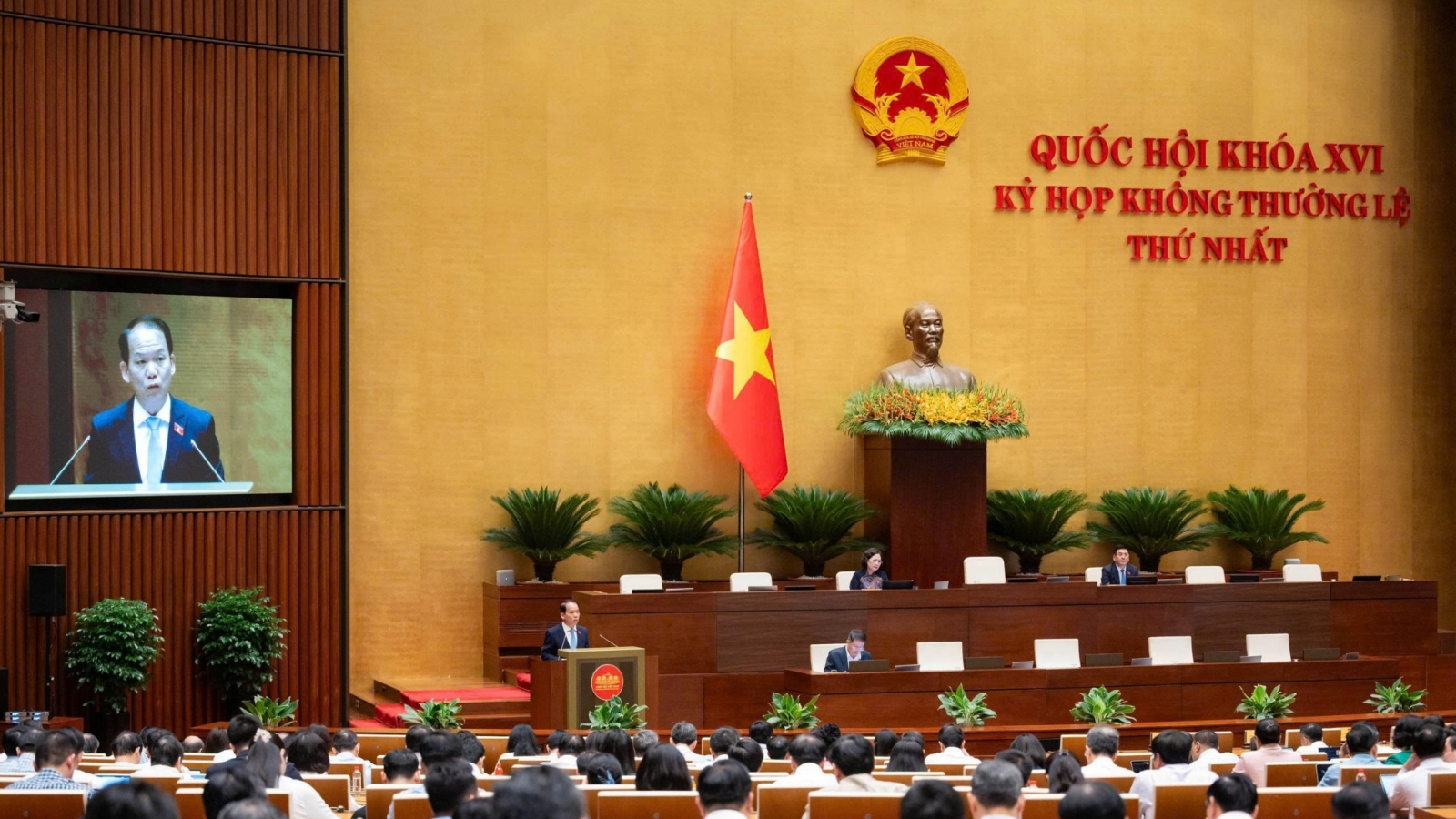
Urban Development Law proposed with special mechanisms for key cities
VOV.VN - The Government has submitted a draft Urban Development Law to the National Assembly, proposing special mechanisms for special-class cities and special economic zones to unlock investment, strengthen urban governance and create new growth drivers.