Vietnam, Russia inject new impetus into economic, sci-tech cooperation

VOV.VN - Vietnam and Rusia will make more effective use of existing cooperation mechanisms, bring stronger momentum to economic and trade ties, expand cooperation in science and technology, and strengthen transport connectivity, thereby injecting new impetus into their Comprehensive Strategic Partnership in the new period.
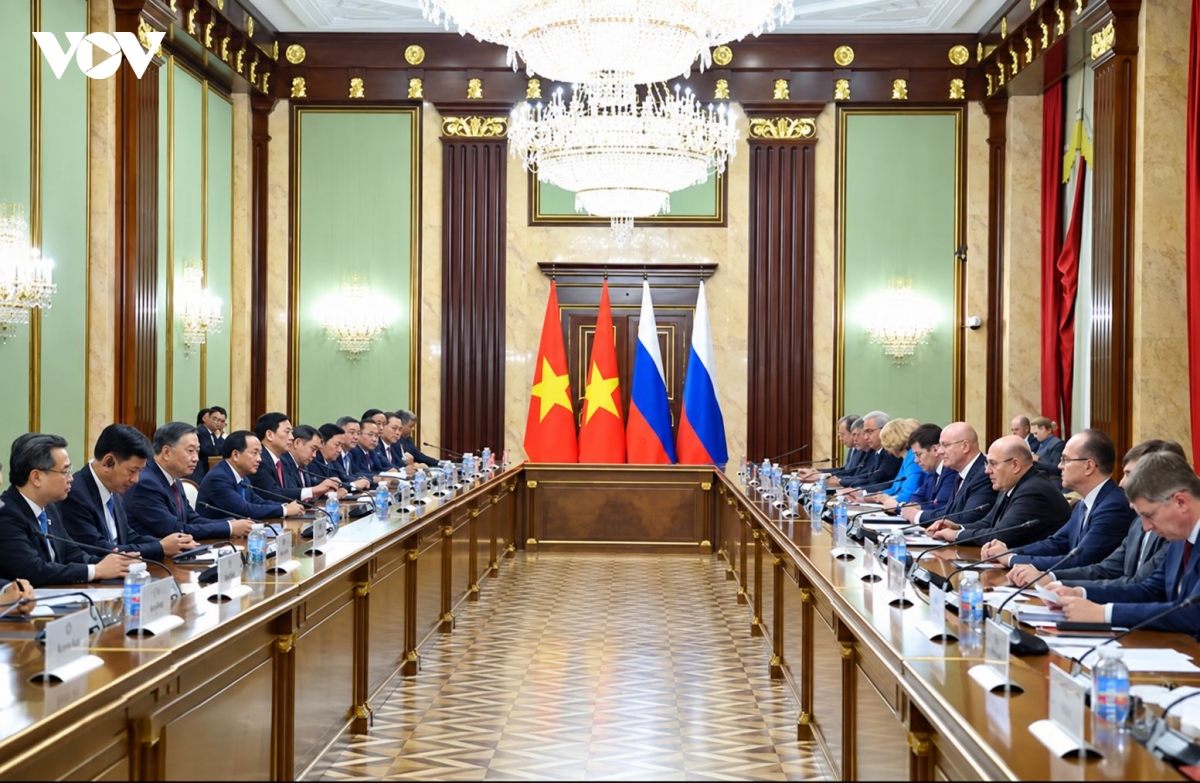
These major orientations were discussed during a meeting in Moscow on September 8 between General Secretary of the Communist Party of Vietnam Central Committee and President To Lam and Russian Prime Minister Mikhail Mishustin, as part of the former’s State visit to Russia.
In a friendly, sincere and trusting atmosphere, Prime Minister Mishustin warmly welcomed the Vietnamese leader’s visit which he said would mark a turning point in bilateral cooperation in the time ahead.
Stepping up economic and trade cooperation
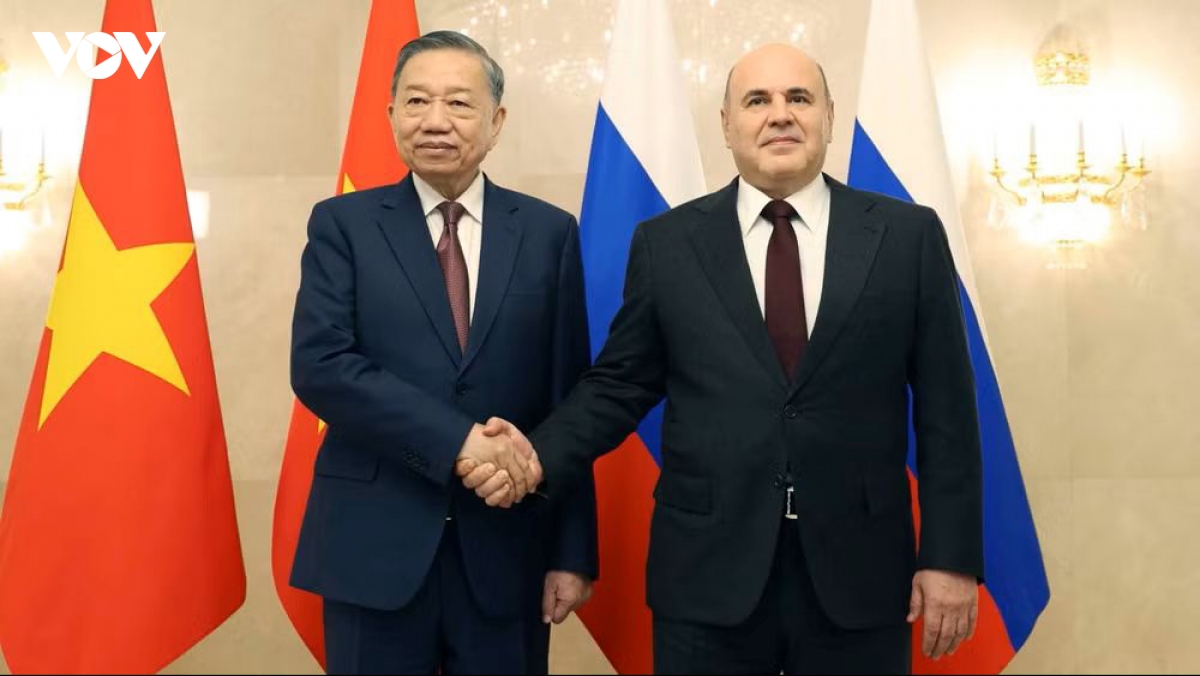
Highlighting the important role of the two Governments in concretising and implementing agreements and orientations reached by the two countries’ senior leaders, General Secretary and President To Lam proposed that the two Governments continue close coordination and bring into full play existing mechanisms, particularly the Vietnam-Russia Intergovernmental Commission for Economic-Trade and Scientific-Technological Cooperation.
The two sides welcomed progress in bilateral relations across a wide range of areas, from trade, investment, science and technology, and education and training to people-to-people exchanges and tourism. In particular, a number of difficulties and obstacles previously identified by the two sides’ leaders have begun to be addressed and resolved.
On that basis, they agreed to continue making effective use of existing bilateral cooperation mechanisms while studying the establishment of new mechanisms and specialized working groups in appropriate areas.
They said stronger progress should be made in economic and trade cooperation, given the considerable potential and complementary strengths of the two economies. Encouraging and facilitating businesses from both countries to conduct business, invest and strengthen business-to-business connectivity was identified as a priority.
General Secretary and President To Lam called for stronger two-way investment in a more balanced direction. Following TH Group’s success story, Vietnam encourages its businesses to invest in agriculture in Russia, and at the same time encourages Russian businesses to invest in industry in Vietnam.
To enhance the effectiveness of economic, trade and investment cooperation, General Secretary and President To Lam proposed that the Russian Government instruct relevant ministries and agencies to continue reviewing and addressing difficulties and obstacles in economic, trade and investment cooperation; and introduce appropriate solutions concerning tariffs, quotas, transport, logistics and market access, thereby increasing the presence of Vietnamese goods in the Russian market.
Noting that Vietnam was the first country in the world to sign a free trade agreement with the Eurasian Economic Union (EAEU), of which Russia is a member, General Secretary and President To Lam proposed that Russia use its voice to encourage EAEU member states to open their markets, remove trade barriers and eliminate threshold-based trade remedy mechanisms for Vietnamese goods.
Strengthening transport connectivity, energy and technology cooperation
Alongside trade and investment, transport connectivity and logistics were identified by both sides as important factors in expanding the exchange of goods and establishing stable supply chains.
Prime Minister Mishustin said the two sides should study solutions to improve the efficiency of maritime, rail and multimodal transport. General Secretary and President To Lam agreed that the two sides should establish new strategic connectivity through transport cooperation, particularly in rail, maritime and air transport.
The two sides also spoke highly of the effectiveness of oil and gas cooperation projects, describing them as vivid examples of successful Vietnam-Russia cooperation. Russia expressed its wish to further develop energy cooperation with Vietnam, not only in traditional areas but also by exploring new areas suited to the needs and development orientations of both countries.
Meanwhile, science and technology was identified by both sides as an area with significant potential to become a new driving force for bilateral relations.
General Secretary and President To Lam and Prime Minister Mikhail Mishustin stressed the need to elevate science and technology cooperation to a new level and expand cooperation into areas such as new energy and biomedical technology.
General Secretary and President To Lam proposed that Vietnam make greater use of Russia’s strengths in basic science, engineering and technology in line with Vietnam’s needs for rapid and sustainable development. He also asked Russia to support Vietnam in training high-quality human resources in fields where Russia has strengths and Vietnam has demand.
Laying the foundation for long-term ties
Alongside economic, science and technology, and transport cooperation, the two sides pledged to further increase cooperation in culture, tourism and people-to-people exchanges, thereby helping younger generations in both countries gain a deeper understanding of the history and traditions underpinning Vietnam-Russia relations.
These areas of cooperation form part of broader orientations aimed at strengthening the social foundation and bonds between the two peoples, creating a basis for sustainable development of bilateral relations in the new period.
Prime Minister Mishustin expressed his belief that General Secretary and President To Lam’s State visit to Russia and his talks with President Vladimir Putin would provide strong new impetus and identify important strategic orientations for Vietnam-Russia relations in the new period.
Affirming that the Russian Government would closely coordinate with the Vietnamese Government, Prime Minister Mishustin said the two sides would work together to concretise and effectively implement agreements reached at the highest level, translating political orientations into concrete programmes, projects and tangible cooperation outcomes.
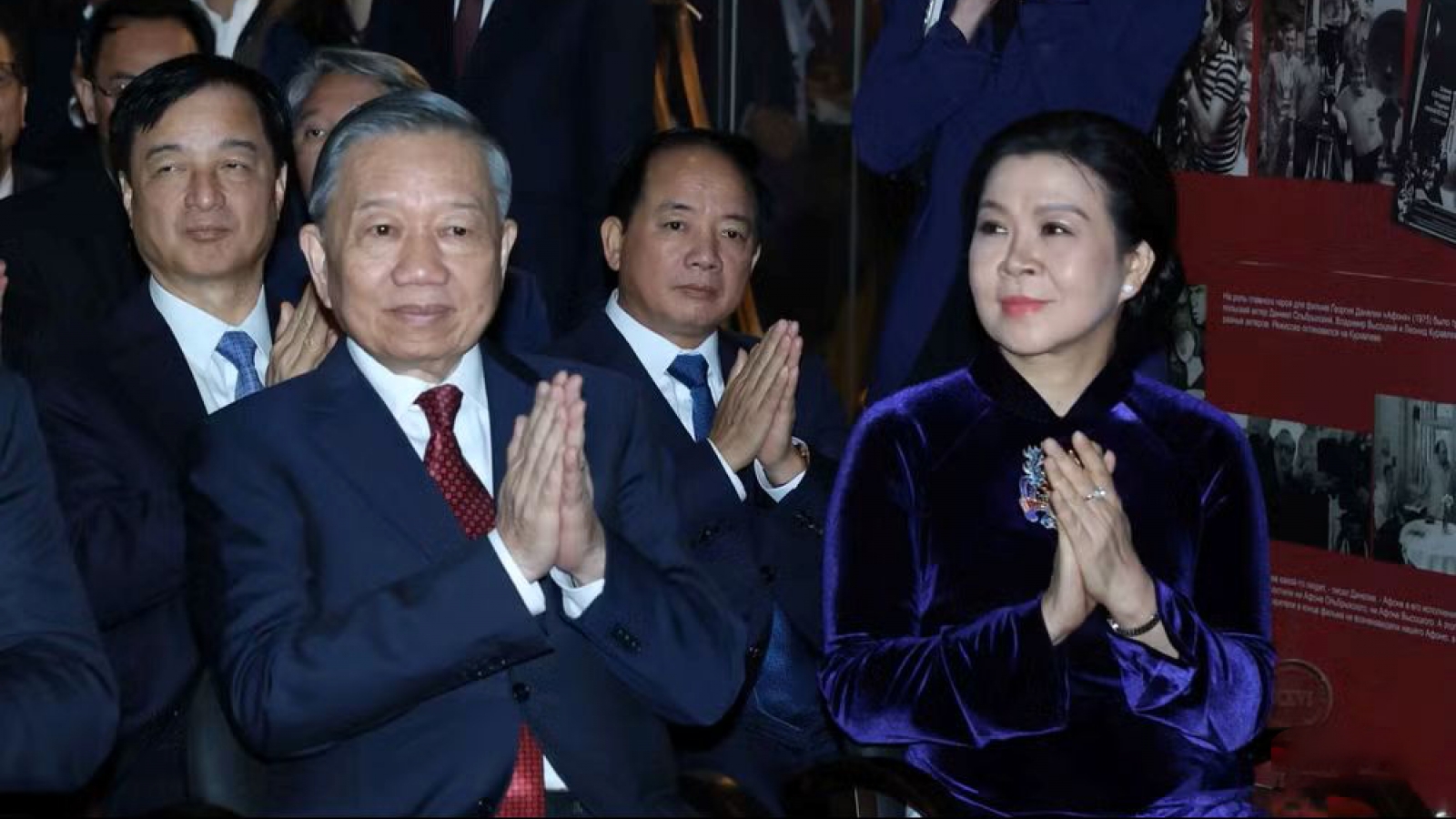
New Vietnam-Russia cultural space inaugurated at VGIK
VOV.VN - The Vietnam-Russia Heritage and Cultural Connectivity Space was inaugurated in Moscow on September 8 to preserve the legacy of cultural, educational and artistic cooperation between the two countries.