Vietnam, Russia forge structural breakthrough in 2026 economic cooperation

VOV.VN - The partnership between Vietnam and Russia is entering a deep structural phase, according to a recent in-depth analysis published on the portal russiaspivottoasia.com.
The relationship is shifting strongly from pure import-export trade toward establishing sustainable value chains, logistics infrastructure, and production linkages, solidifying Vietnam's position as Russia's largest trading partner within ASEAN.
The portal compiled a range of concrete data and bilateral economic activities from August 2026 to highlight these achievements and Vietnam's strategic role.
Bilateral trade turnover in 2025 reached US$4.77 billion, up 4% compared to 2024, maintaining a sustainable balance with Vietnam's exports to Russia standing at US$2.26 billion and imports at US$2.51 billion. Growth continued into 2026, with two-way trade in the first five months reaching US$2.16 billion, up 6.6%.
Significantly, several Vietnamese commodity groups recorded record export growth to Russia, including iron and steel (up 582.8%), coffee (up 51%), and footwear (up 43.4%). Both countries are taking on a major economic challenge to reach US$10 billion in bilateral trade, backed by the Vietnam-Eurasian Economic Union (EAEU) Free Trade Agreement.
According to russiaspivottoasia.com, a major distinction in 2026 is the shaping of a new cooperation model focused on finding partners for joint production, distribution, and technological collaboration rather than mere goods sales.
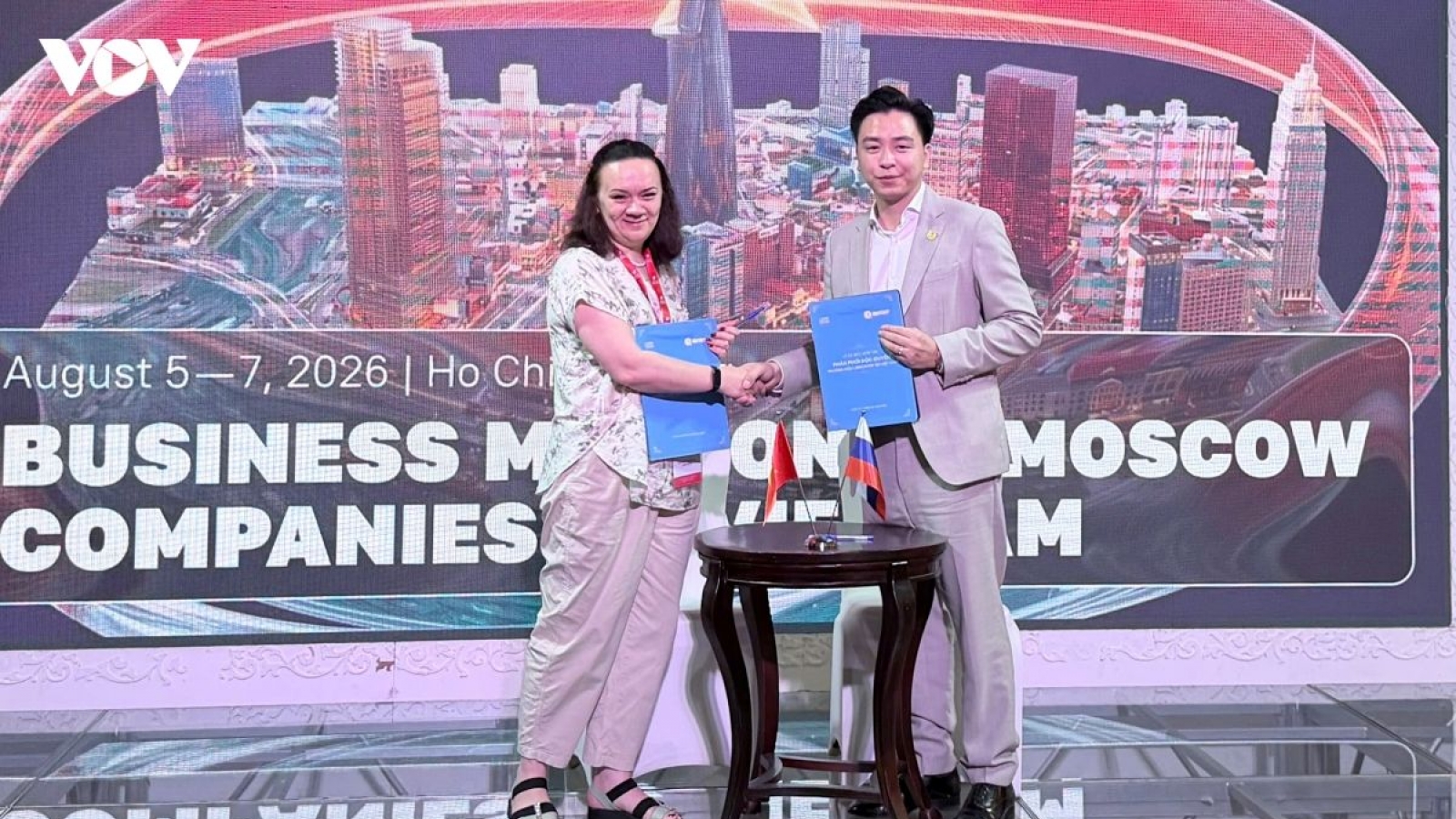
At a business cooperation conference on August 5 in Ho Chi Minh City, organised by VIETRADE in coordination with Moscow export centres, the Ho Chi Minh City Supporting Industries Association connected around 300 buyers and suppliers from both countries.
On investment, by early 2026, Russia had about 220 projects in Vietnam with total registered capital of US$996 million, while Vietnam held 18 projects in Russia with a larger total capital of roughly US$1.64 billion.
Moscow is actively inviting Vietnamese enterprises to establish direct manufacturing facilities and joint ventures in Russia.
Bilateral freight transport volume in 2025 rose by 38% to reach 688,300 tonnes. Logistics enterprises such as Delo Group and VIMC implemented agreements to develop maritime shipping routes.
A Vietnam-China-Russia international rail transport corridor is also taking shape to expand capacity. Meanwhile, aviation infrastructure yielded measurable economic results with eight operating airlines, driving passenger traffic in the first six months of 2026 up 32% to 1.07 million.
Over the seven- month period of 2026, Vietnam received 863,000 Russian tourist arrivals, a 174% increase year-on-year and more than double the 2019 level. This figure moved Russia up to third place among international source markets and made it the largest European tourist market in Vietnam, surpassing traditional markets such as France. Russian arrivals to Vietnam are projected to exceed 1 million in 2026.
The two countries continue to maintain joint oil and gas projects, as well as LNG initiatives involving Novatek and Zarubezhneft. Russia's Rosatom State Corporation is working with Vietnam's Ministry of Science and Technology to accelerate the Center for Nuclear Science and Technology project in Ninh Thuan, focused on small modular reactors and radiation safety.
In conclusion, russiaspivottoasia.com noted that practical indicators in 2026 demonstrate a shift in Vietnam-Russia relations from a "Russia sells - Vietnam buys" framework to a "building together" model. Results from this transition will be reflected at the 26th session of the Vietnam-Russia Intergovernmental Commission on Economic, Trade, Scientific and Technological Cooperation, scheduled to take place in Vietnam before the end of this year.
Vietnam and Russia to deepen comprehensive strategic partnership
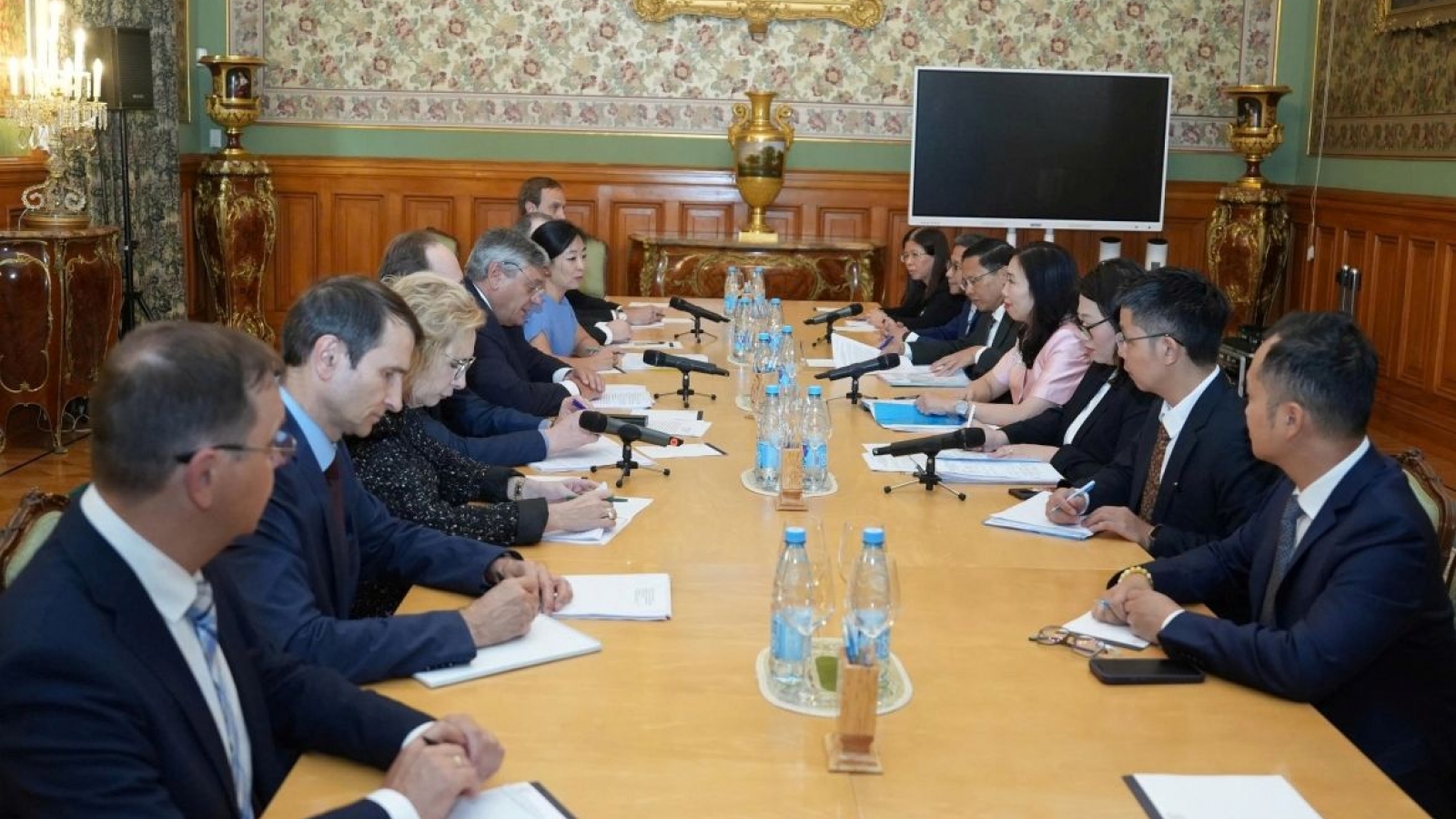
VOV.VN - Vietnam and Russia will strengthen coordination between their foreign ministries, address bottlenecks in bilateral cooperation and turn the high-level commitments into concrete results as they work to deepen their Comprehensive Strategic Partnership.
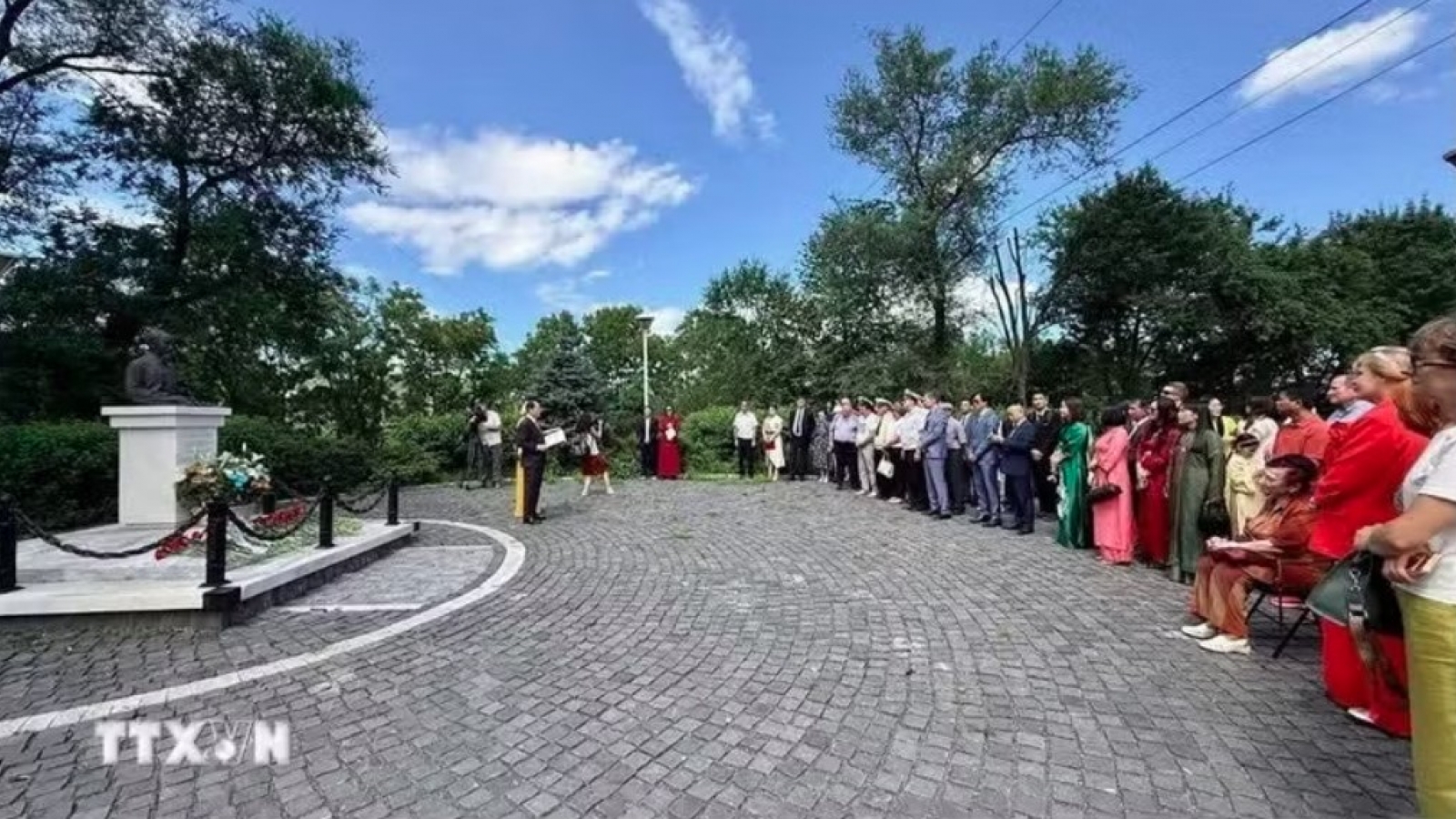
Russia’s Vladivostok bus stop renamed as “Ho Chi Minh Park”
The Consulate General of Vietnam, in coordination with the authorities of Vladivostok city and the Vietnam Friendship Association in Russia's Primorye region, on August 19 held a flower-laying ceremony to mark the official renaming of the “Sportivnaya” bus stop to “Ho Chi Minh Park” in Vladivostok city.