Trade seminar expands agricultural market scope for Vietnam, India

VOV.VN - An online seminar on promoting market opening and boosting agricultural trade between Vietnam and India was held on August 20 by the Vietnam Trade Office in India to provide market intelligence and strengthen direct business-to-business connections between both nations.
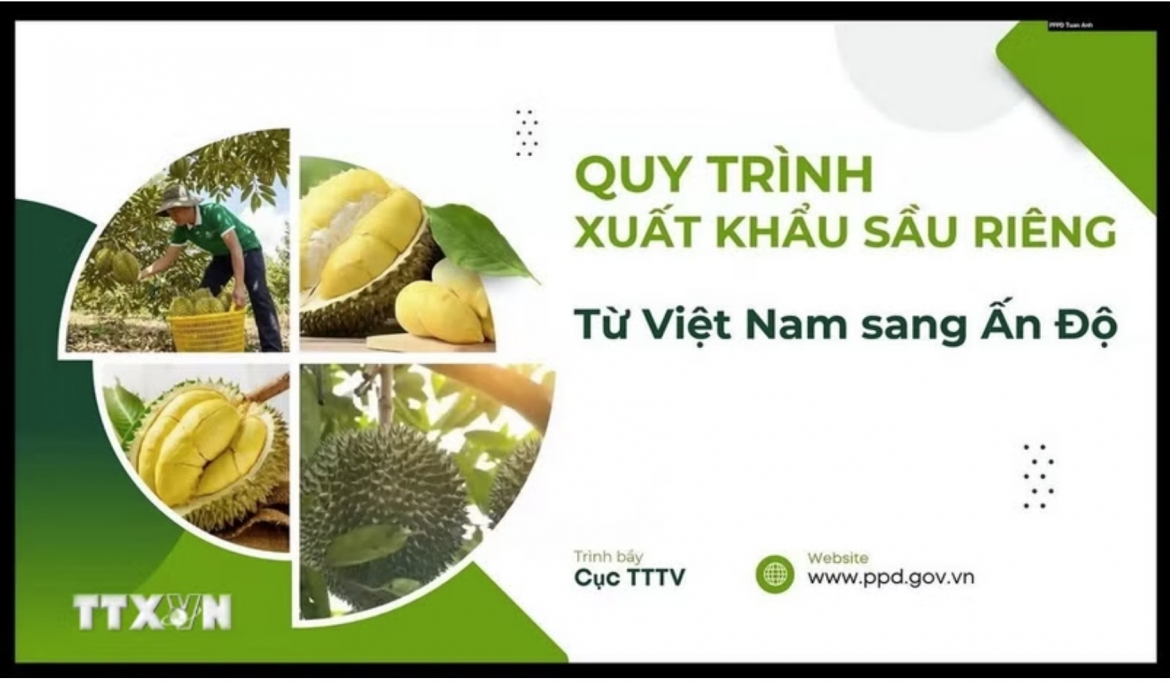
Opening the event, Trade Counselor Bui Trung Thuong emphasized that economic and trade cooperation remains a crucial pillar in Vietnam-India relations, with agricultural trade offering ample room for expansion and diversification.
According to Thuong, India opening its market to Vietnamese durian and Vietnam granting access to fresh Indian grapes represent notable milestones, unlocking new opportunities for producers and exporters in both countries. To convert market access into actual trade flows, both sides must step up coordination, information sharing, and full compliance with quality, quarantine, food safety, logistics, and traceability requirements.
A representative from the Agricultural and Processed Food Products Export Development Authority (APEDA) of India outlined India’s strengths in producing and exporting fruits such as grapes, pomegranates, mangoes, bananas, and oranges.
The official noted that India has built robust systems for traceability, pesticide residue control, packing facilities, and supply chain management to satisfy import market standards. Assessing Vietnam as a high-potential market for Indian agricultural produce, the APEDA representative shared that Indian enterprises are preparing to send their first shipments of grapes to Vietnam in the upcoming season while seeking to further expand their export portfolio.
Meanwhile, Rajaram Sangle, representing the Indian Grape Exporters Association, said that following Vietnam’s market opening for Indian grapes, exporters plan to execute trial shipments starting this December. He proposed organizing business matching events in Vietnam in October or November to connect with local importers, retailers, and supermarket chains.
During the seminar, officials from plant protection agencies of both countries presented their respective quarantine regulations and offered guidance for businesses. India’s National Plant Protection Organization (NPPO) explained that India applies a risk management system to imported goods, classifying items based on pest risk levels and applying corresponding quarantine measures.
Phytosanitary certification and import permitting procedures are conducted online through the Plant Quarantine Management System (PQMS), which is integrated with customs and supported by 73 plant quarantine stations nationwide.
The NPPO representative stressed that Vietnamese enterprises must thoroughly study quarantine requirements for each product line, ensuring shipments comply with technical conditions and hold phytosanitary certificates issued by competent Vietnamese agencies. Full adherence to quarantine rules, border inspections, and technical requirements in India serves as a critical condition for customs clearance, minimizing the risk of rejections or added costs.
Conversely, Vietnamese business representatives noted that India’s market opening for Vietnamese durian creates major opportunities for the sector. However, enterprises pointed to several hurdles, including import procedures, cold-chain logistics, transit times, and introducing durian to Indian consumers. Businesses advocated stepping up trade matching activities and organizing promotional programs to incrementally build market presence.
Regarding logistics, a representative from HG Invest emphasized the role of air freight for high-value, perishable, and time-sensitive agricultural products like grapes and durian. Combining air connectivity with cold storage, consolidation, and distribution systems can help shorten transport times, preserve product quality, and enhance trade efficiency, the representative said.
Participants also agreed that Vietnam-India agricultural cooperation should extend beyond fresh produce trade into food processing, agricultural technology, crop varieties, logistics, and other segments across the value chain. A representative from the India-Vietnam Chamber of Commerce suggested that both governments increase information sharing and establish dedicated focal points to help enterprises understand and comply with import market regulations.
Closing the seminar, Trade Counselor Bui Trung Thuong affirmed that the Vietnam Trade Office in India will continue to support market information sharing, business matching, trade promotion, and coordination with relevant agencies and associations to push up two-way agricultural trade.
As Vietnam and India target raising bilateral trade turnover to US$25 billion by 2030, expanding and diversifying agricultural trade offers substantial potential. Step-by-step market openings for each other’s key products, alongside strengthened business connections, logistics, and supply chains, are expected to boost bilateral agricultural trade and realize the established trade target.

India's largest retail chain to join Vietnam International Sourcing 2026
Reliance Retail, India's largest retail chain, will participate in the Vietnam International Sourcing 2026 (VIS 2026) exhibition, scheduled to take place in Ho Chi Minh City from September 3–5, to seek long-term and reliable suppliers for its vast customer base across India.
India officially opens market to Vietnamese fresh durian
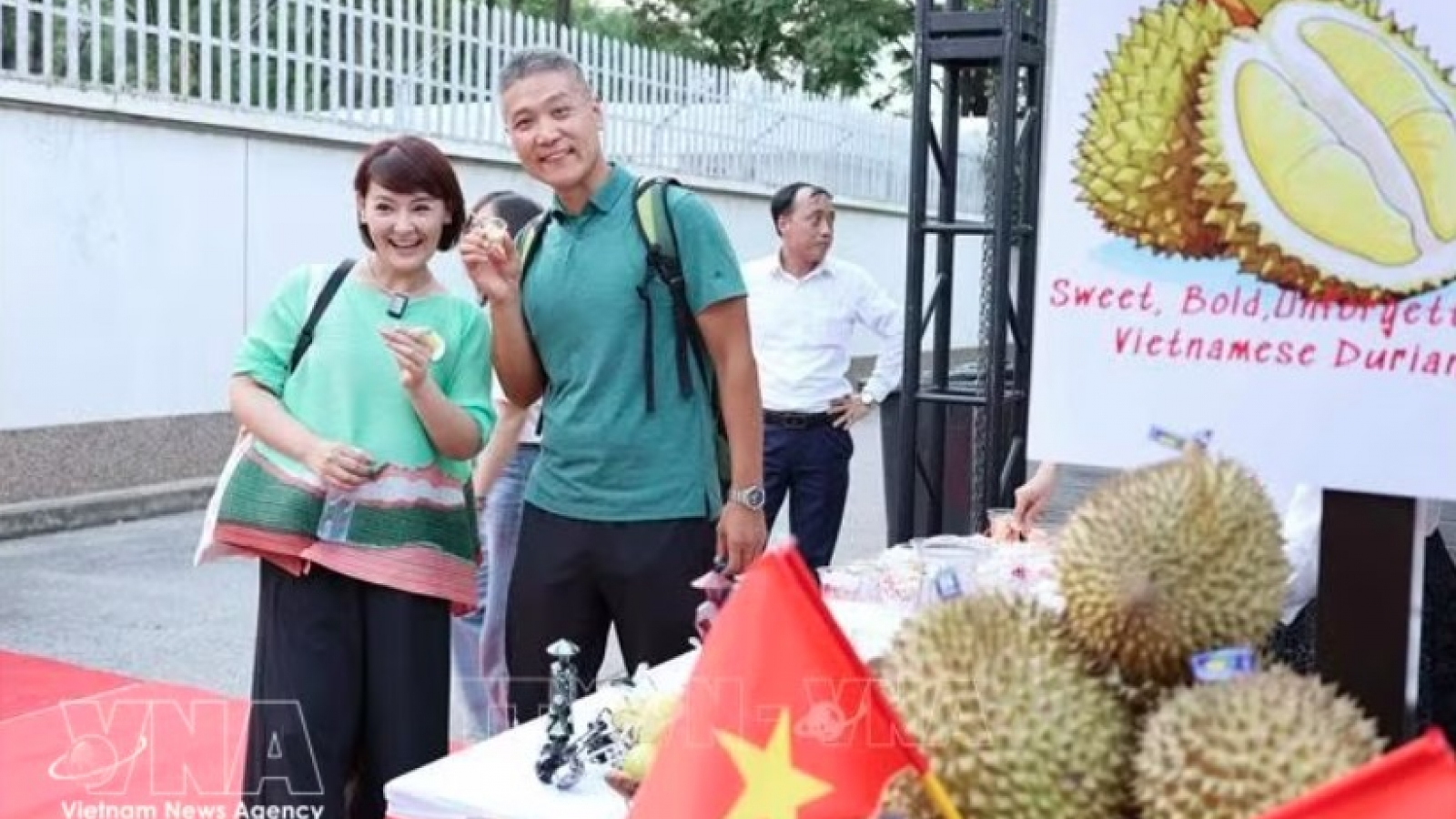
India has officially opened its market to fresh Vietnamese durian, allowing imports of the fruit for consumption, the Department of Crop Production and Plant Protection under the Vietnamese Ministry of Agriculture and Rural Development said.