Russian investors explore fresh opportunities in Vietnam's real estate market

VOV.VN - Russian investors are showing growing interest in Vietnam’s real estate market, with emerging demand for commercial projects such as office spaces and logistics centers, according to an analytical report by Russian financial, trade, and economic media outlet RBC.
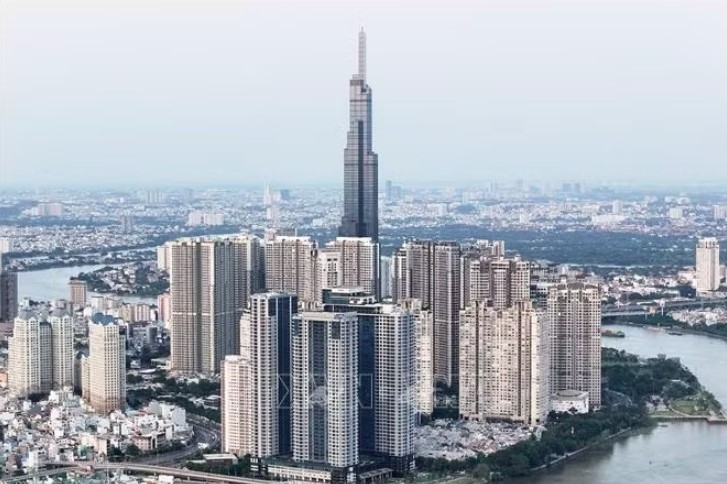
In 2026, the volume of inquiries from Russian investors regarding project deployment feasibility in Vietnam has risen, RBC reported. Experts attribute this trend to a strategy of investment diversification as Russian capital explores alternative markets in Southeast Asia alongside traditional Middle East destinations.
Vietnam is considered to hold solid potential because its real estate sector, particularly commercial property, retains room for growth compared to several regional peers. Bilateral ties between Vietnam and Russia, coupled with the legal framework enabling foreign-invested enterprises, are also seen as as favorable factors for Russian investors.
Nevertheless, experts note that carrying out real estate projects in Vietnam entails specific legal and financial requirements, including compliance with equity capitalization rules. Foreign investors must also deal with cultural and linguistic differences, capital transfer regulations, and operational reliance on local partners.
In the residential sector, international brokerage firm Tranio reported that inquiries from Russian clients regarding property purchases in Vietnam dropped by 39% during the eight-month period of this year compared to the same period in 2025. However, this contraction is regarded as a market correction following a surge in demand the previous year.
Anna Larina, Director of Foreign Property and Resorts at NF Group, observed that a growing number of Russians are expressing interest in acquiring real estate in Vietnam.
According to Tranio, Vietnam possesses distinct advantages over regional resort markets, including relatively low entry barriers, rebounding tourism and aviation sectors, and expanding coastal hubs such as Danang and Khanh Hoa. The firm also highlighted the growing Russian community in Vietnam, featuring long-term residents and remote workers who generate organic demand for residential and rental apartments.
Experts divide Vietnam's real estate market into two primary segments: major urban centers and resort destinations. In metropolitan areas, investors typically target early-stage projects with expectations of capital appreciation upon completion. In resort markets, growing tourist arrivals are expected to underpin property demand, though developers cautioned that not all projects offer low entry prices or high rental yields.
A critical regulatory factor for foreign investors is property ownership laws, Tranio noted. Foreign nationals are permitted to purchase housing units only within commercial projects approved for foreign buyers, and property ownership does not automatically confer long-term residency rights.
Investor residency is instead linked to capital contributions in Vietnamese business entities, with durations and thresholds stipulated by law.
Investor residency is instead tied to capital contributions in Vietnamese business entities, with durations and thresholds stipulated by law. For instance, a three-year residence permit is granted for investments of at least VND 3 billion (approximately US$120,000), while a 10-year permit requires a minimum investment of VND 100 billion (approximately US$4 million).

New directions for Vietnam-Russia cooperation in science, education
Politburo member and Secretary of the Communist Party of Vietnam (CPV) Central Committee Nguyen Duy Ngoc, who is also Chairman of the Party Central Committee’s Commission for Organisation, held a working session with Russian Deputy Prime Minister Dmitry Chernyshenko on September 9.