The Xinh Mun: Life and traditions midway up the mountains

VOV.VN - Living mainly in the northwestern mountains and border areas, the Xinh Mun have developed distinctive farming practices, housing styles and customs shaped by their natural surroundings, while preserving many traditional cultural values amid significant changes in their livelihoods.
The Xinh Mun are one of the ethnic communities that have long inhabited northwestern Vietnam. According to the 2019 survey, Vietnam had 29,503 Xinh Mun people, including 27,031 in Son La Province, accounting for more than 91% of the total Xinh Mun population nationwide. They live mainly in areas along the Vietnam-Laos border, particularly in Son La, with another group residing in Dien Bien Province.
The Xinh Mun comprise two subgroups, Xinh Mun Da and Xinh Mun Nghet. Their language belongs to the Mon-Khmer group of the Austroasiatic language family. However, long-term interaction and co-residence with other ethnic groups, particularly the Thai, has made Thai widely used for communication in many areas. According to Son La Province's cultural data portal, the Xinh Mun have no indigenous writing system. In some areas, their mother tongue is showing signs of decline, while in villages along the border, Xinh Mun is still widely spoken.
Living with the terrain, farming with land and water
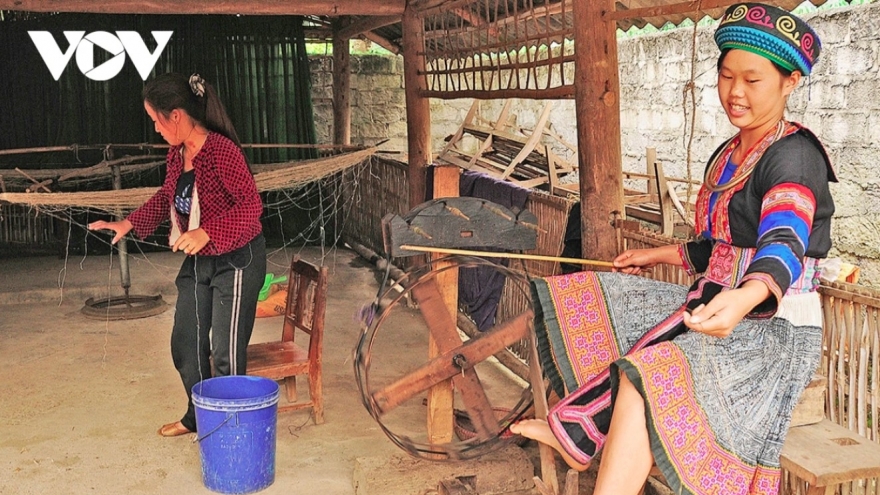
In each place they settle, the Xinh Mun adapt to the terrain and water sources to build their livelihoods. Traditionally, their way of life has been closely associated with upland cultivation, particularly the growing of glutinous rice and maize. According to materials on the Xinh Mun, they have historically used various farming methods, from making holes to sow seeds to using hoes and ploughs. Later, where conditions allowed, they gradually developed wet-rice cultivation and small-scale irrigation. Basketry was also once a relatively well-developed craft in the community.
Vi Van Nen, a Xinh Mun man in Yen Son Commune, Son La Province, says that to create terraced fields, local people have to plan water flows and build systems to channel water into the fields. In places without irrigation canals, bamboo is used to make channels to carry water to farming areas.
Building on these traditional practices, Xinh Mun livelihoods are continuing to change through crop diversification. In Yen Son Commune, some upland rice fields have been converted to fruit orchards, including plum trees, while some areas are being intercropped with coffee. Areas with favourable water supplies have been converted to wet-rice cultivation, allowing farmers to grow two or three crops a year.
Changes in livelihoods can also be seen in individual stories from Xinh Mun villages. In Na Da Village, Yen Son Commune, some households that once relied mainly on maize and cassava have switched to growing plums and coffee combined with livestock farming. One Xinh Mun family there planted 100 plum trees before investing in a further 2,000 coffee trees, gradually diversifying its sources of income.
These changes show that Xinh Mun livelihoods today remain closely linked to land, water and the mountainous terrain, but the ways in which natural resources are used have become more flexible.
Homes that tell the story of a community
If fields and upland farms show how the Xinh Mun adapt to nature, their homes preserve some of the clearest traces of their social life and customs.
Traditionally, the Xinh Mun live in stilt houses with curved gable roofs, shaped like a tortoise shell. This architecture shares some similarities with Thai houses, partly because the two communities have lived alongside each other for a long time. However, Xinh Mun houses still retain features associated with family hierarchy and customary practices.
Vi Van Nen shares, houses in the past often had five to seven compartments, but such large houses are now less common because of construction costs. The interior is divided according to position: the central compartment is for the household head, while the side compartments are for the children. On the roof is a “khảu cút”, made of two crossed bamboo poles, which is regarded as a sign of the status of the household head. People who have only recently moved out to establish their own household do not install a khảu cút; it is added when they reach adulthood and start a family.
The stairways are also divided according to their use. The front staircase is for men and guests, while the rear staircase is for women.
These seemingly small details create a distinct “order” beneath the roof, where the living space also reflects family and community relationships.
During a house-warming ceremony, the head of the household must invite his maternal uncle or father-in-law to light the first fire in the kitchen. On the first night, the fire must not be allowed to go out, reflecting the wish that good fortune will remain with the household.
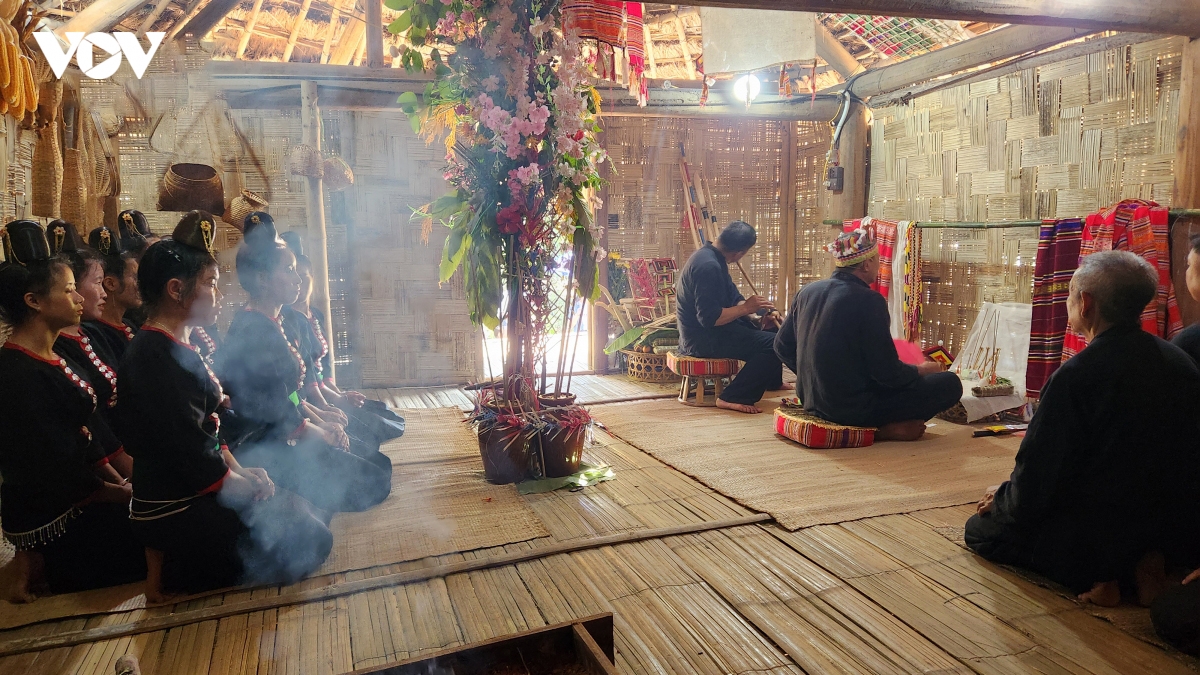
When a family performs a ceremony to worship its ancestors, a trellis-like screen made from green branches is woven into place. During the ritual period known as “cấm nhà” (“house prohibition”), outsiders are not allowed to enter and family members use only the Xinh Mun language. For families that still maintain this custom, it is not simply a ritual rule but also a way of affirming their distinct cultural space.
Preserving identity amid change
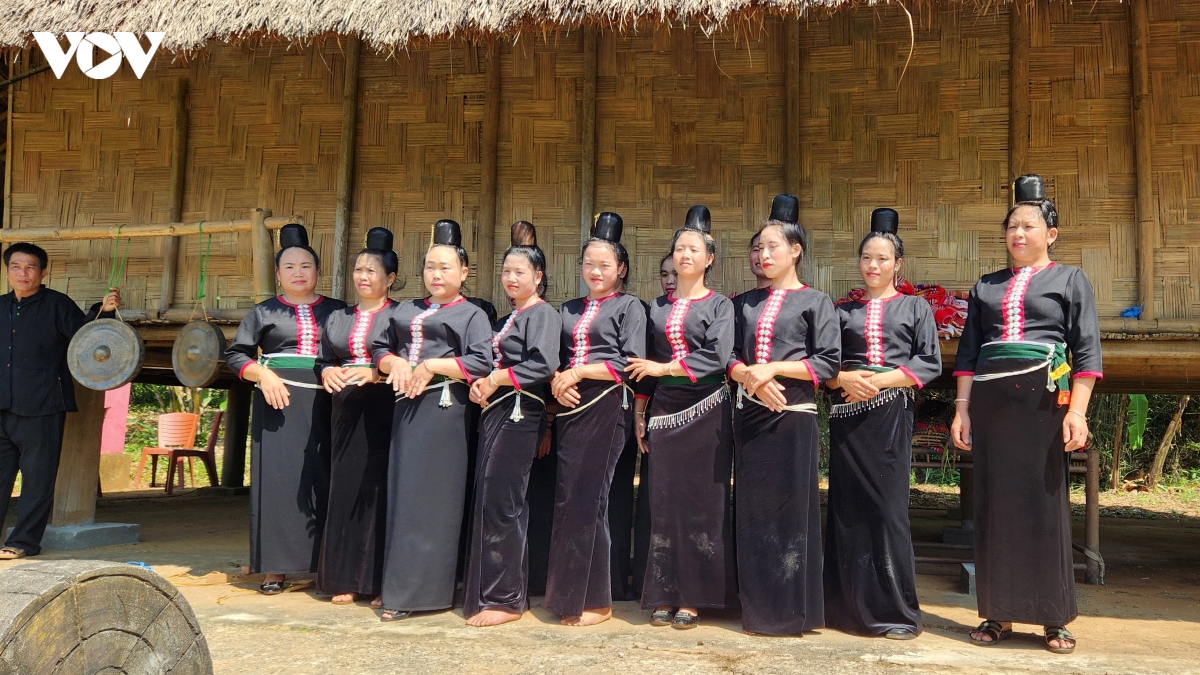
Xinh Mun culture now exists amid strong interaction with other ethnic groups living in the northwest. Son La Newspaper reports that many Xinh Mun rituals, including new-rice, crop-praying and naming ceremonies, are still maintained, although in some places the ritual prayers have been influenced by Thai culture. Folk performance traditions also share certain similarities with those of the Thai.
Traditional Xinh Mun women's clothing also has many similarities with Thai women's attire, while retaining distinctive features. The blouse is usually a colourful fitted ao com, paired with a long black skirt reaching the ankles and decorated with patterns on the body and hem. A brightly coloured waistband provides an accent around the waist.
In their spiritual life, the Xinh Mun practise ancestor worship and hold rituals related to crops, health and community life. The Mang Ma ritual (health-praying ceremony) of the Xinh Mun Da has been included by the Ministry of Culture, Sports and Tourism in the National Intangible Cultural Heritage List. In Son La, the ritual is practised as a distinctive spiritual and cultural tradition of the Xinh Mun community.
Since 2015, Son La Province has conducted inventories and prepared scientific dossiers on the cultural heritage of the Xinh Mun. It has also organised the restoration of some rituals, provided instruction in folk songs and dances, and carried out preservation activities under programmes on ethnic minority culture.
These efforts are particularly significant as some Xinh Mun cultural values face the risk of fading away. Cultural authorities in Son La have noted that elderly people, who preserve much of the community's traditional knowledge, are growing older, while the transmission of that knowledge to younger generations is not always maintained regularly.
Even so, Xinh Mun life is not standing still. From terraced fields that depend on carefully managed water flows and stilt houses with curved, tortoise-shell-shaped roofs to language, clothing and traditional rituals, the community continues to preserve markers of its identity as livelihoods change and cultural interaction grows.
Midway up the mountains of the northwest, the way the Xinh Mun cultivate their fields, build their homes and practise their customs thus tells not only the story of a community adapting to nature, but also of how a cultural identity is passed down from one generation to the next.
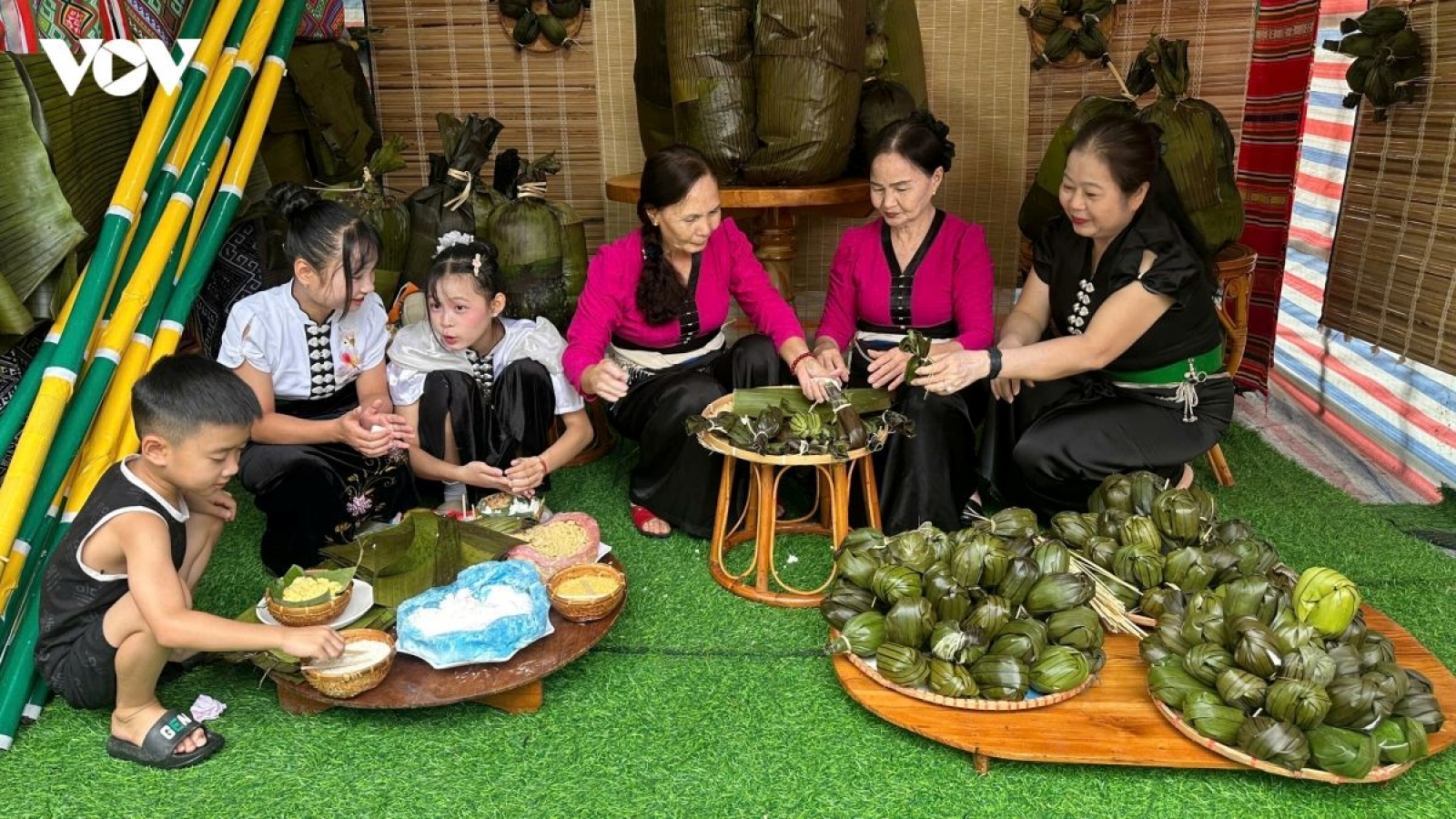
Xip Xi - the White Thai festival of love and gratitude
VOV.VN - Held after the harvest season, Xip Xi is a traditional festival of the White Thai community in Phu Yen commune, Son La province, that has been passed down through generations as a celebration of children, gratitude for the buffalo and hopes for peace and prosperity.