Vietnam sees expanded tech cooperation with Singapore amid digital economy boom

VOV.VN - As Vietnam experiences rapid growth in its digital economy and artificial intelligence (AI) adoption, Singapore’s model of institutional governance, organizational restructuring, and tech ecosystem development offers a practical reference, opening up clear avenues for enhanced bilateral technology cooperation.
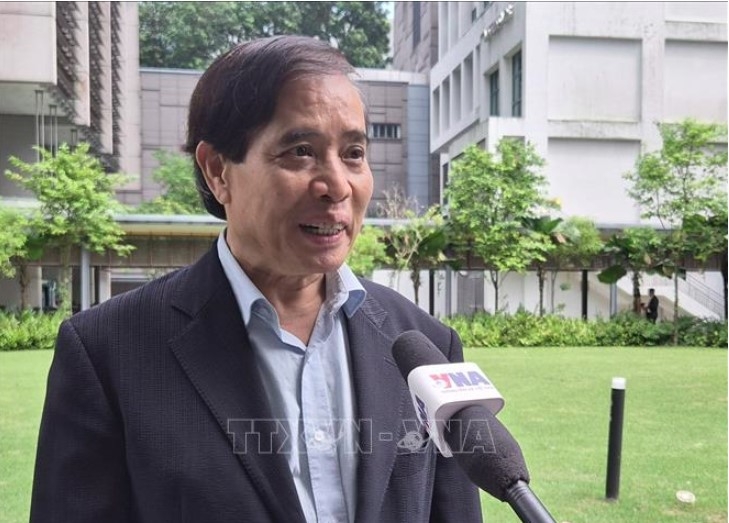
Amid rapid developments in AI and digital technology, Singapore’s experience demonstrates that adapting to new technologies depends not only on infrastructure spending or policy issuance, but also requires synchronized adjustments across institutions, public apparatus, human resources, and public-private partnerships. These insights provide valuable lessons for Vietnam at a time when its domestic digital economy and AI uptake are accelerating.
Speaking with the media in Singapore, Professor Vu Minh Khuong from the National University of Singapore (NUS) noted that a key highlight in Singapore’s tech adaptation is its swift responsiveness in both legal frameworks and state organization. A prime example is the renaming of the Ministry of Communications and Information to the Ministry of Digital Development and Information, clearly signaling the expanding role of digital transformation in national development strategy.
According to Prof. Vu Minh Khuong, Singapore’s executive bodies have also been reinforced with resources to translate digital policies into concrete programs. The government has launched numerous initiatives supporting tens of thousands of enterprises to integrate AI into daily operations, while promoting technology training for civil servants. Another notable feature is that Singapore does not view technology through benefits alone, but consistently accounts for downside risks. Issues such as AI misuse, fake news, personal data breaches, and high-tech fraud are tackled through a combination of legal safeguards and public awareness campaigns.
Prof. Vu Minh Khuong emphasized that Singapore places particular importance on equipping citizens to navigate risks in the digital space. Rather than relying exclusively on administrative measures, the country focuses on boosting digital literacy, enabling the public to guard against misinformation, online scams, and emerging tech-driven threats. Alongside this, the island city state promotes the application of new technologies across daily life and business, while taking care that vulnerable groups with limited tech access, particularly the elderly, are not left behind. This approach helps society better capitalize on technological gains while consolidating public trust in the digital transformation process.
To lay the foundation for mastering emerging technologies, Singapore focuses simultaneously on policy, legislation, infrastructure, and workforce development, with special emphasis on cultivating AI engineers and specialists. Notably, the country does not work in isolation, but actively links national initiatives with the ecosystems of multinational technology corporations.
Khuong assessed that Singapore’s methodology centers on identifying major national challenges, then mobilizing capable enterprises to participate right from the solution design stage. In areas such as AI, data centers, and digital infrastructure, the Government engages directly with businesses regarding investment needs and hurdles in law, finance, land, and energy, thereby clearing the way for large-scale projects.
This model enables Singapore to draw on the technical capabilities, capital, and long-term vision of global tech leaders to solve strategic problems, while generating jobs and boosting national competitiveness. A key strength lies in building and mobilizing a full innovation ecosystem, rather than relying strictly on legal regulations. New policies and rules undergo extensive consultation with affected stakeholders prior to implementation.
Meanwhile, digital economy metrics show that Vietnam has a strong foundation to accelerate technology adoption. Thao Dao, Head of Country Strategy and Operations for Vietnam at Google, stated that research over the past decade consistently puts Vietnam among the fastest-growing digital markets in Southeast Asia.
Vietnam’s digital economy currently stands at approximately US$39 billion in Gross Merchandise Value (GMV), with e-commerce contributing around US$25 billion. A prominent trend is video commerce, which is growing at roughly 60% annually. About 650,000 sellers and stores in the country now rely on digital platforms not merely as a secondary channel, but as their primary route to customers.
According to the Google representative, Vietnam’s interest in and adoption of AI ranks among the highest in the region. This indicates that AI is rapidly moving beyond specialized applications to become a everyday tool in business, education, and broader social life.
Sharing a similar assessment, Shanti Alexander, Regional Policy Campaigns and Programs Director for Asia-Pacific at Meta, said that Vietnam boasts huge potential in digital tech and AI adoption. Vietnamese enterprises are currently regional leaders in conversational commerce and business messaging platforms to connect with customers at home and abroad.
According to a Meta study, about 9 out of 10 surveyed individuals and businesses in Vietnam see AI as valuable for raising productivity, communication, and business operations. The Meta representative also praised the entrepreneurial drive, willingness to test new technologies, and forward-looking mindset of the Vietnamese business community.
According to experts, Singapore’s experience and the rapid expansion of Vietnam’s digital market show that both countries have plenty of new opportunities to step up cooperation in AI, the digital economy, workforce training, and innovation ecosystem building.
In particular, Singapore’s experience in aligning policy with practical business needs, mobilizing tech conglomerates to solve national challenges, and ensuring vulnerable groups are not left behind offers valuable insights for Vietnam.
With its large market size, young workforce, high tech absorption rate, and an increasingly dynamic business ecosystem, Vietnam is well positioned to transition from a tech-consuming market into a centre for developing, applying, and creating value from technology.
Combining these domestic advantages with Singapore’s governance expertise, institutional capacity, and global tech network can unlock substantial space for bilateral cooperation in this new phase of scientific, technological, and AI development.

Vietnam-Singapore economic ties enter new phase of cooperation
Politburo member and Standing Member of the Secretariat of the Communist Party of Vietnam (CPV) Central Committee Tran Cam Tu’s official visit to Singapore and his co-chairing of the first Vietnam-Singapore Strategic Dialogue on August 24-25 are expected to inject fresh momentum into investment areas of cooperation.
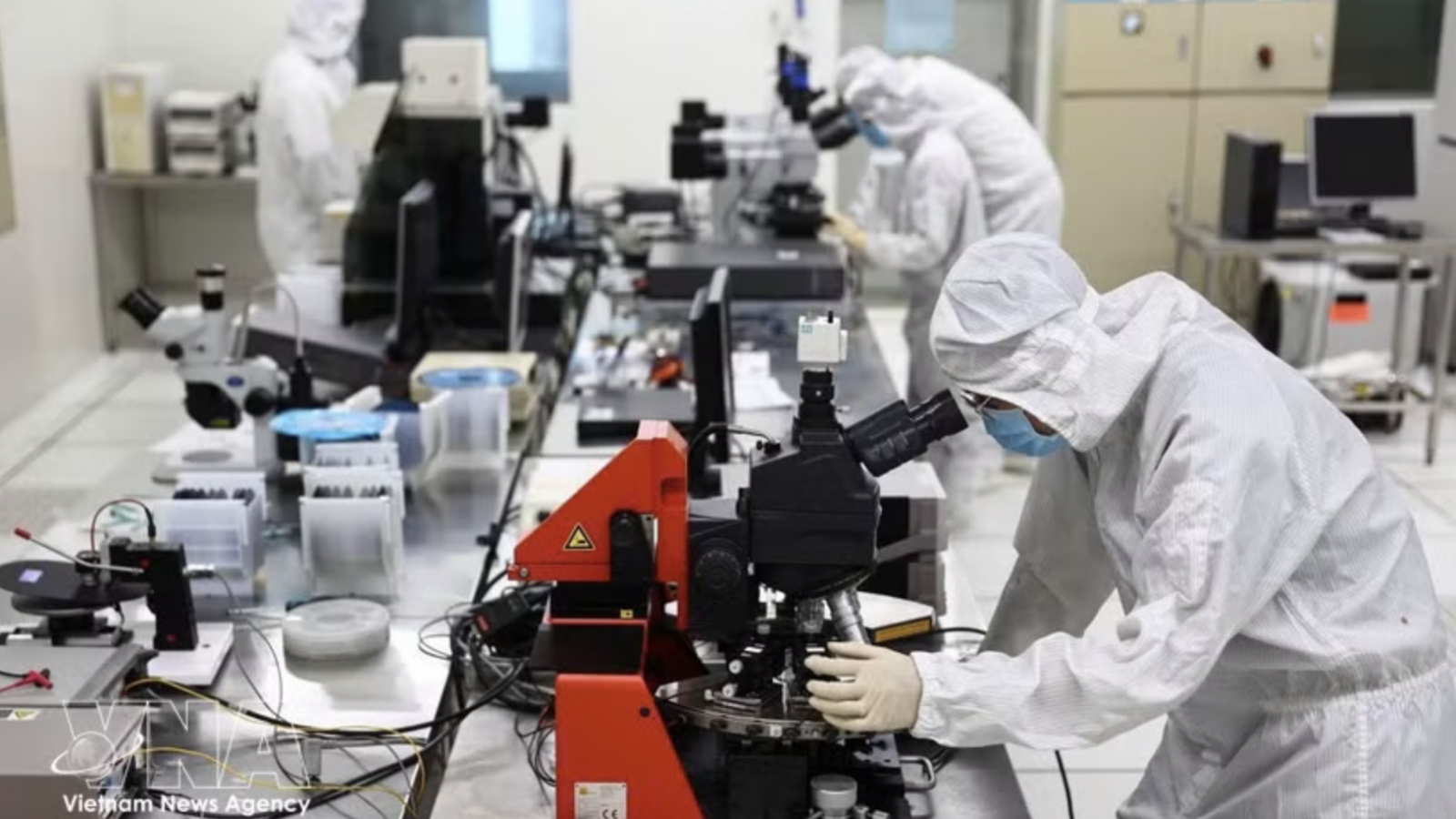
Singapore’s tech adaptation offers lessons for Vietnam: Insiders
Singapore’s experience in science and technology development offers valuable lessons for Vietnam, particularly in building an innovation ecosystem, strengthening governance capacity and proactively adapting to emerging technology waves such as artificial intelligence (AI) and semiconductors, said insiders.