Expert: AI opens opportunities for Vietnam to narrow development gap

VOV.VN - Dr. Duong Cam Vinh believes that attracting intellectual talent, especially in AI, requires practical problems to solve, flexible participation mechanisms, and major projects capable of gathering top minds.
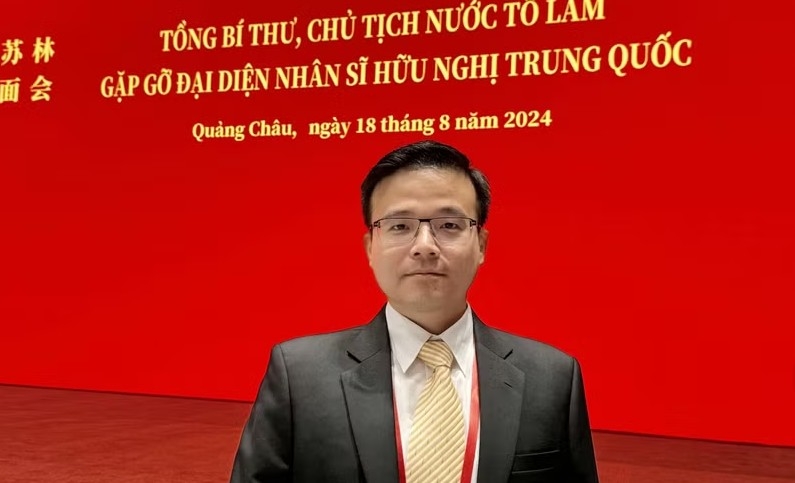
(Photo: VNA)
Speaking to the press in China, Dr. Duong Cam Vinh, holding a Ph.D. in Mechanical Engineering from Tsinghua University and serving as General Manager of Dongguan Hanrong Intelligent Technology Co., Ltd. (China), shared his insights following the Politburo's Resolution No. 23 on overseas Vietnamese affairs.
He noted that the resolution, alongside statements by General Secretary and President To Lam regarding overseas intellectual talent attraction, reaffirms that the Party and State regard the overseas Vietnamese community as a vital national resource.
Vinh emphasized that the core message that expatriates can contribute regardless of geography, broadens the traditional perspective. Contributions can take the form of knowledge, expertise, or serving as a bridge connecting domestic and international institutions.
Addressing AI development, Vinh stressed that AI competition ultimately boils down to talent competition. By mobilizing Vietnamese experts working at global technology centers, Vietnam can accelerate its development and catch up globally.
He outlined three key conditions to attract AI talent: first, practical challenges rather than slogans, meaning Vietnam should publish technological demand lists from enterprises and research institutes to provide concrete problems as a testing ground for AI talent; second, flexible participation mechanisms, ensuring expatriates are not required to relocate permanently to contribute, enabling overseas experts to handle projects and collaborate remotely while mentoring domestic engineers; and third, national-level major projects, prioritizing the development of an indigenous Vietnamese-language large language model (LLM) to serve as the "brain" of the AI era, reduce foreign dependency, and safeguard national historical and cultural integrity against misinformation by uniting domestic and overseas experts across machine learning, linguistics, and history.
Looking long-term, Vinh underscored the importance of foundational education, noting that schools and families must guide children to use AI tools for critical thinking and self-study rather than dependency, and concluded by affirming his readiness to engage in remote technical exchanges, engineer training, and bilateral business connectivity, particularly in machine vision and AI.
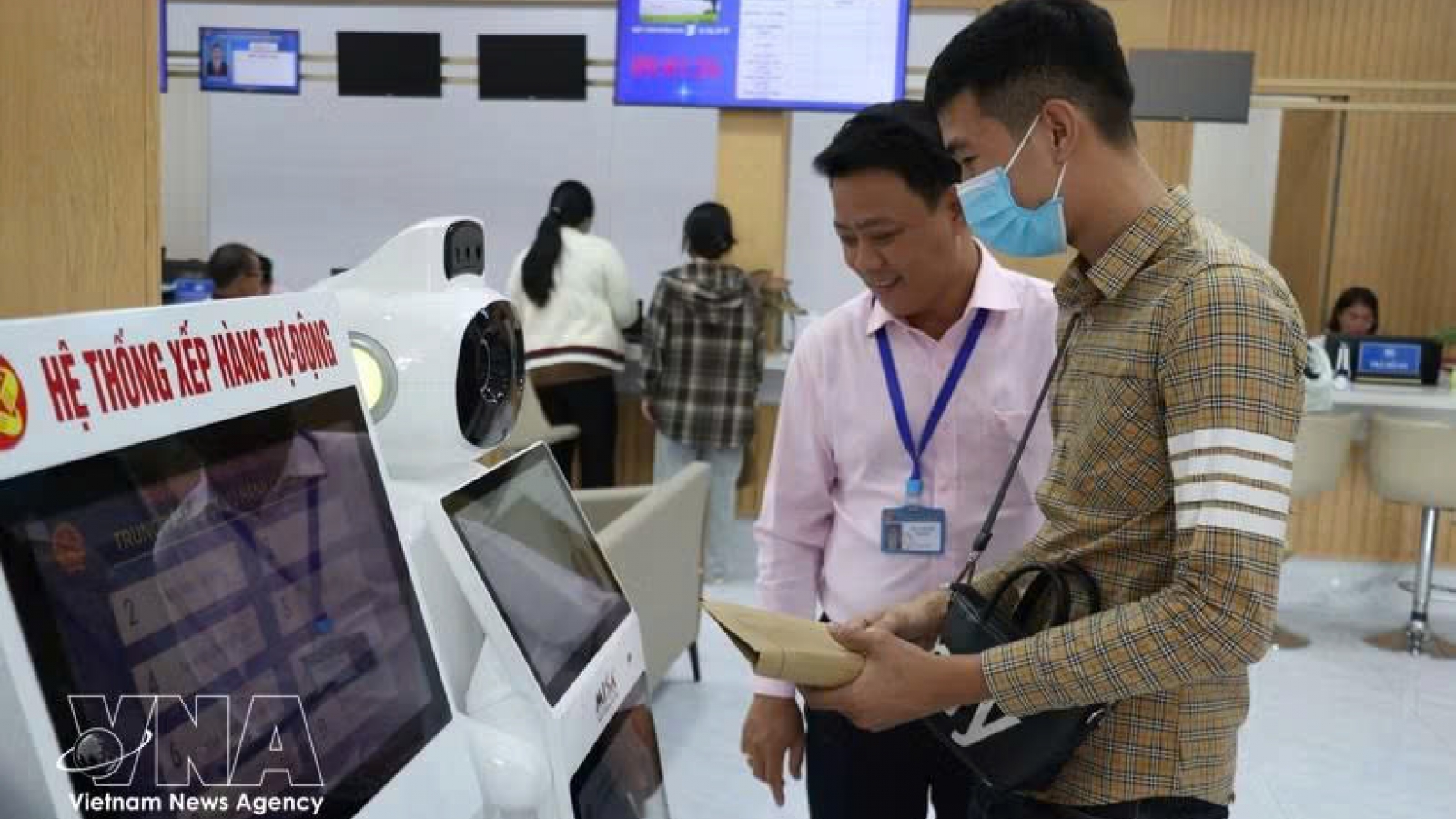
Up to US$192,000 available for each AI technology innovation task
The National Technology Innovation Fund under the Ministry of Science and Technology plans to select 15 AI-based technology innovation tasks in 2026, with state funding of up to VND3 billion (US$192,000) per task, heard a workshop in Ho Chi Minh City on September 30.