Vietnam calls for stronger cooperation against terrorism and violent extremism

VOV.VN - Vietnam has called for stronger international cooperation to combat terrorism and violent extremism, warning that terrorist and extremist groups are increasingly exploiting cyberspace, emerging technologies, and social, ethnic and religious divisions to expand their activities.
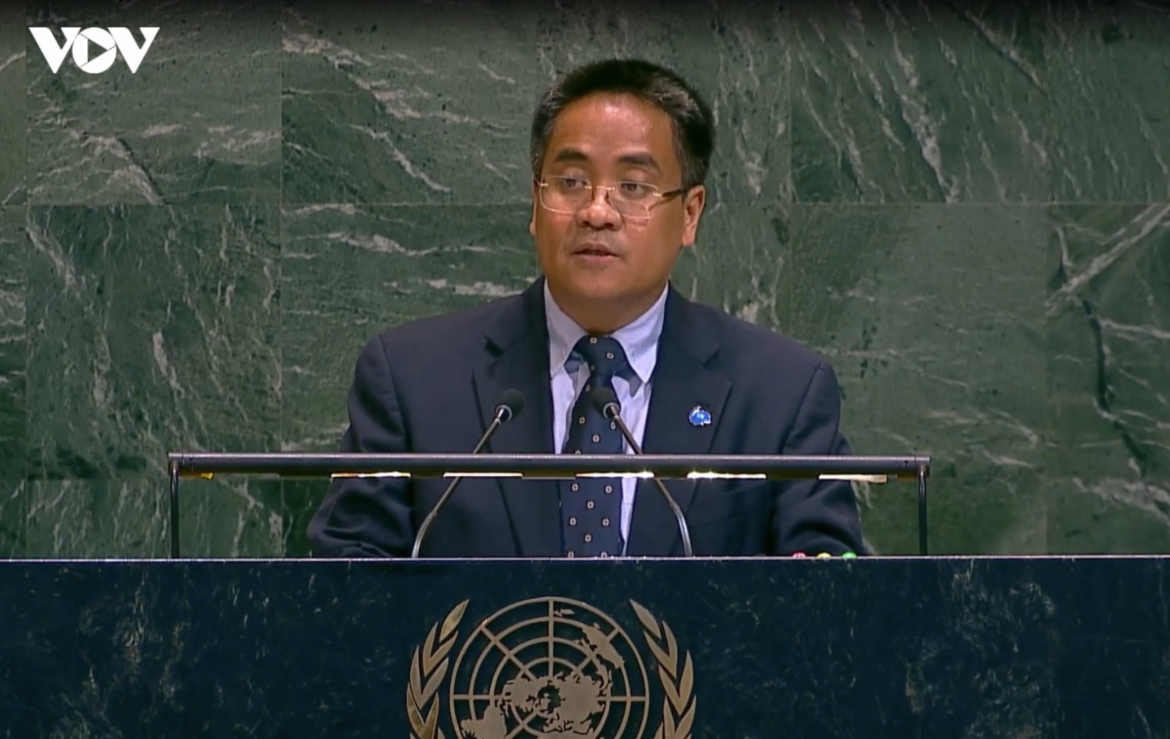
Speaking at the ninth review of the implementation of the United Nations Global Counter-Terrorism Strategy at the United Nations headquarters in New York on July 1, Minister Counsellor Nguyen Hai Luu, Deputy Permanent Representative of Vietnam to the United Nations welcomed efforts by the United Nations and member states to combat terrorism.
He said terrorism continues to pose a serious threat to global peace, stability and development.
Luu also voiced concern over the growing misuse of cyberspace, emerging technologies, and social, ethnic and religious issues by terrorist and extremist groups to radicalize individuals, recruit members, organize forces and incite cross-border violence, posing growing challenges for many countries.
Reaffirming Vietnam’s consistent stance on condemning terrorism in all forms, manifestations and motives, the Vietnamese diplomat called on United Nations member states to strengthen cooperation in investigating, prosecuting and bringing to justice those involved in organizing, carrying out or financing terrorist acts, including individuals and groups linked to recent terrorism-related cases in Vietnam.
Vietnam also laid stress on the need for comprehensive measures that combine stronger security and law enforcement with efforts to address the root causes of terrorism, including political, economic and social inequality, prolonged conflicts, discrimination and marginalization.
The country also highlighted the importance of international cooperation, information-sharing, exchanges of experience, technical assistance and capacity-building, particularly for developing countries.
Vietnam said all counter-terrorism measures must comply with the United Nations Charter and international law, while opposing double standards in counter-terrorism efforts.
Earlier, at the Fourth High-Level Conference of Heads of Counter-Terrorism Agencies, a representative of Vietnam’s Ministry of Public Security shared concerns over external terrorist threats to the country’s national security.
These include the risks of terrorist suspects infiltrating, hiding in or transiting through Vietnam, as well as the misuse of cyberspace to spread extremist ideology, share instructions for making weapons and explosives, and disseminate attack methods.
The representative also warned against attempts to exploit socio-economic, ethnic and religious issues to incite extremism, violence and terrorist acts.
On the sidelines of the meeting, the Vietnamese delegation held discussions with key partners and the United Nations Office of Counter-Terrorism (UNOCT) on initiatives to bolster cooperation, share experience and build capacity, particularly in responding to emerging threats.
Speaking at the ninth review of the implementation of the United Nations Global Counter-Terrorism Strategy at the United Nations headquarters in New York on July 1, Minister Counsellor Nguyen Hai Luu, Deputy Permanent Representative of Vietnam to the United Nations welcomed efforts by the United Nations and member states to combat terrorism.
He said terrorism continues to pose a serious threat to global peace, stability and development.
Luu also voiced concern over the growing misuse of cyberspace, emerging technologies, and social, ethnic and religious issues by terrorist and extremist groups to radicalize individuals, recruit members, organize forces and incite cross-border violence, posing growing challenges for many countries.
Reaffirming Vietnam’s consistent stance on condemning terrorism in all forms, manifestations and motives, the Vietnamese diplomat called on United Nations member states to strengthen cooperation in investigating, prosecuting and bringing to justice those involved in organizing, carrying out or financing terrorist acts, including individuals and groups linked to recent terrorism-related cases in Vietnam.
Vietnam also laid stress on the need for comprehensive measures that combine stronger security and law enforcement with efforts to address the root causes of terrorism, including political, economic and social inequality, prolonged conflicts, discrimination and marginalization.
The country also highlighted the importance of international cooperation, information-sharing, exchanges of experience, technical assistance and capacity-building, particularly for developing countries.
Vietnam said all counter-terrorism measures must comply with the United Nations Charter and international law, while opposing double standards in counter-terrorism efforts.
Earlier, at the Fourth High-Level Conference of Heads of Counter-Terrorism Agencies, a representative of Vietnam’s Ministry of Public Security shared concerns over external terrorist threats to the country’s national security.
These include the risks of terrorist suspects infiltrating, hiding in or transiting through Vietnam, as well as the misuse of cyberspace to spread extremist ideology, share instructions for making weapons and explosives, and disseminate attack methods.
The representative also warned against attempts to exploit socio-economic, ethnic and religious issues to incite extremism, violence and terrorist acts.
On the sidelines of the meeting, the Vietnamese delegation held discussions with key partners and the United Nations Office of Counter-Terrorism (UNOCT) on initiatives to bolster cooperation, share experience and build capacity, particularly in responding to emerging threats.
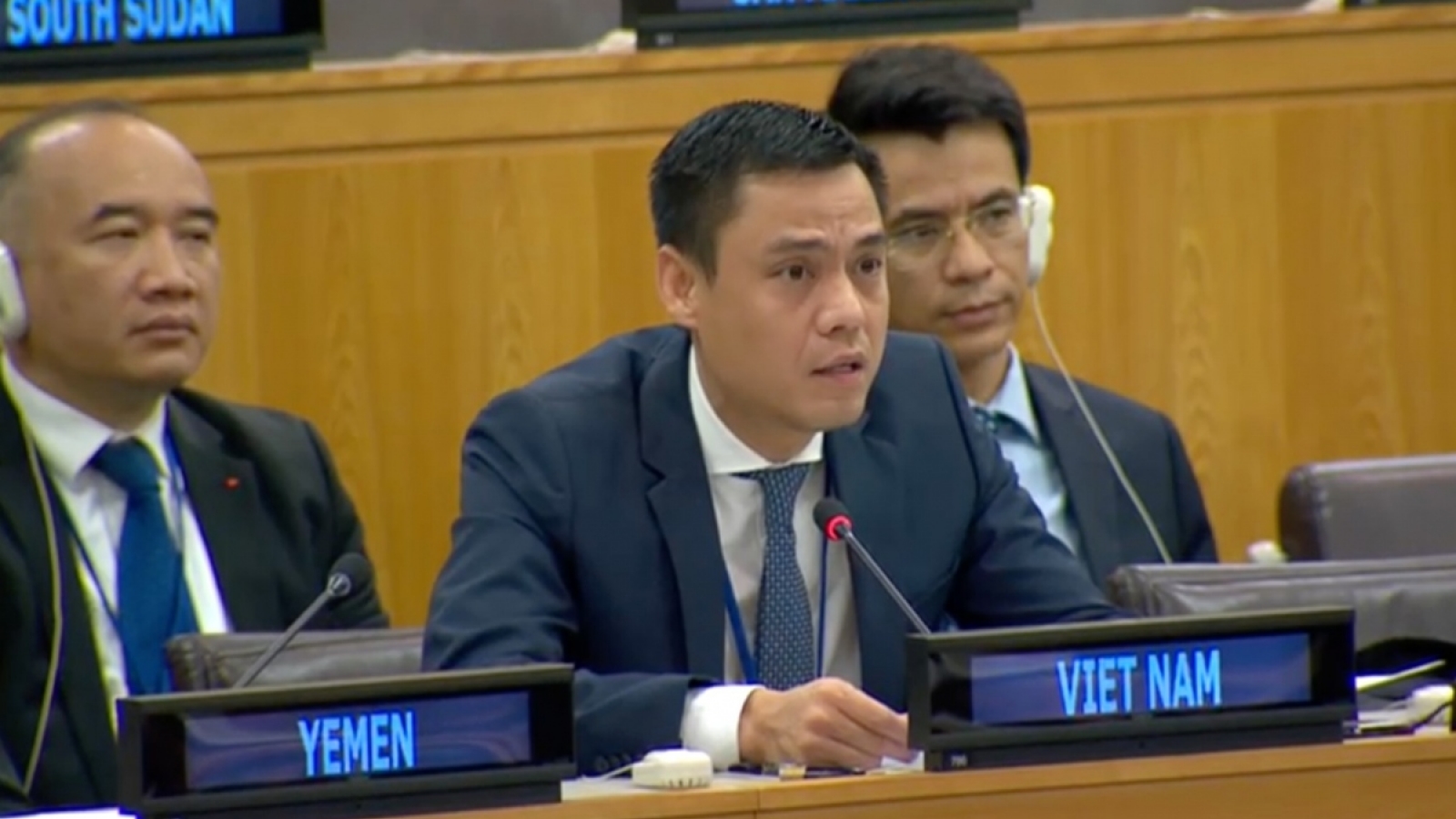
Vietnam joins efforts to meet UN's global counter-terrorism strategy
VOV.VN - The nation underscored its resolute condemnation of terrorist acts in any form or for any purpose on October 3 during a plenary meeting held by the Sixth Committee (Legal) of the 77th session of the UN General Assembly.