Vietnam moves towards data-driven social welfare system to better reach those in need

VOV.VN - Vietnam is moving toward a more data-driven social welfare system, with Party General Secretary and State President To Lam calling for a national social welfare index and personal welfare profiles to help ensure support reaches the right people at the right time and its impact can be measured.
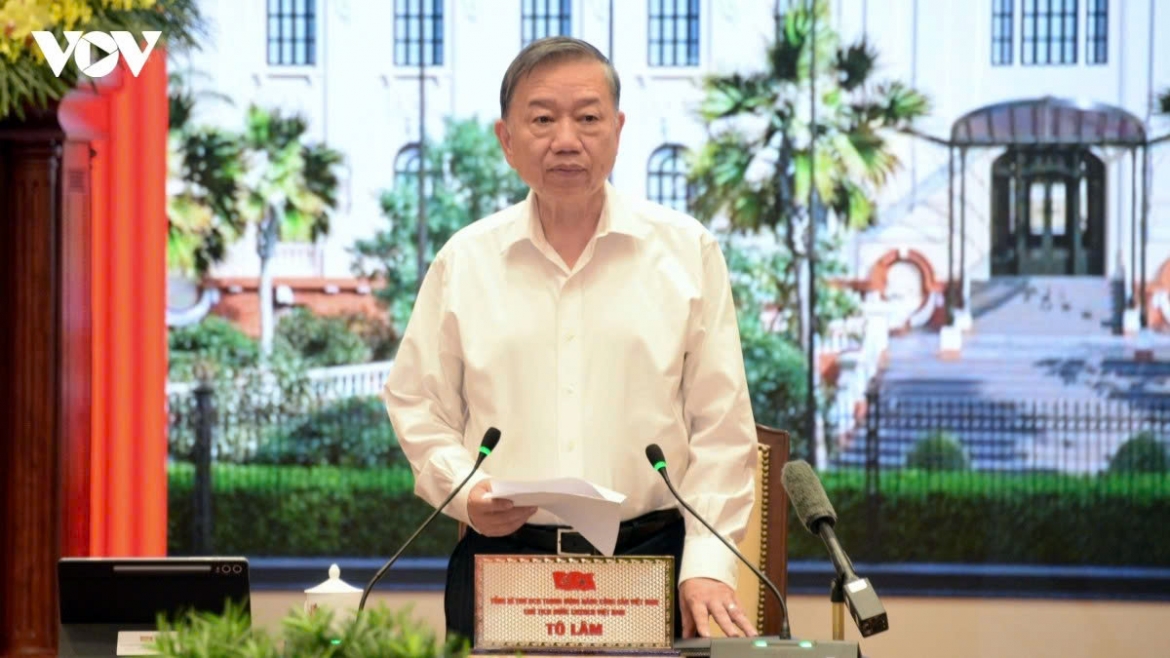
The top leader made the request at a meeting with the Government Party Committee and relevant agencies in Hanoi on August 25 to review social welfare policies, particularly those targeting vulnerable groups, and discuss priorities for the coming period.
Vietnam has made significant progress in expanding social protection. More than 99 million people, or 96.9% of the population, are covered by health insurance, while around 2.5 million people receive social pension benefits.
Policies on poverty reduction, credit, housing, education, healthcare, employment and disaster relief have also provided support for millions of households.
However, gaps remain. Many informal workers, platform workers, migrants and women engaged in unpaid care work still lack adequate protection, while the level of benefits and access to services remain uneven in some areas.
New risks are also emerging. Vietnam has more than 17 million older people, and those aged 60 and above are projected to account for more than 20% of the population by 2036. Natural disasters, disease outbreaks, automation and shifts in the labour market could further increase vulnerability.
Against this backdrop, Party General Secretary and State President To Lam stressed that economic growth does not automatically translate into social welfare. A stronger system must be able to anticipate risks, identify people in need and respond in a timely manner.
From “leaving no one behind” to measurable results
By 2030, Vietnam aims to establish a broadly inclusive, multi-layered and digitalised social welfare system that provides a minimum level of protection for everyone.
To make the principle of “leaving no one behind” measurable, the top leader called for the development of a national social welfare index, to be published annually by locality and population group.
The index should measure such factors as coverage, adequacy of benefits, the proportion of eligible people left out, processing times, out-of-pocket costs, access to employment, accessibility for people with disabilities and user satisfaction.
The new approach would shift the assessment of welfare policies from asking how many policies have been introduced to more practical questions, such as Who is actually receiving support? Who is still being missed? And how quickly does assistance reach those in need?
The top leader also called for stronger accountability, saying that leaders should be responsible for explaining cases where eligible people are missed or assistance is delayed.
A personal social welfare profile for every citizen
Alongside the national index, Party General Secretary and State President To Lam asked the Government to accelerate the development of a national social welfare database linked with population, insurance, tax, employment, healthcare, education, housing and disaster-related data, while ensuring data security and privacy.
The goal is to create a life-cycle social welfare profile for each person, allowing authorities to better understand individual and household circumstances and identify appropriate forms of support.
On that basis, social assistance programmes should be reviewed and overlapping measures consolidated, with core eligibility criteria standardised and benefit levels adjusted in line with minimum living standards, price changes and budget capacity.
The Government was also asked to expand social insurance coverage, build a more inclusive labour market, explore more flexible insurance mechanisms for low-income workers, and strengthen protection for informal and platform workers.
For working-age people facing difficulties, assistance should increasingly be linked with skills training, employment counseling, credit and connections to businesses rather than relying solely on income support.
Preparing for an ageing society and emerging risks

Another priority is to make the social welfare system more responsive to population ageing. The top leader called for research into a national care economy strategy bringing together health care, rehabilitation, social work and family- and community-based care.
Potential measures include day care, respite care, support for people with disabilities, palliative care and mental health services. Pilot programmes for long-term care insurance in selected localities were also proposed, along with professional standards for care workers and appropriate policies for social workers, nurses and home caregivers.
At the same time, the welfare system needs to respond more quickly to shocks such as natural disasters, job losses and other disruptions to household livelihoods.
Party General Secretary and State President To Lam called for medium-term financial planning for social welfare, with resources and programme outcomes made more transparent. Overlapping and ineffective measures should be cut so that resources can be concentrated on essential services and groups that remain inadequately protected.
The emerging approach places less emphasis on how much is spent or how many people receive benefits and more on whether the system can identify those in need, respond quickly and prevent people from falling below a minimum standard of living without being detected.
From a national social welfare index to life-cycle personal welfare profiles, Vietnam is seeking a system that relies more heavily on data, early identification and accountability. The aim is to turn “leaving no one behind” from a broad principle into outcomes that can be measured and assessed.

Social welfare policies to become more practical in next development phase
Social welfare will remain a central task of the Government in the coming period, with higher requirements and more practical policies to ensure well-being and improve living standards for all people, Minister of Health Dao Hong Lan affirmed on October 9.