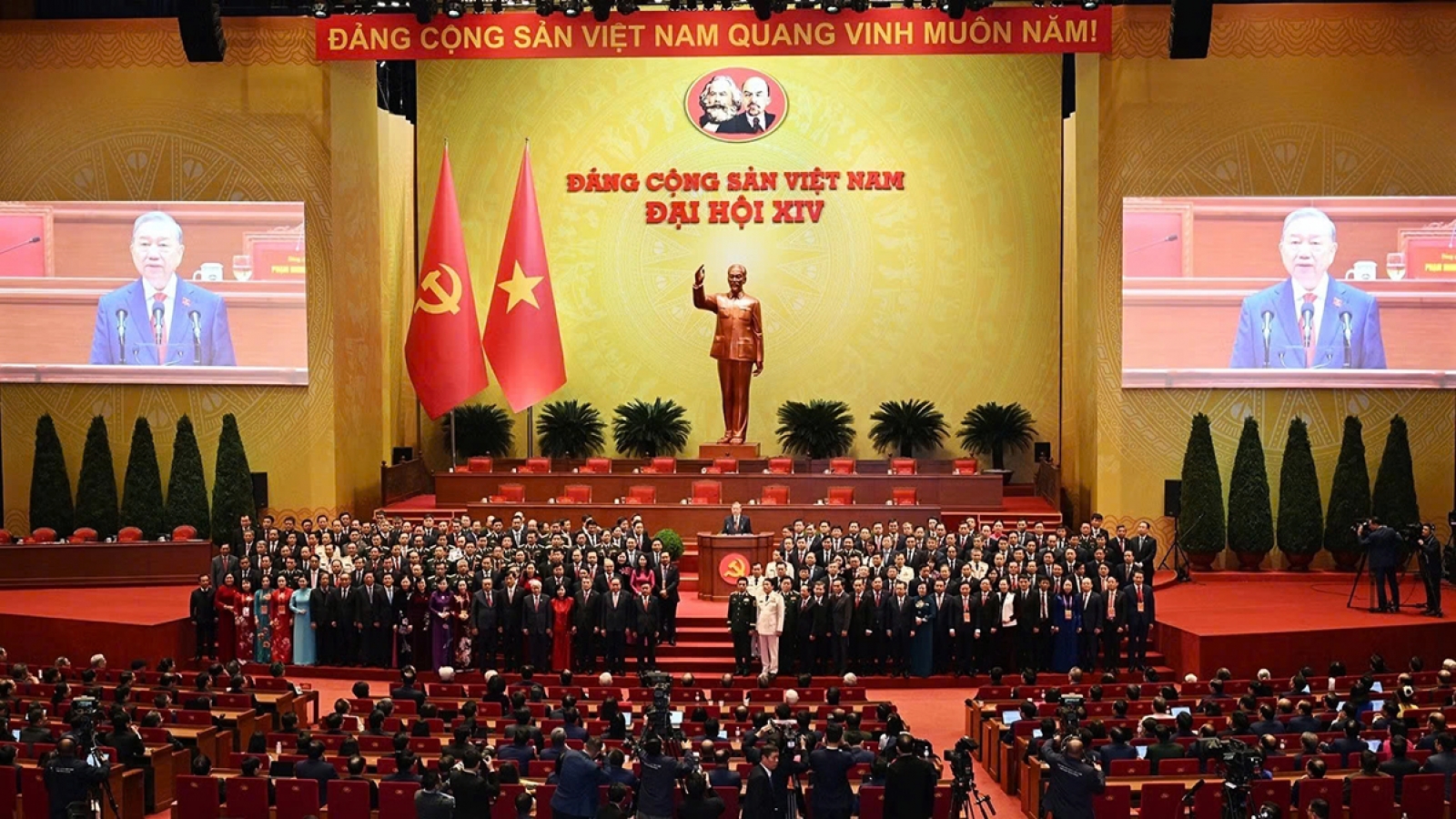
Top leader calls for continued Party building and rectification with tangible results

VOV.VN - General Secretary of the Central Committee of the Communist Party of Vietnam and President To Lam has called for continued Party building and rectification as a regular task for Party organisations, with greater emphasis on prevention, self-inspection, correction and power control to deliver tangible results.
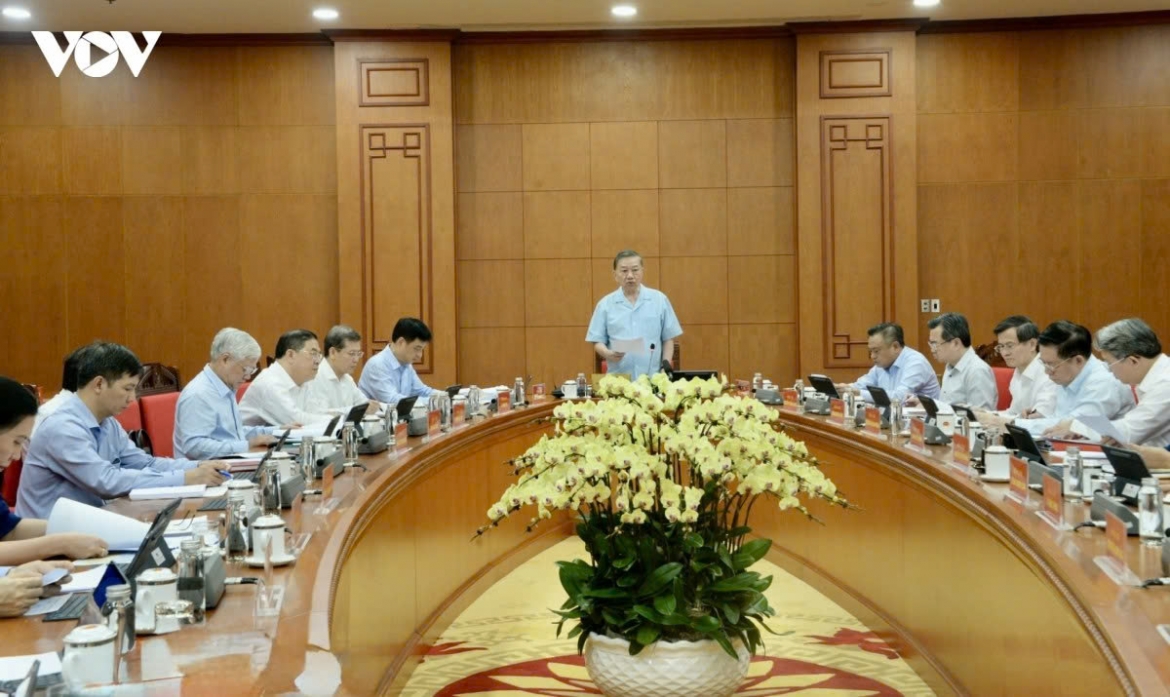
The request was made at a working session of the Party in Hanoi on August 27 to review the implementation of Conclusion No. 21-KL/TW, issued on October 25, 2021 by the 13th Party Central Committee, and discuss a draft scheme on strengthening Party building and rectification and building a comprehensively clean and strong political system.
According to the top leader, the implementation of Conclusion 21 has produced important results. Its policies have been pursued consistently and decisively, while discipline, order and responsibility have been strengthened. Efforts to prevent and combat corruption, waste and negative phenomena have also continued under the principle of “no forbidden zones, no exceptions.”
The next stage, however, should focus less on adding documents and programmes and more on achieving substantive results, he stressed.
Party building and rectification must become routine work
Party General Secretary and State President To Lam said the implementation of Conclusion 21 has been broad, but some Party organisations still draw up general action programmes without clearly identifying responsibilities, deadlines and expected outputs.
Some sound policies have been implemented slowly, while shortcomings that have already been identified have not always been followed up and resolved fully.
Self-criticism and criticism remain formalistic in some places, and self-inspection has yet to become a regular practice. In some cases, assessments of Party organisations and officials still focus too heavily on paperwork and procedures.
The General Secretary and State President pointed to responsibilities at both the Party committee and leadership levels, including failures to conduct regular self-correction and persistent inspection, as well as tendencies to avoid difficult issues or show excessive deference.
Other factors include unclear coordination mechanisms and incomplete early-warning data, alongside the continuing risks posed by the temptations of power, material interests and group interests.
Judging from reality, the top leader held that Party building and rectification must become the regular work of every Party committee and Party organisation.
“Building” and “fighting” must proceed together, while early prevention, self-inspection and self-correction should form the foundation, he said, adding that authority must go together with responsibility, inspections must lead to correction, and disciplinary action should also help close loopholes in mechanisms and regulations.
New Party resolutions must address new problems
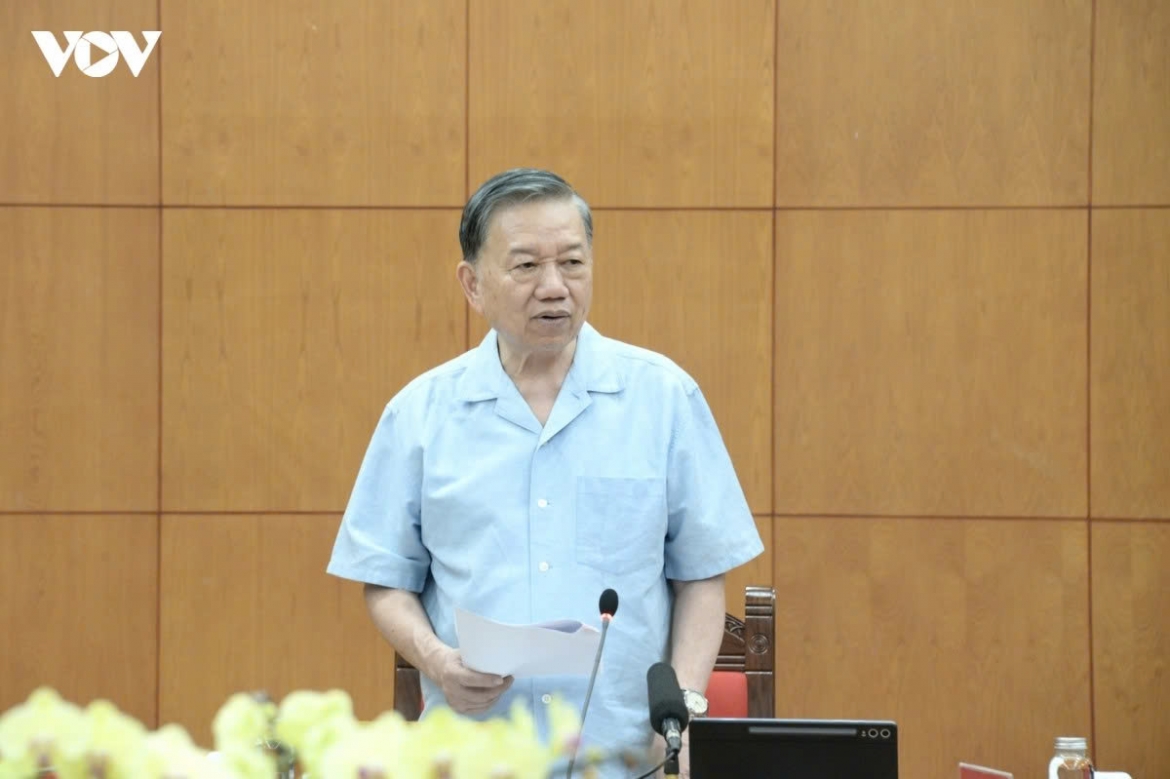
Regarding the draft scheme and proposed new resolution, Party General Secretary and State President To Lam said it must make clear what new problems the document would solve that existing Party documents have not adequately addressed.
Not every provision that is already sufficiently regulated needs to be repeated in a new resolution. Provisions of Conclusion 21 that remain valid should continue to be implemented strictly.
Where problems have been identified but are unresolved because of weaknesses in implementation, the focus should be on discipline, responsibility and inspection, rather than using a new resolution as a substitute for correcting weaknesses, he reminded.
Only issues arising from changed circumstances or new requirements that call for new understanding and mechanisms at the central level should be incorporated into a new resolution.
The aim is to ensure that a new Party resolution does not become another layer of documents, but instead creates stronger leadership capacity, greater organisational strength and a greater ability for the Party to renew, rectify and improve itself.
From handling violations to preventing them
Another major emphasis was the need to build the capacity for continuous prevention, renewal, rectification and self-improvement.
The top leader noted that leadership and governance culture should be developed in close connection with public participation and data-based governance.
Standards such as putting the country and people first, integrity, impartiality, respect for facts, matching words with actions, taking responsibility and being determined to correct mistakes should be translated into behavioural standards and criteria for evaluating officials.
Ethics should be nurtured through organisational culture, reinforced by discipline and safeguarded through mechanisms for controlling power.
The General Secretary and State President also called for convenient and safe channels through which the Vietnam Fatherland Front, socio-political organisations, the media and the public can provide opinions, raise concerns and exercise oversight.
Information should be delivered to the proper authorities, handled and responded to, while people who make legitimate reports should be protected.
After 15 years of Party building and rectification efforts, the top leader underscored that the current requirement goes beyond simply detecting and dealing with violations.
A strong ruling party must be capable of identifying its own shortcomings, controlling power, correcting mistakes and preventing recurrence, he stressed.
The new resolution should therefore lead to changes that can be seen in practice, including stronger Party organisations, better-performing Party cells, capable leaders, smoothly functioning agencies, tighter power control and more timely responses to legitimate public concerns, he concluded.
Building a strong Party by consolidating public trust
VOV.VN - Since its founding, the Party has consistently upheld the principle of “the people as the root” in all its activities, building and promoting the right of working people to exercise mastery.