Strategic leadership must turn vision into results, top leader To Lam says

VOV.VN - General Secretary of the Communist Party of Vietnam Central Committee and President To Lam has stressed that strategic leadership must connect long-term vision with sound decisions, effective implementation and measurable development outcomes that strengthen public trust.
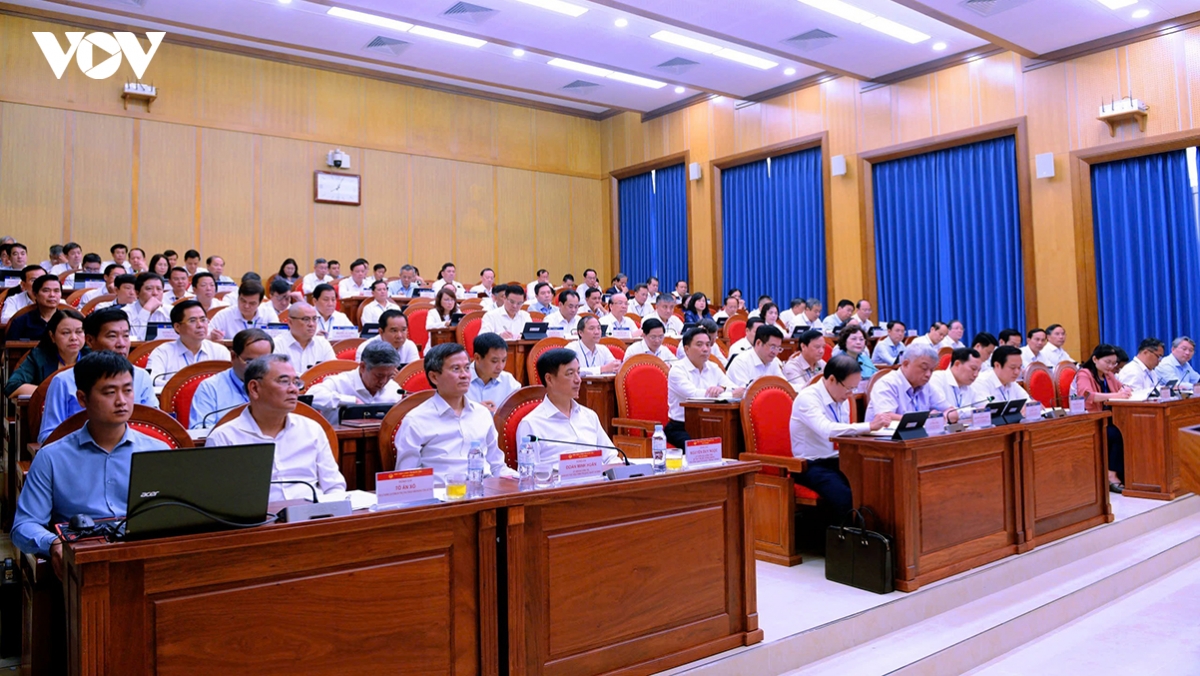
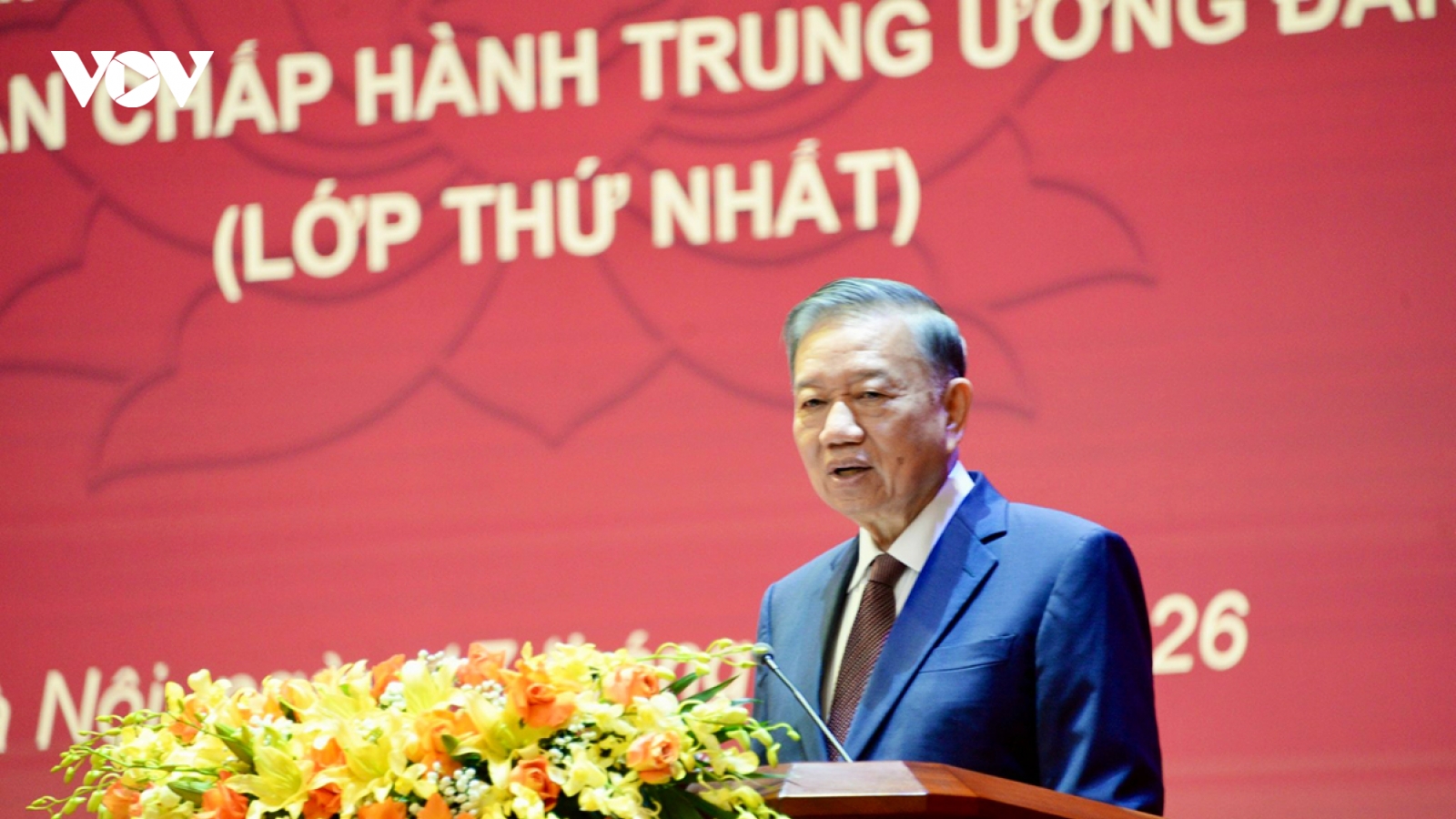
The top leader made the remarks while delivering a thematic presentation to participants attending a training and knowledge-updating programme for Party Central Committee members (second class) in Hanoi on September 14.
The presentation, titled “Strategic Leadership in the New Era: A Hundred-Year Vision – Breakthrough Thinking – Development Facilitation – Execution Governance”, focused on the requirements of strategic leadership in the new era, from setting a long-term vision and choosing a development path to creating breakthroughs, building the conditions for development and organising implementation so that decisions can be translated into reality.
Long-term vision must shape decisions made today
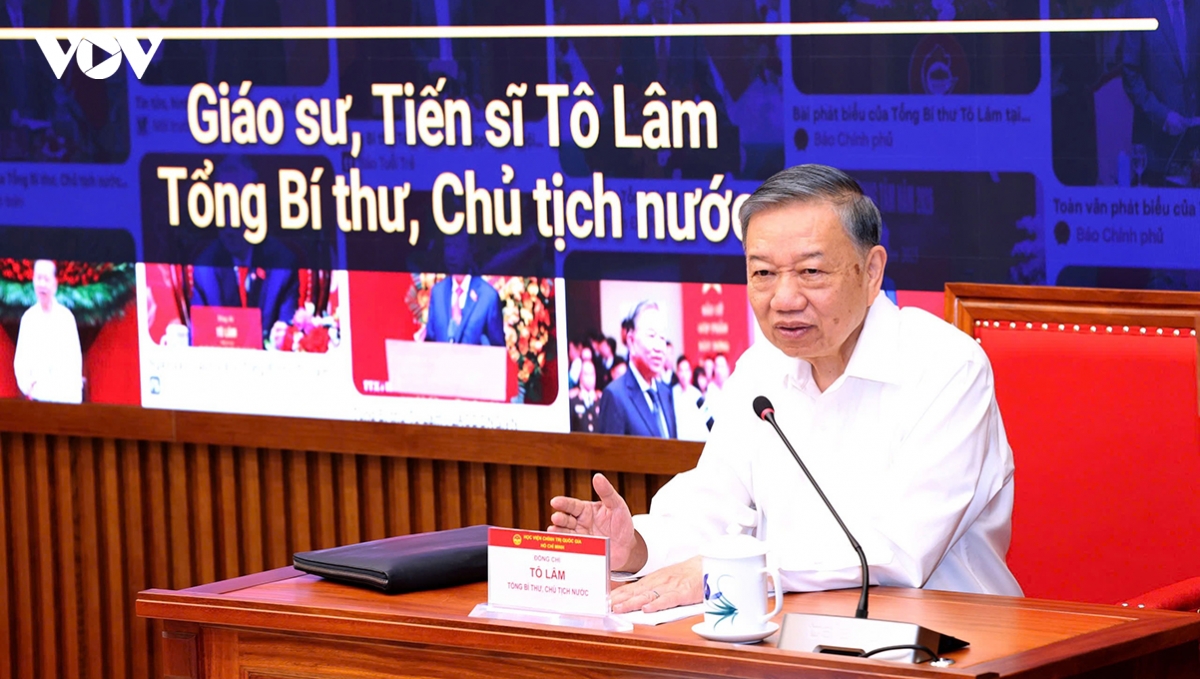
Emphasising the need to maintain stability and promote development amid a rapidly changing environment, Party General Secretary and President To Lam said Vietnam is entering a new stage of development.
After 40 years of implementing the Đổi Mới (Renewal) process, the country’s stature, potential, international position and prestige have reached a new level. The 14th National Party Congress, held in January 2026, not only set out tasks for a single term but also established a vision extending to 2030, 2045 and the decades beyond.
According to the top leader, this is a time to stay steadfast and build on what has been achieved while making a decisive renewal of thinking and methods of action to drive rapid and sustainable development in the new era.
A notable shift in the development mindset is the treatment of development, stability and national defence as an integrated whole. Development generates resources for stability; stability creates the conditions for continued reform and development; and national defence must be proactively strengthened from an early stage and from afar, including throughout the development process.
Strategic autonomy, he noted, does not mean closing the country off from the outside world. Rather, it means strengthening the capacity for self-determination, self-reliance and adaptation, by leveraging domestic resources, proactively pursuing international integration and combining national strength with the strength of the times.
From this perspective, a hundred-year vision is not an attempt to predict the future. It means defining broad strategic directions and building the capabilities needed to respond proactively to whatever changes may arise. It means identifying the values that must be preserved, the position the country seeks to attain and the capabilities that need to be developed from today.
In his view, such a vision must be broad enough to encompass fundamental national issues, ambitious enough to bring together the aspirations of the entire nation, durable enough to carry responsibility across generations, and open enough to adapt to changes that cannot yet be foreseen.
The top leader highlights the Politburo’s Resolution 19 that concretises the roadmap for renewing the development model through milestones for 2030, 2035 and 2045, with a vision to 2130. These milestones, he said, must be linked into a single, coherent process in which each stage builds on the achievements of the previous one while laying the foundations for the next.
A long-term vision also means avoiding short-term gains achieved at the expense of depleted resources, widening inequality, environmental degradation or burdens passed on to future generations. Strategic development must not be fragmented by political terms of office or administrative boundaries at the expense of national interests.
Breakthrough thinking must deliver real change
For the General Secretary and President, strategic leadership is not simply about setting the right goals or developing a long-term vision. Vision must be translated into concrete choices, well-grounded decisions and the capacity to organise their implementation.
“We must look far ahead but start with concrete tasks; uphold principles without becoming conservative; dare to pursue breakthroughs without being reckless; pair decentralisation and delegation of authority with power control; and prepare the conditions for implementation at the same time as decisions are made,” he stressed.
The value of breakthrough thinking, he said, is ultimately tested by its ability to remove bottlenecks, expand development space, create new capabilities and deliver tangible change.
This requires correctly identifying bottlenecks, seizing opportunities, concentrating resources, managing risks and making timely adjustments. The persuasiveness of a breakthrough choice does not lie in the scale or novelty of a decision, but in the tangible changes it produces and the new capabilities it creates.
Strategic leadership should therefore be understood through four closely interconnected dimensions: a hundred-year vision, breakthrough thinking, development facilitation and execution governance. These can be distilled into four requirements: the right direction, the right priorities, adequate conditions and tangible results.
These requirements must operate within Vietnam’s political framework, under which the Party leads, the State manages and the people exercise mastery; on the foundation of a socialist rule-of-law State; with democracy accompanied by discipline and order; and with power subject to oversight and authority matched by responsibility.
National interests, the happiness of the people and the country’s sustainable development are the overarching objectives – and ultimately the yardstick by which strategic leadership must be measured.
Development facilitation must create conditions for implementation
Building on the need to make sound choices and pursue breakthroughs, the top leader highlighted the role of development facilitation and coordinated execution.
In his view, development facilitation is the responsibility of the entire political system and society under the Party’s leadership, with the State playing a particularly important role in institution-building, management, coordination and safeguarding the public interest.
According to him, facilitation does not mean loosening management. The faster the country seeks to develop, innovate and integrate into the global economy, the more it needs transparent laws, strict discipline, fair competition and effective protection of legitimate rights and interests.
From a strategic leadership perspective, a decision can produce results only when the conditions for implementation are prepared in a coordinated manner. Decision-making must therefore go hand in hand with clearly defining responsibilities, authority, resources, coordination mechanisms and systems for oversight.
This is also essential to translating long-term vision into concrete tasks and preventing a gap from emerging between goals that have been set and the capacity to deliver them in practice.
Execution governance is the test of leadership capacity
Emphasising execution governance, General Secretary and President To Lam said it should not be regarded as the final stage of strategic leadership, but as an integral part of the leadership process itself.
Implementation provides the opportunity to test initial assessments, the feasibility of objectives, the capacity of those entrusted with responsibilities, the effectiveness of coordination, the use of resources and the ability to manage risks. Lessons from practice must feed back into the policymaking process so that policies can be refined.
“Decisions and implementation mechanisms need to be designed at the same time,” he stressed.
Execution governance connects policy decisions with the capacity of the entire system to act. Clear responsibility, adequate conditions, seamless coordination, reliable data and timely oversight provide the foundation for sustainable results.
A leader, therefore, needs more than the ability to set a strategic direction. They must also build an organisation capable of proactively fulfilling its responsibilities, coordinating effectively, taking ownership, learning from practice and adjusting itself in a timely manner. This is how individual qualities and capabilities can be transformed into sustainable organisational strength.
Drawing together the themes of the presentation, General Secretary and President stressed that long-term vision must guide decisions made today; stability and development must reinforce each other; breakthroughs must begin with the right choices; development facilitation must unlock resources and the creative potential of society; and the effectiveness of execution governance must provide the test of leadership capacity.
Strategic leadership in the new era, therefore, cannot stop at articulating an ambitious vision. It must create a pathway through which vision becomes action, decisions become results, and today’s results continue to build the capabilities needed for the next stage of development.
Concluding his presentation, the top leader emphasised, “Great aspirations must be realised through the right vision, well-grounded decisions and responsible action. Every result achieved today must build the capabilities needed for the country to move further and more firmly towards the future.”
The new era requires thinking far ahead, making the right decisions and acting effectively. With resolve, intellect, unity, innovation and a strong sense of responsibility, Vietnam is determined to build a peaceful, independent, democratic, prosperous, strong, civilised and happy country and steadily advance towards socialism.
Strategic officials must sharpen their thinking and execution capacity, says top leader
VOV.VN - Party General Secretary and State President To Lam has called for higher standards for strategic officials, emphasising continuous learning, self-reflection and the ability to make sound decisions and turn them into tangible results.