Investment Law revision aims to create a more open, efficient investment environment

VOV.VN - Vietnam is moving to widen market access, improve investment incentives and streamline procedures with greater support tied to investors’ actual commitments and results, in an effort to create a more open, transparent and effective investment environment and improve the quality of capital attracted to the country.
The proposed amendments to the Investment Law seek to address institutional bottlenecks in investment and create a framework that is more responsive to investors, while ensuring that investment incentives generate tangible economic and social benefits.
The proposal was discussed at the sixth session of the National Assembly Standing Committee in Hanoi on September 30.
Widening market access, improving investment support
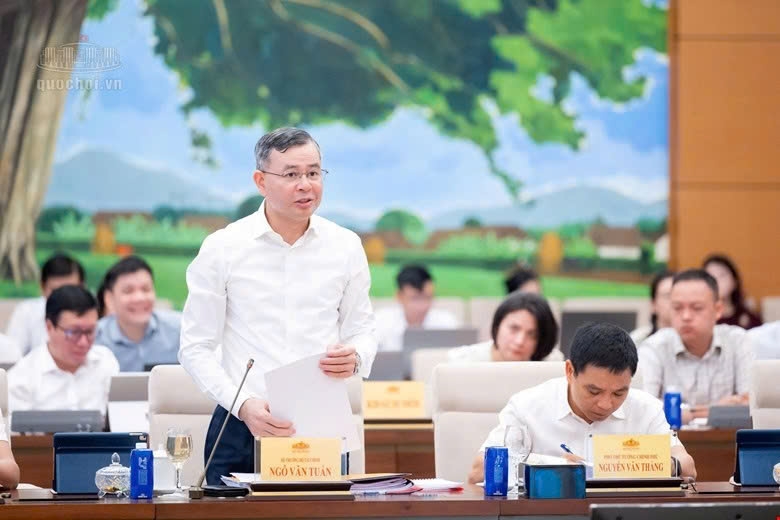
Presenting the Government’s proposal, Minister of Finance Ngo Van Tuan said the draft focuses on three major areas - improving regulations on market access for foreign investors; renewing investment incentives and support policies; and further streamlining investment procedures and strengthening State management of foreign-invested economic activities.
For foreign investors, the draft seeks to expand market access according to a roadmap alongside ensuring transparency, consistency and non-discrimination. It also aims to address limitations in the current list of conditional market-access sectors and support efforts to upgrade Vietnam’s stock market.
Investment incentives and support would also be reshaped to encourage investment in high technology, the green economy and the digital economy.
The draft adds four forms of investment support covering the development of supply chains, production and product and technology improvements; initial investment and increases in fixed assets; cooperation between businesses and educational and scientific institutions; and other forms of support linked to project performance and domestic linkages.
The proposed approach would gradually shift the focus from conventional incentives toward support linked to the effectiveness of investment projects and their contributions over the project life cycle.
The draft also provides for special investment incentives, allowing the Government to decide on exceptional support packages for projects that are considered necessary to attract and have significant spillover effects.
Other proposed measures include accelerated depreciation for infrastructure developers and businesses in eco-industrial parks, as well as support for worker training. In addition, the draft seeks to promote investment according to regional growth poles, with priority given to high-tech and green investment in key economic areas and to processing, manufacturing and supporting services in surrounding areas.
Investment procedures would also be further simplified, including special procedures for projects outside industrial parks and high-tech parks, as well as projects in international financial centres and free trade zones.
Greater openness must come with stronger accountability
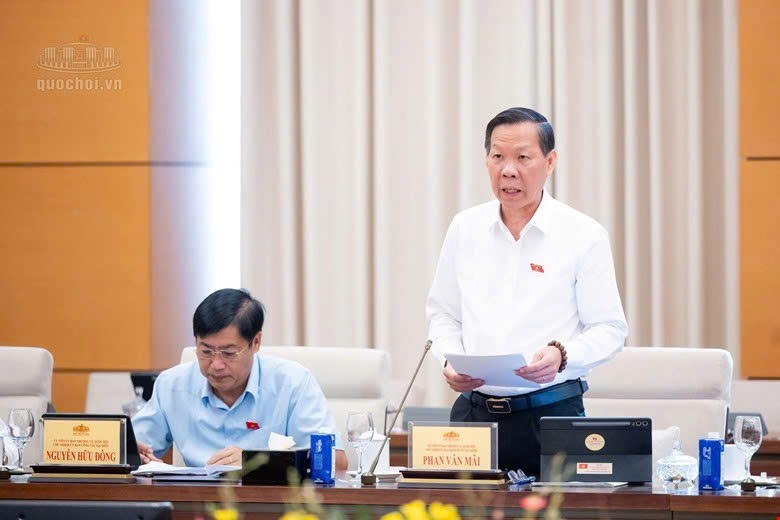
While supporting the direction of the amendments, the Standing Committee of the National Assembly’s Economic and Financial Committee called for clearer safeguards to ensure that greater investment support is matched by measurable results.
Presenting the committee’s preliminary appraisal report, its Chairman Phan Van Mai said the committee generally agreed on the need to amend the Investment Law to remove institutional and policy barriers and further implement policies on the development of the foreign-invested economic sector.
However, the committee requested a clearer explanation of the need for another amendment, given that the Investment Law was only recently amended at the first extraordinary session of the National Assembly in August 2026.
The Government was asked to identify the specific bottlenecks currently hindering investment, their causes and scale, and demonstrate whether the proposed amendments would effectively address them.
The committee also suggested closer coordination between the Investment Law and other legislation, including laws on land, the State budget, bidding, natural resources and the marine environment, to ensure consistency across the legal framework.
Mechanism for special investment incentives
The committee stressed that the Law itself should set out the basic principles and criteria for determining which projects qualify for special incentives, rather than leaving too much discretion to subordinate legislation.
Investment commitments should be quantified wherever possible, using criteria such as investment capital, disbursement, technology transfer, participation of domestic businesses in supply chains and domestic production value.
The draft should also spell out how incentives would be maintained, adjusted, reduced or recovered when investors fulfil only part of their commitments.
For investment support payments, the rules should clearly define eligible beneficiaries, conditions, scope and support levels, alongside preventing duplicate support and setting limits and inspection responsibilities.
Similar clarification is needed for local support mechanisms, including the authority of provincial-level People's Councils and the use of local budget resources.
Balancing investor access with national interests

Concluding the discussion, National Assembly Vice President Nguyen Thi Hong said the draft legislation should facilitate investment and improve the quality and effectiveness of capital attraction while ensuring effective risk management, efficient use of resources and protection of national interests.
She urged the drafting agency to continue reviewing relevant Party Central Committee resolutions and other policy documents, so that the revised law would provide a comprehensive framework and help avoid the need for repeated amendments.
On special investment incentives, she highlighted the need to further clarify eligible beneficiaries, criteria, conditions and limits, as well as mechanisms linking incentives to investors’ commitments and actual performance.
The relationship between tax incentives, the global minimum tax and other investment-support policies should also be clarified, she said.
For accelerated depreciation in eco-industrial parks, the draft should specify the applicable conditions, assets, scope and duration of the policy and ensure that the incentive serves the objective of transforming industrial parks toward greener production.
The draft would also need to clearly define the scope, criteria and limits for cases involving investor approval, exemption from auction or bidding requirements, and exemption from investment-policy approval procedures.
Taken together, the proposed amendments point to a two-sided approach to improving Vietnam’s investment environment - making market access and investment procedures more open and predictable, and making incentives more selective, measurable and accountable.
Such an approach would allow the country to improve its ability to attract investment while placing greater emphasis on the quality, spillover effects and long-term contribution of investment projects to the domestic economy.
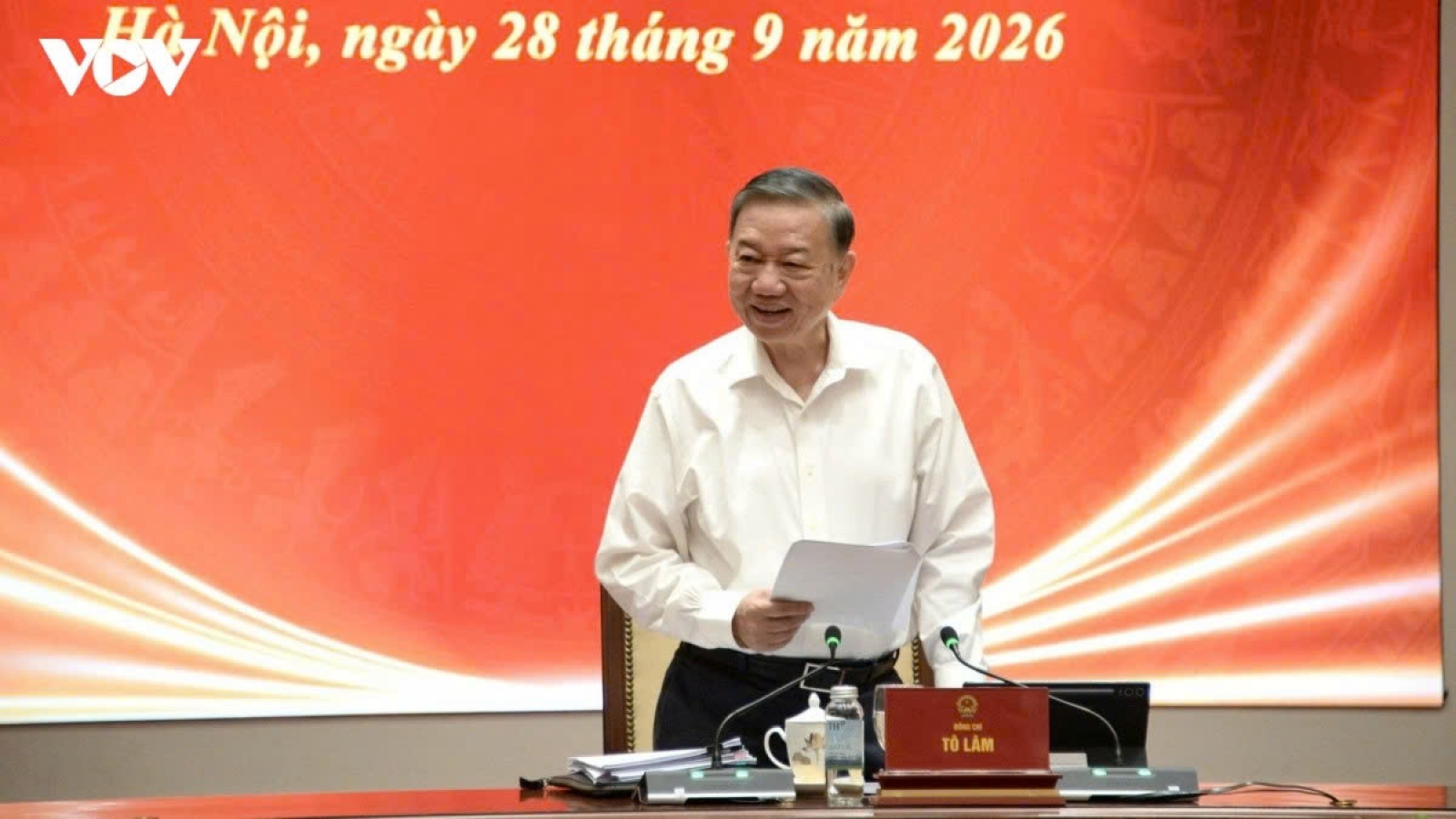
Stable laws needed to boost investment confidence, top leader To Lam says
VOV.VN - General Secretary of the Communist Party of Vietnam Central Committee and President To Lam has called for a legal system stable enough to give people and businesses confidence to invest and plan ahead, yet flexible enough to support development, technological progress and new business models.