Hanoi told to unlock recourses for a new phase of growth

VOV.VN - Hanoi must unlock underused resources and build new growth drivers based on science, technology, innovation and data to sustain rapid, high-quality development, Party General Secretary and State President To Lam said at a working session with the Standing Board of the Hanoi Party Committee on July 8.
The meeting reviewed Hanoi’s socio-economic performance in the first half of 2026 and discussed the implementation of the Politburo's Resolution 02 on building and developing the capital in a new era.
Unlocking resources for a new stage of development
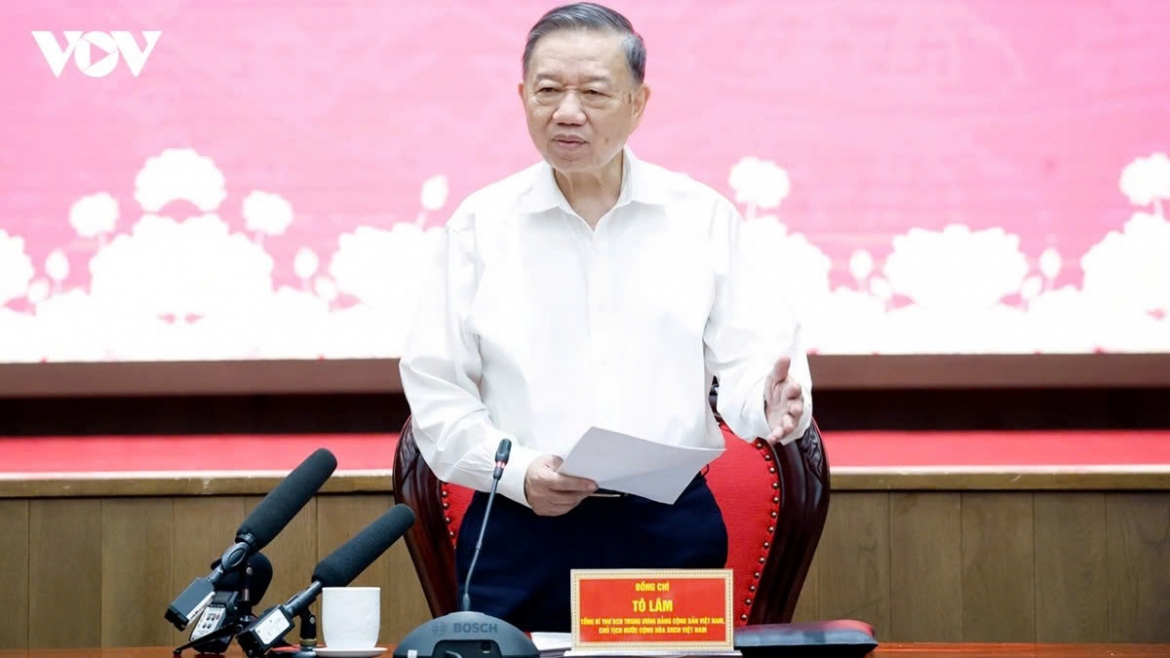
Reviewing the city’s performance, Party General Secretary and State President To Lam acknowledged Hanoi’s positive growth momentum, describing it as an important foundation for achieving its target of annual gross regional domestic product (GRDP) growth of at least 11% in 2026.
During the first six months of the year, Hanoi’s GRDP expanded by 8.22%, outperforming the national average. Total social investment reached VND254.5 trillion (US$9.7 billion), up 14.1% year on year, while state budget revenue exceeded VND404 trillion, equal to 62.2% of the annual estimate.
Public investment was a bright spot, with disbursement surpassing VND63 trillion, more than doubling compared with the same period last year. Nearly 19,000 new businesses were established, with registered capital increasing by 145%.
The city also continued to advance administrative reform and digital transformation by restructuring internal administrative procedures and expanding digital public services. The iHanoi platform has become an important channel connecting local authorities with residents.
These achievements, he said, demonstrated Hanoi’s strong development potential but maintaining growth alone would not be sufficient.
“The capital must build new development capacity by improving the efficiency of resource utilisation rather than relying solely on expanding investment,” he said.
Making a comprehensive review of development resources
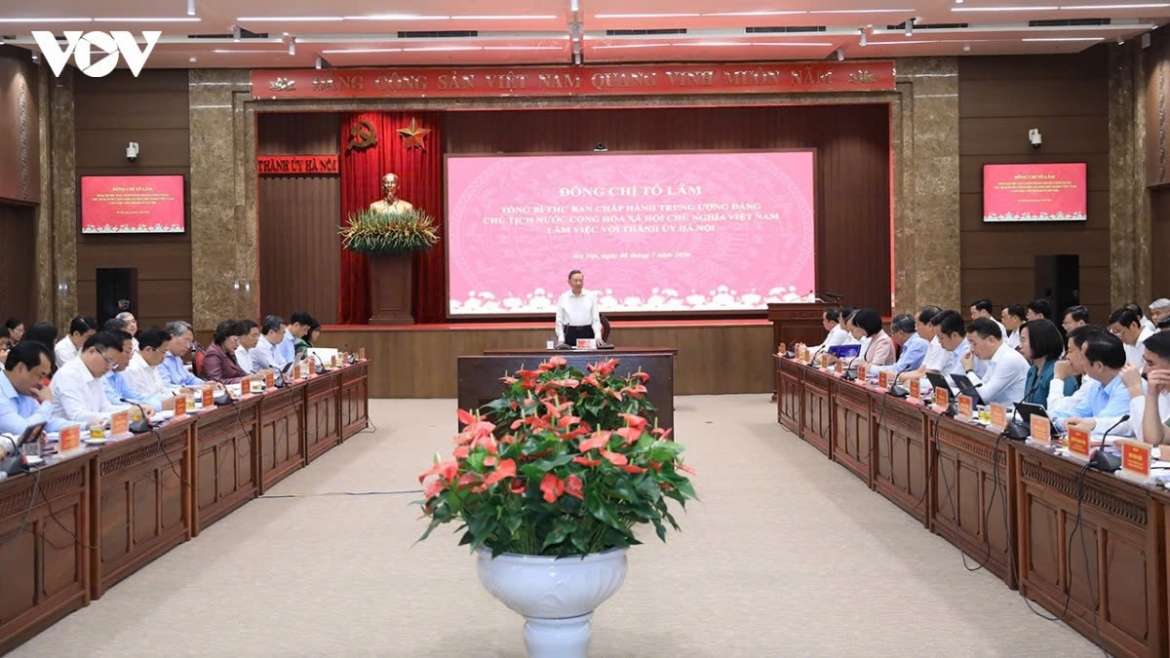
The top Party and State leader praised Hanoi's efforts in institutional reform, infrastructure development, administrative modernisation and urban planning.
He noted that the city has completed its master plan with a 100-year vision while steadily implementing the revised Capital Law and major strategic resolutions adopted by the Party Central Committee.
At the same time, Hanoi has begun creating new development spaces through underground infrastructure, better urban connectivity and more integrated planning.
However, he said the city now needs to identify and remove the bottlenecks preventing it from fully realising its development potential. He called for a comprehensive review of all major development resources, including land, public assets, investment capital, resettlement land funds, technical and social infrastructure, high-quality human resources, data and science and technology.
According to him, Hanoi should clearly determine which resources are being used effectively, which remain underutilised and which have become ‘frozen’ due to administrative or institutional obstacles.
He also urged the city to move away from broad, generalised management towards more targeted growth planning, with clear performance indicators, implementation timelines and accountability assigned to each agency and official.
Removing bottlenecks to expand growth space
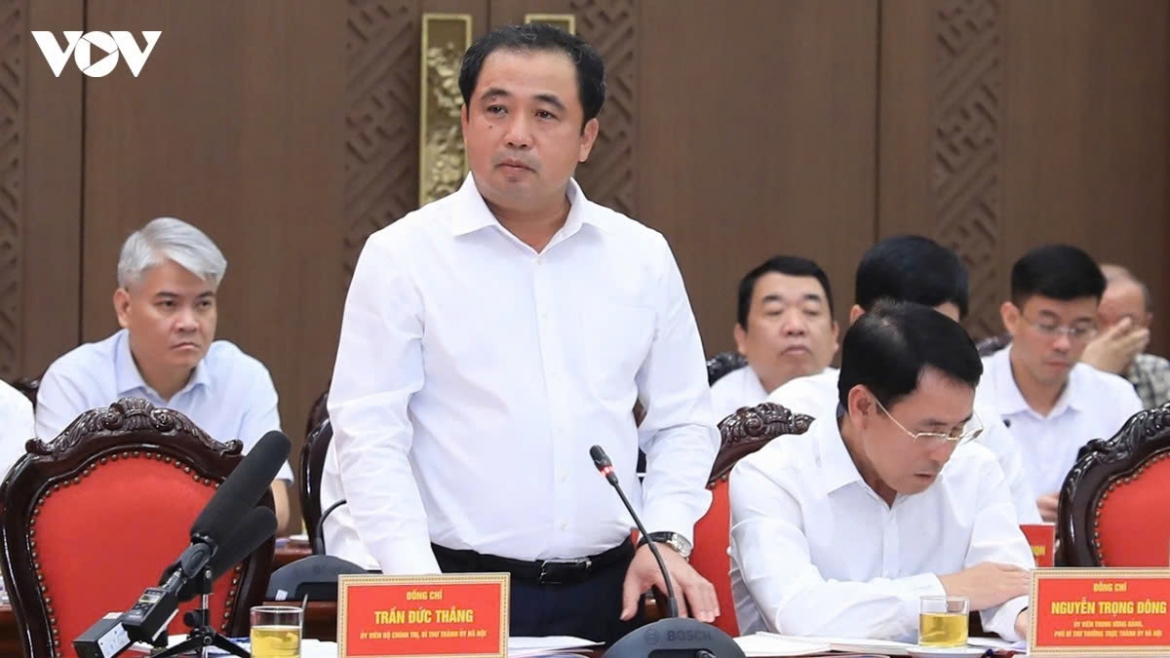
Unlocking idle and underutilised resources is one of Hanoi's greatest opportunities for future growth, the top leader said.
He called on the city to accelerate the review and settlement of delayed investment projects, inefficient land use, idle public assets and unfinished infrastructure works alongside removing administrative procedures that continue to slow investment.
At the same time, Hanoi should prioritise site clearance, speed up public investment disbursement and accelerate strategic infrastructure projects.
Priority should be given to projects that strengthen regional connectivity and expand development space, including ring roads, bridges across the Red River, urban railways, flood-control systems, wastewater treatment facilities, solid waste treatment plants and social housing.
The top Party and State leader stressed that site clearance should not be viewed merely as a technical process but as a broader socio-economic task that ensures adequate resettlement, access to schools and health care, sustainable livelihoods and improved living conditions for affected residents.
Pursuing faster growth, improving development quality
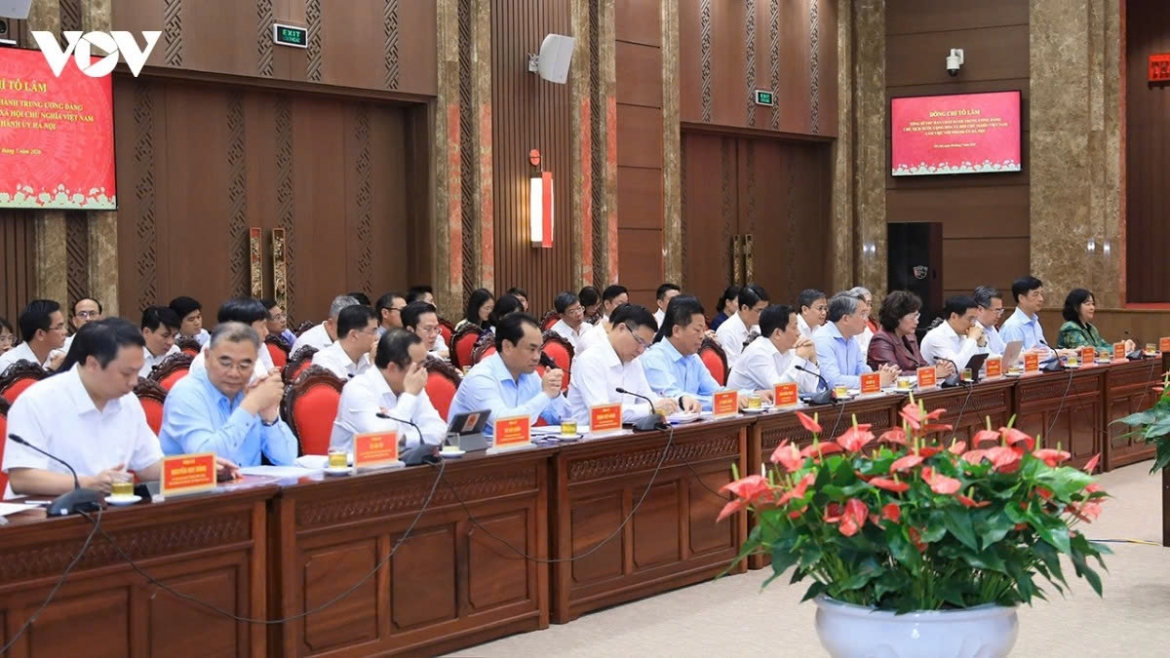
The top leader emphasised that Hanoi should pursue rapid economic growth without sacrificing environmental sustainability, social welfare or effective governance.
Double-digit growth is an important objective, he said, but development should ultimately be measured not only by economic output or investment volume, but also by urban quality, residents' well-being and the city's ability to generate sustainable long-term value.
He also called on Hanoi to take the lead in developing a knowledge-based economy powered by science, technology, innovation and digital transformation. He urged the city to accelerate the standardisation, integration and effective use of shared data to support public administration, growth forecasting, public investment monitoring, land management, administrative services and social welfare delivery.
Another priority, he said, is fostering large, competitive enterprises capable of investing in advanced technologies, leading industrial value chains and expanding into international markets.
Hanoi should develop supportive mechanisms for high-tech companies that can master core technologies, increase localisation rates and enhance the global competitiveness of Vietnamese products.
At the meeting, the top leader also called on Hanoi's entire political system to maintain a strong sense of urgency, responsibility and determination to implement its development agenda.
He said the capital should strive for faster growth while improving development quality, modernise without losing its cultural identity, and ensure that all residents benefit from economic progress.
As Vietnam enters a new stage of development, Hanoi should not only serve as the country's political and administrative centre but also pioneer new development models, governance approaches and growth drivers that can generate wider momentum for national development, he concluded.

E-commerce becomes new growth driver for Vietnam's digital economy
VOV.VN - E-commerce is a new consumer trend and an important driver of Vietnam's economy, accounting for around 11% of total retail sales and making Vietnam one of the most dynamic markets in Southeast Asia.