Draft Party document signals shift in anti-corruption strategy

VOV.VN - The Communist Party of Vietnam is signaling a sharper shift in its anti-corruption strategy in the draft political report for its coming 14th National Congress, with experts saying the document shows a stronger commitment to tackling graft at its roots.

Nguyen Huu Luan, a senior lecturer at the Ho Chi Minh National Academy of Politics, said the draft outlines a more comprehensive and forceful approach to fighting corruption, reflecting what he described as a high level of political determination.
The document demonstrates a “revolutionary offensive” mindset, treating corruption and misconduct as threats to the survival of the Party and the political system, he stated.
According to the draft, combating corruption is a regular and essential task for the entire Party and state apparatus. It stresses the principle of four no’s (no ability, no willingness, no need and no dare to commit corruption), shifting the focus from deterrence to prevention and promotion of integrity within the system.
While the draft acknowledges recent gains and notes improved public confidence, Luan said it should more directly address corruption cases that have occurred at central and provincial levels in recent years.
Prevention takes center stage

Lecturer Luan said the draft shows a clear transition from emphasising punishment to prioritising prevention. It refers to corruption as an “internal enemy” that must be tackled at the source by fostering a culture of integrity and thrift, and by linking anti-corruption efforts with the fight against misconduct and waste, which the draft describes as precursors to corruption.
One notable change is the expansion of anti-corruption measures to the private sector, in line with international practice, aimed at curbing collusion between state officials and business interests. The move, he noted, could help break public-private graft networks, make markets more transparent and protect both businesses and citizens, contributing to sustainable economic development.
The draft proposes key measures including stronger oversight of power, reforms in personnel management to limit vested interests, increasing the use of digital technology to improve monitoring, and expanding public oversight to draw on wider social scrutiny.
The scholar pointed out that recent crackdowns have led some officials to fear making decisions, becoming risk-averse and reluctant to take responsibility. He said the draft should differentiate clearly between deliberate violations for personal gain and unintentional mistakes caused by regulatory gaps, technical limitations or workplace pressure.
The senior lecturer called for strict punishment of intentional abuses of power for profit, but more leniency toward non-profit-related errors. He also argued for protections for officials who make proactive decisions in the public interest, and for greater transparency in inspection, audit and investigation processes to avoid wrongful accusations and reduce fear among public servants.
The draft also stresses the need to close legal loopholes, improve pay and benefits to reduce incentives for corruption, and expand dialogue with citizens, Party members and public employees to strengthen public oversight of corruption and waste.
The draft also stresses closing legal loopholes, improving pay and benefits to reduce incentives for corruption, and increasing dialogue with citizens, Party members and public employees to strengthen public oversight of corruption and waste.
Power control – a must
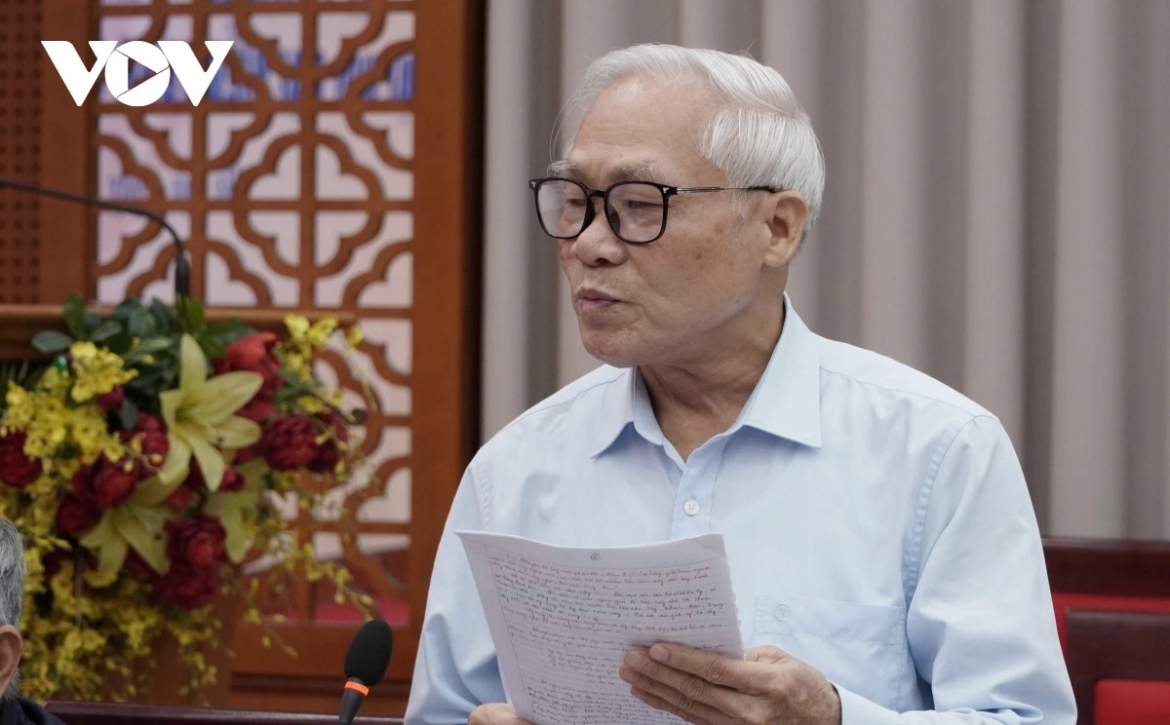
Pham Ngoc Thao, head of the Democracy and Legal Affairs Advisory Council of the Hanoi chapter of the Vietnam Fatherland Front, urged the Communist Party of Vietnam to place stronger emphasis on power control, saying anti-corruption measures must begin with closing legal loopholes and strengthening oversight.
In his analysis, the draft report is concise and more direct than previous versions, clearly addressing achievements, shortcomings and their causes. He praised what he described as a straightforward tone that does not avoid or embellish the truth.
Thao noted growing public concern about corruption, citing an unprecedented number of senior officials disciplined or prosecuted in the current term. He said the document should further stress preventive measures and tighter control over official authority to stop loopholes being exploited for personal gain.
He highlighted land, natural resources and environmental management as areas most prone to wrongdoing, pointing to recent cases involving abuse of power and entrenchment of vested interests. Media reports of illegally built luxury residences, he said, illustrate lax enforcement. Strengthening laws to seal all loopholes is essential, he added, to prevent inequality between officials and ordinary citizens.
Thao said frank assessments would help maintain public trust. Quoting the spirit of past teachings by president Ho Chi Minh, he said the Party “does not fear admitting shortcomings and correcting itself”, and that such transparency would reinforce public confidence.
Experts’ comments indicate the draft for the 14th Congress reflects a stronger push to combat corruption by tightening power oversight, improving the legal framework and reinforcing Party discipline, aimed at building a cleaner and more resilient political system.
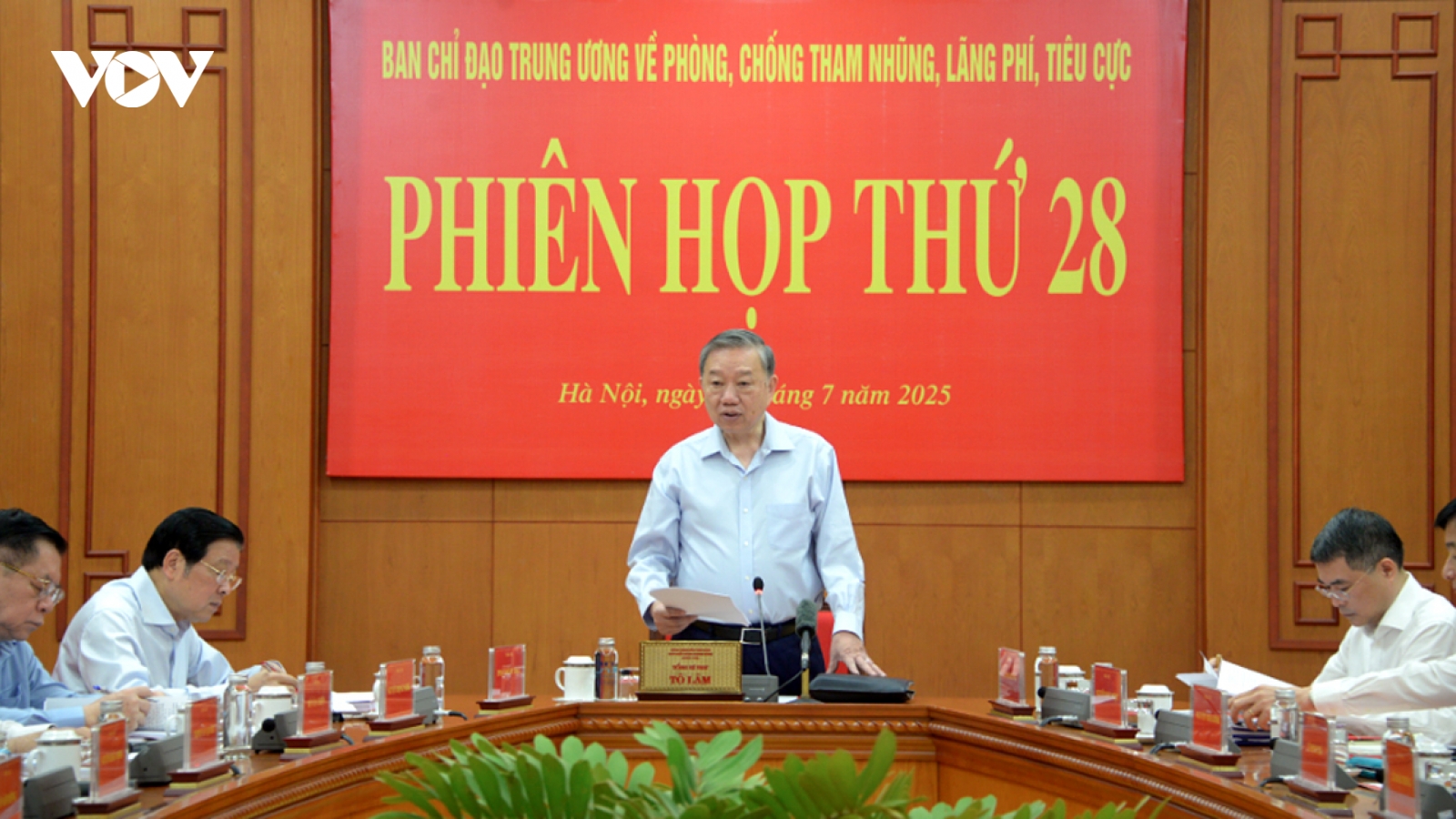
Top leader calls for expedited trial of serious corruption cases of public concern
VOV.VN - Party General Secretary To Lam on July 7 urged relevant agencies to accelerate the investigation, prosecution, and trial of serious, complex corruption and misconduct cases that have drawn public attention, ensuring thorough and lawful resolution.