Vietnam calls for dialogue to reduce nuclear risks at UNGA

VOV.VN - Vietnam has called on nuclear-weapon states to maintain dialogue to reduce nuclear risks, strengthen transparency and accountability, and fulfil their commitments towards the total elimination of nuclear weapons.
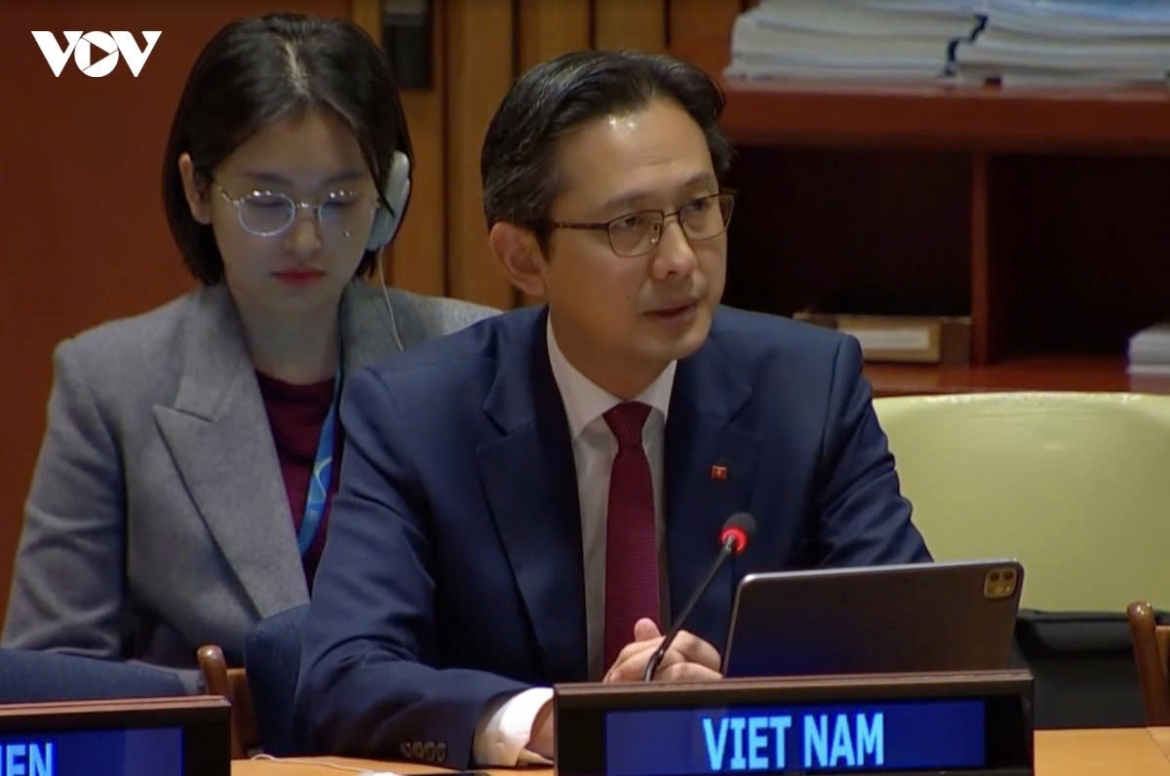
Speaking at a high-level plenary meeting of the UN General Assembly (UNGA) in New York on September 29, Ambassador Do Hung Viet, Permanent Representative of Vietnam to the United Nations, voiced concern over declining commitments to nuclear disarmament, the expansion of nuclear arsenals and growing reliance on nuclear deterrence in security strategies.
Building on discussions at the 11th Review Conference of the Treaty on the Non-Proliferation of Nuclear Weapons (NPT), Viet stressed the importance of upholding international law and strengthening multilateral frameworks for nuclear disarmament and non-proliferation.
He highlighted the NPT, the Comprehensive Nuclear-Test-Ban Treaty (CTBT) and the Treaty on the Prohibition of Nuclear Weapons (TPNW) as key instruments in these efforts.
The ambassador also urged nuclear-weapon states to sign and ratify the Protocol to the Treaty on the Southeast Asia Nuclear Weapon-Free Zone (SEANWFZ).
He reaffirmed Vietnam’s continued contribution to international efforts on nuclear disarmament and non-proliferation, as well as to strengthening multilateralism and international law, with the goal of building a world free of nuclear weapons.
Growing concerns over nuclear risks
The Vietnamese statement came as the international community faces renewed concerns over the future of nuclear arms control and disarmament.
The UN General Assembly held the high-level plenary meeting to commemorate and promote International Day for the Total Elimination of Nuclear Weapons. The meeting was attended by UN Secretary-General António Guterres, President of the 81st session of the General Assembly Khalilur Rahman, and representatives of UN Member States, regional organisations and civil society.
In his message to the meeting, Guterres warned that the world faces its most serious nuclear risks since the end of the Cold War, citing the continued expansion and modernisation of nuclear arsenals and the growing risk of miscalculation associated with emerging technologies.
He also pointed to the weakening of nuclear arms-control and risk-reduction mechanisms. The New Strategic Arms Reduction Treaty (New START) between Russia and the United States has expired without a successor framework, while the 11th NPT Review Conference failed to reach consensus on a substantive outcome.
Guterres called on nuclear-weapon states to resume dialogue, negotiate new arms-control frameworks and reduce the role of nuclear weapons in security policies. He also urged countries to advance the entry into force of the CTBT and intensify efforts towards the total elimination of nuclear weapons.
At the meeting, countries underscored the need for concrete, verifiable and irreversible measures towards that goal.
The Non-Aligned Movement reaffirmed that the total elimination of nuclear weapons is the only absolute guarantee against their use or threat of use. It also called on nuclear-weapon states to fulfil their obligations under Article VI of the NPT, increase transparency and pursue nuclear disarmament through a specific pathway.
Vietnam reaffirms safe, peaceful development of nuclear energy
VOV.VN - Vietnam has reaffirmed its commitment to developing and applying nuclear energy for peaceful purposes, with safety, security and nuclear non-proliferation placed at the forefront as it expands international cooperation and prepares for major nuclear energy projects.