Canada expects top leader To Lam’s visit to give new impetus to Vietnam-Canada

VOV.VN - Canada is eagerly looking forward to top Vietnamese leader To Lam’s State visit, expecting the historic visit to provide significant new impetus for bilateral relations and open up further opportunities for cooperation in trade, investment, energy, aviation, innovation and technology.
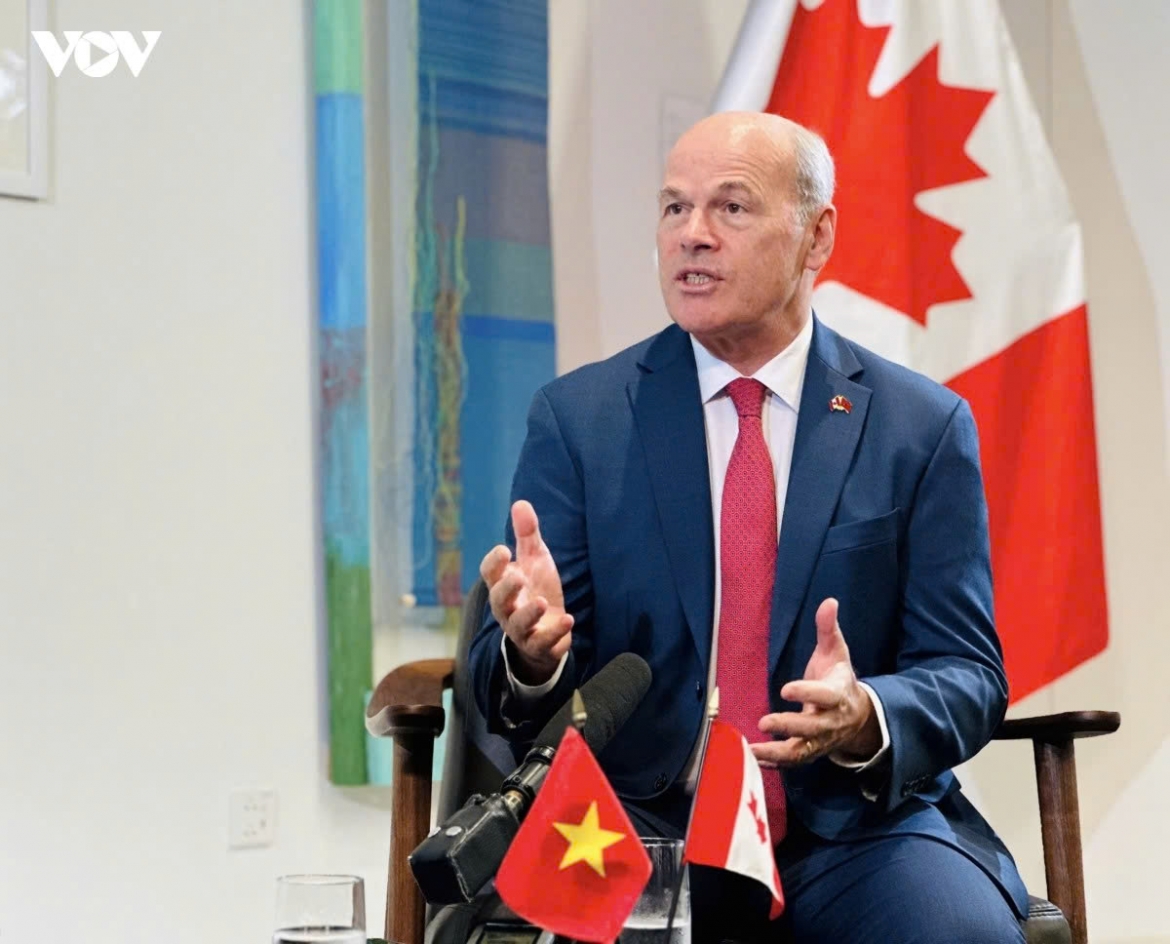
Canadian Ambassador to Vietnam Jim Nickel made the remarks in an interview granted to VOV ahead of General Secretary of the Communist Party of Vietnam Central Committee and President To Lam’s State visit to Canada, stressing that the two countries still have considerable room to expand cooperation across a wide range of areas.
According to Ambassador Nickel, this will be the first visit to Canada by a General Secretary of the Communist Party of Vietnam since the two countries established diplomatic relations in 1973.
In 2017, Vietnam and Canada established a Comprehensive Partnership, providing a broad framework for bilateral cooperation. Relations have since recorded positive results across a wide range of areas, from diplomacy, trade and investment, and defence and security to cultural and academic exchanges, science, technology and innovation.
Ambassador Nickel described the upcoming visit as a historic milestone and said it could provide important political momentum for taking the bilateral relationship to new heights.
Significant room for further cooperation
Assessing areas of cooperation in the coming period, Ambassador Nickel welcomed the increasingly strong development of trade, investment and innovation ties between Canada and Vietnam.
According to the diplomat, both Canada and Vietnam recognise the need for reliable trading partners and for diversifying their trade relationships. Over the past five years, two-way trade and investment have doubled.
Two-way trade alone rose from CA$15.7 billion in 2024 to CA$20.6 billion in 2025. However, Ambassador Nickel said there remains substantial potential for further growth in bilateral trade.
Agriculture is one of the areas highlighted by the diplomat as offering considerable opportunities to promote two-way trade and investment.
Energy is another area with strong cooperation potential, as Vietnam continues to develop advanced manufacturing, data centres, international financial centre and the semiconductor industry, all of which require reliable and growing energy supplies.
Meanwhile, Canada has strengths in both conventional and renewable energy, as well as a range of new initiatives and technologies in the sector. Energy could therefore become an area in which the two countries significantly expand cooperation.
Aviation and aerospace also offer complementary advantages, Ambassador Nickel said. While Vietnam’s aviation industry is developing rapidly, Canada has strengths in aviation manufacturing and technology.
Innovation and technology are also expected to offer significant growth potential in the coming years, spanning areas from communications technology and satellites to artificial intelligence.
Vietnam is Canada’s key ASEAN trading partner
Canada sees Vietnam not only from the perspective of bilateral cooperation, but also as an important part of its strategy to diversify trade relations and build resilient supply chains in the Indo-Pacific.
Ambassador Nickel said Vietnam is Canada’s most important trading partner within ASEAN and is regarded by Canada as a gateway to ASEAN partners and, more broadly, the Indo-Pacific region.
In his view, Vietnam is now a global manufacturing hub and an important link in global supply chains. Strengthening ties with Vietnam is therefore of significant importance to Canada.
The ambassador noted that bilateral trade is growing rapidly, while investment ties are also strengthening year by year. Canada believes that shared interests and values will provide a foundation for long-term economic development within the Vietnam-Canada partnership.
In its long-term strategy, he said, Canada views Vietnam as an important partner in diversifying trade relations, building secure and reliable supply chains for its industries, and expanding economic partnerships with countries it sees as sharing similar values and a commitment to a rules-based trading system.

New momentum in Vietnam-Canada relations
VOV.VN - Vietnam and Canada have the opportunity to elevate cooperation in science, technology, and innovation from isolated projects into structured programs with tangible economic value and specific products, with artificial intelligence, aerospace, and strategic technologies poised to become breakthrough areas.