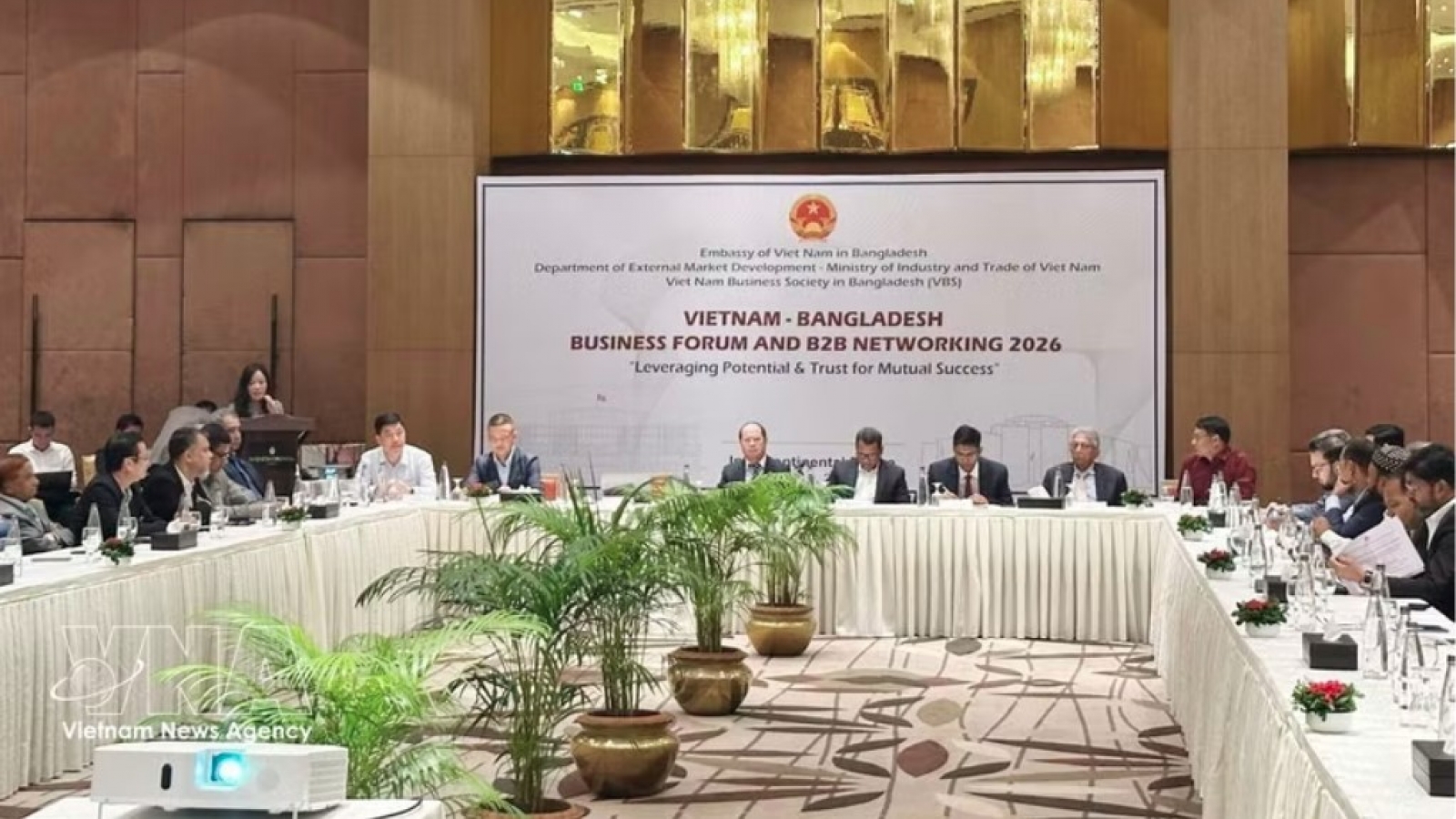
Vietnam-Bangladesh business forum unlocks economic potential

VOV.VN - More than 280 businesses from Vietnam and Bangladesh took part in the Bangladesh–Vietnam Business Forum and B2B Matchmaking Event 2026 on July 25, seeking to expand trade, investment and long-term business partnerships between two of Asia's dynamic emerging economies.
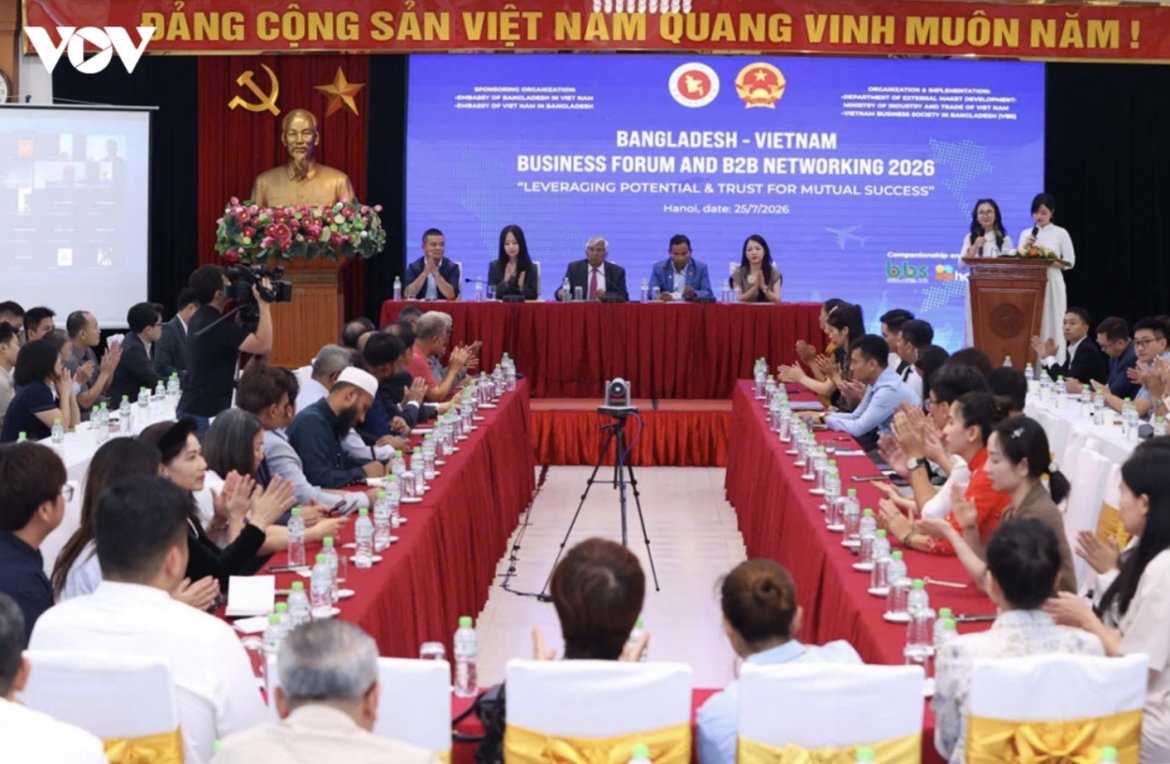
The event brought together 33 Bangladeshi companies attending in person, around 90 participating online, and nearly 200 Vietnamese enterprises representing sectors including manufacturing, agriculture, food processing, technology, logistics, textiles, construction and services.
Designed to strengthen engagement between businesses, government agencies and diplomatic representatives from both countries, the forum created opportunities for companies to identify partners, explore new markets and translate commercial potential into concrete cooperation projects.
Significant room for growth
Bangladesh is currently Vietnam's second-largest trading partner in South Asia. The two countries are seen as having complementary strengths, with Bangladesh offering a large consumer market and a gateway to South Asia, while Vietnam has competitive advantages in manufacturing, processing, agriculture, food, consumer goods, textiles, technology and logistics.
Speaking virtually at the forum, Vietnamese Ambassador to Bangladesh Nguyen Manh Cuong said the strong political relationship between the two countries has provided a solid foundation for expanding economic, trade and investment cooperation.
Despite global economic uncertainties, bilateral trade has been stable at between US$1 billion and US$1.5 billion annually. However, he noted that current trade volumes still fall well short of the potential offered by the two economies.
According to the ambassador, Vietnam and Bangladesh have considerable scope to deepen cooperation in areas such as trade, investment, manufacturing, agriculture, logistics, technology, healthcare and tourism.
The key is for businesses from both countries to build greater mutual trust and gain a better understanding of each other's markets, turning opportunities into concrete and sustainable business partnerships, Ambassador Cuong said.
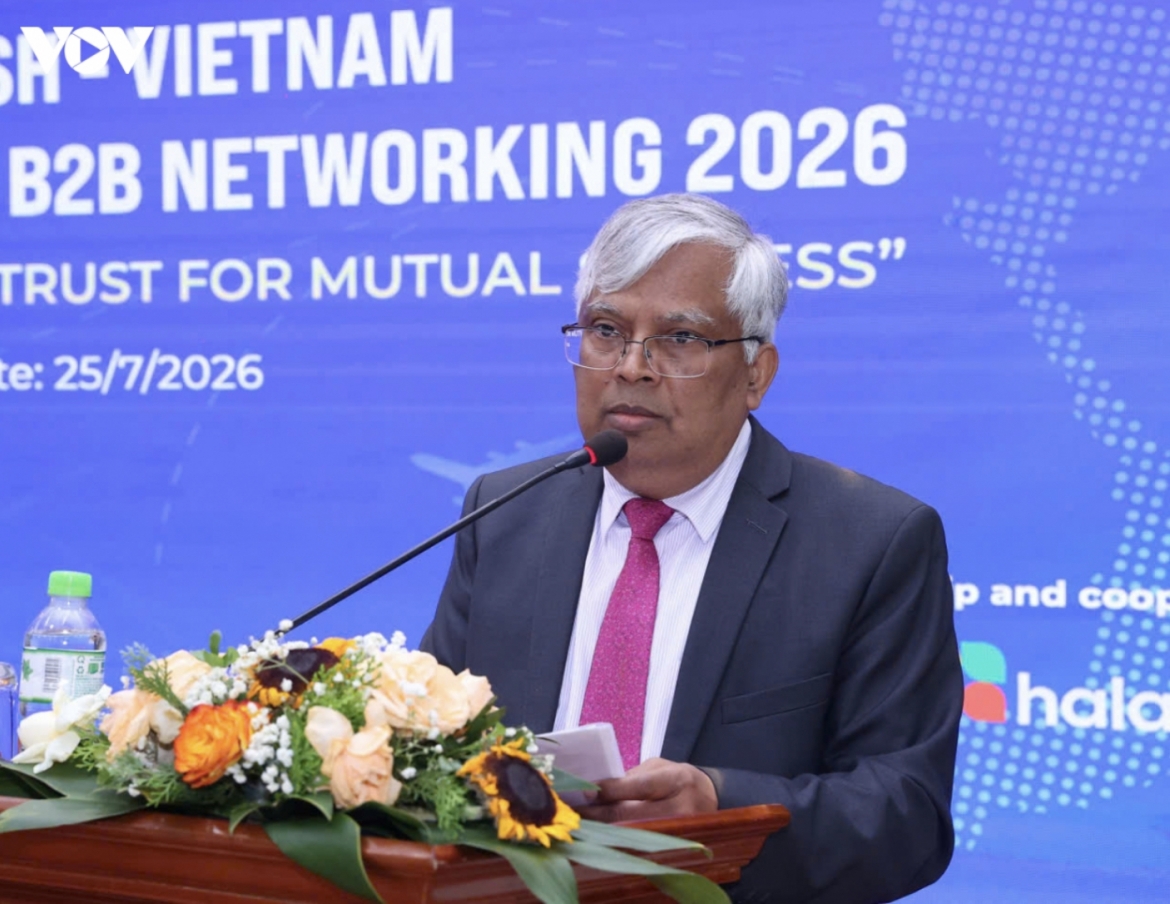
Bangladeshi Ambassador to Vietnam Md. Lutfor Rahman described both countries as dynamic Asian economies that have demonstrated strong resilience while integrating more deeply into global value chains.
He noted that Vietnam and Bangladesh have signed nearly 40 agreements, memoranda of understanding and joint declarations, providing an important institutional framework for bilateral cooperation. Nevertheless, trade turnover remains modest compared with the size of both markets and their long-term economic potential.
Beyond trade toward broader investment
Ambassador Rahman highlighted recent progress in market access, noting that Vietnam has opened its market to fresh potatoes from Bangladesh, while Bangladeshi products such as pharmaceuticals, jute, leather and duck feathers have gradually entered the Vietnamese market.
To elevate bilateral economic cooperation, he proposed that both sides accelerate negotiations on a Preferential Trade Agreement (PTA), as well as expanding collaboration in pharmaceuticals, agriculture, food processing, textiles, information technology, the digital economy, renewable energy, logistics and halal products.
He also stressed the importance of strengthening connections between chambers of commerce, business associations and financial institutions, while exploring the possibility of launching direct flights between the two countries to facilitate trade, investment and tourism.
Turning potential into practical cooperation
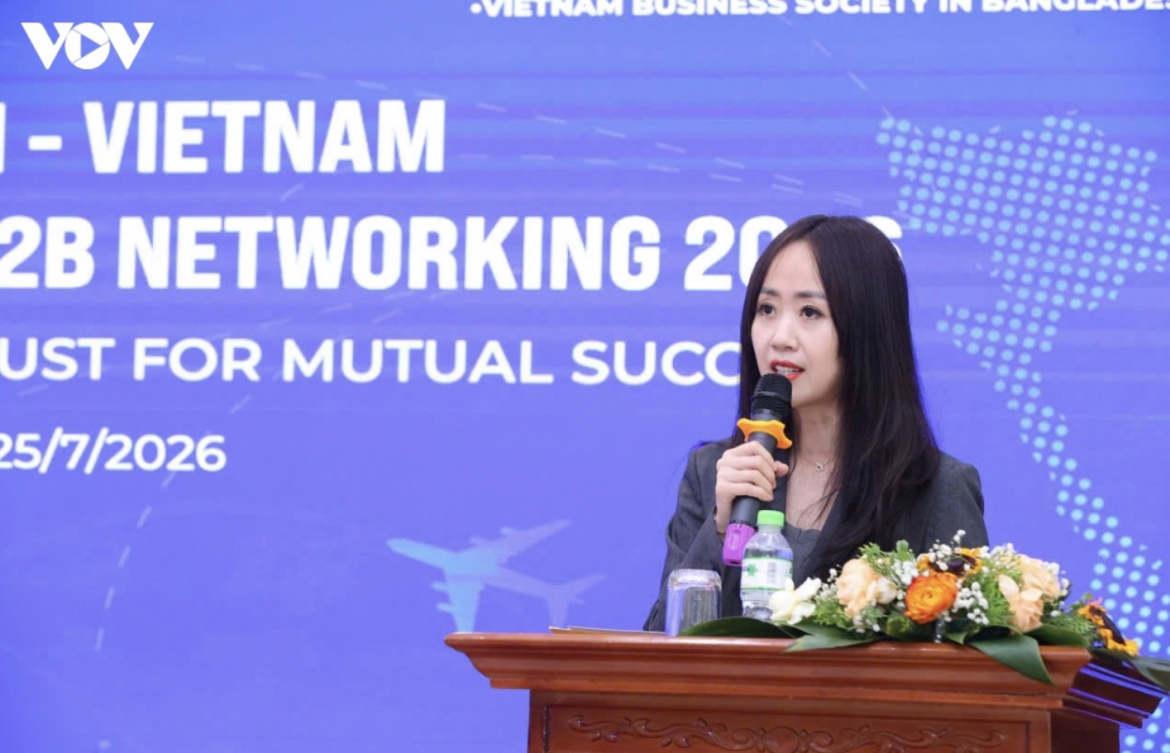
Representing Vietnam’s Ministry of Industry and Trade, Vo Hong Anh, deputy director of the Department of Foreign Market Development, said Bangladesh is one of South Asia’s most dynamic markets, while Vietnam continues to strengthen its position as a major manufacturing and export hub in Southeast Asia.
She noted that the strengths of the two economies are largely complementary rather than directly competitive, creating favourable conditions for businesses to participate more deeply in regional supply chains.
The real question is no longer how much potential exists, but how we can transform that potential into tangible cooperation. That begins with trust, mutual understanding and direct business connections, she said.
Throughout the forum, companies participated in a series of B2B sessions to present their capabilities, identify potential partners and discuss opportunities in trade, distribution, investment and market development. Follow-up business meetings and site visits are expected to continue after the event to help translate initial discussions into concrete commercial outcomes.
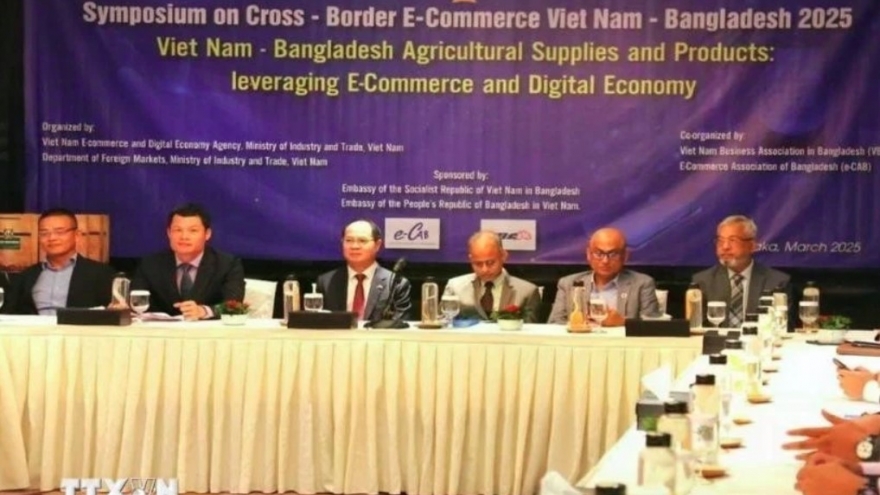
Vietnam, Bangladesh step up cross-border e-commerce promotion
The Department of E-Commerce and Digital Economy under Vietnam’s Ministry of Industry and Trade, in collaboration with the Vietnamese Embassy and the Vietnam Business Association in Bangladesh, organised the "Vietnam-Bangladesh cross-border e-commerce promotion forum" on March 25.