


Roundtable boosts high-tech and innovation cooperation with India

VOV.VN - Hanoi and Indian partners are seeking cooperation opportunities in high technology, innovation, human resource development, technology transfer, and healthcare in an effort to develop concrete projects and products while expanding market connectivity between the two nations.
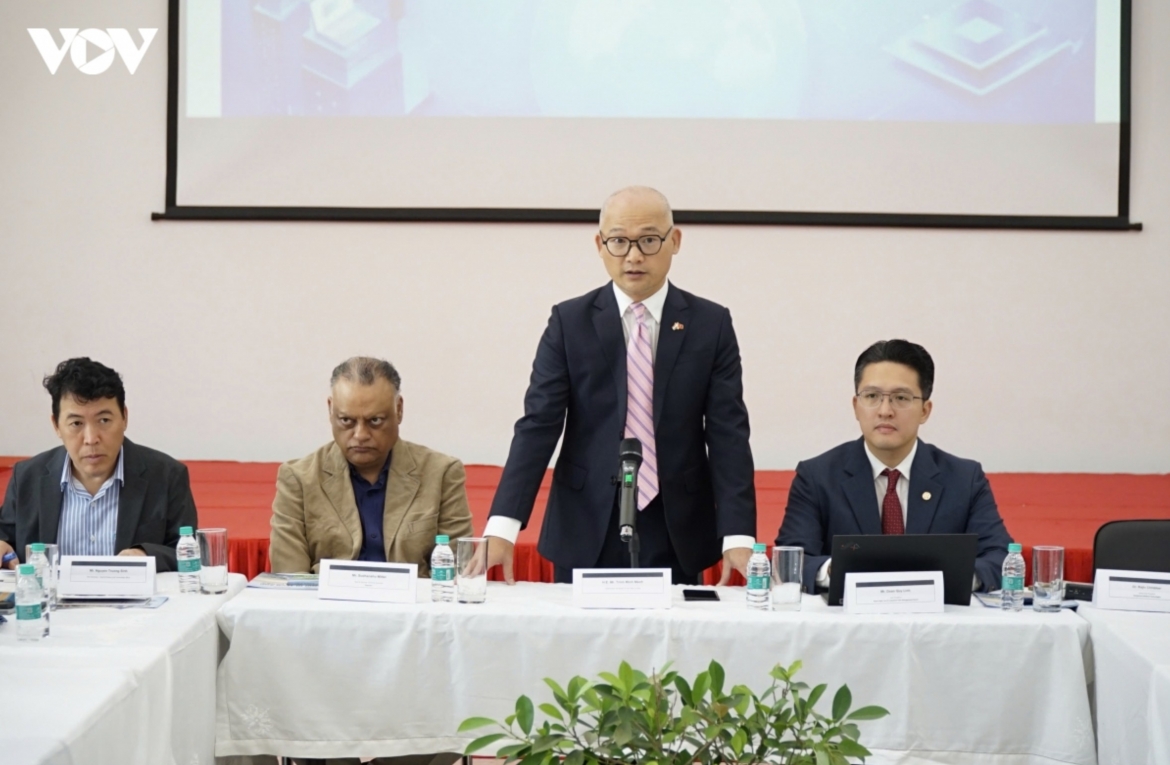
The Vietnamese Embassy and the Vietnam Science and Technology Office in India hosted the Hanoi-India roundtable on high-tech and innovation cooperation on September 24 in New Delhi.
The event attracted representatives from the Management Board of Hanoi High-Tech and Industrial Zones, alongside Indian government agencies, universities, and technology, healthcare, and investment enterprises.
Opening the seminar, Vietnamese Ambassador to India Trinh Minh Manh stated that Vietnam has entered a new development phase, targeting developed-nation status by 2045. Throughout this process, science, technology, innovation, and digital transformation serve as vital drivers for enhancing economic productivity and competitiveness.
Vietnam is increasing investments in science and technology, developing human resources, and refining institutional frameworks while actively seeking international expertise and partnerships. Given these priorities, India, with its strengths in information technology, research, technical talent, and startup ecosystems, emerges as a high-potential partner.
At the seminar, Doan Quy Linh, Deputy Head of the Management Board of Hanoi High-Tech and Industrial Zones, briefed on the capital's competitive advantages in high-tech development and innovation. Hanoi currently hosts two high-tech zones and 14 industrial parks. Among them, the 1,586-hectare Hoa Lac High-Tech Zone is designated to become the national center for research, high-tech application, and innovation.
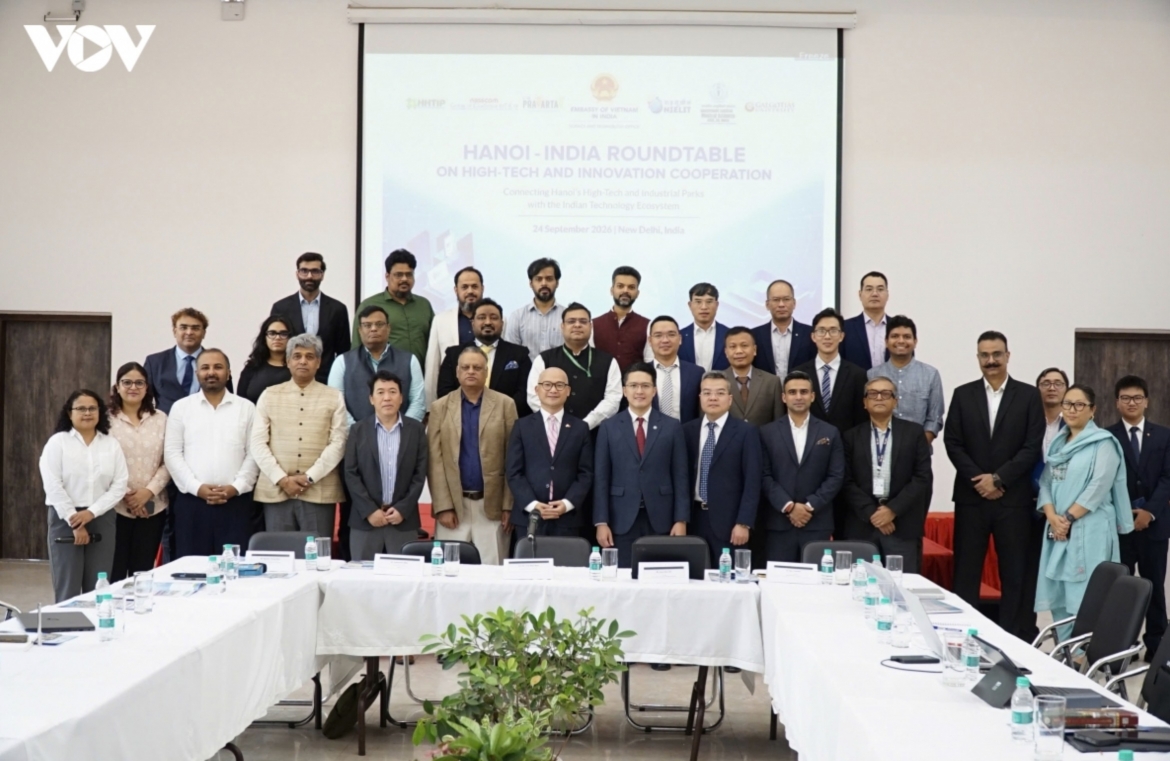
Hanoi looks to attract Indian investment in biotechnology, pharmaceuticals, information technology, and digital technology, while advancing technology transfer, workforce training, and connectivity between the innovation ecosystems of both countries.
Representatives from Indian technology and innovation organizations, such as the NASSCOM Centre of Excellence, the National Institute of Electronics and Information Technology (NIELIT), the Bhashini language platform, and the IIT Madras Pravartak Technologies Foundation, shared their capabilities, operational models, and cooperation potential with Vietnam.
Indian institutes of technology and universities proposed various areas of educational cooperation, ranging from deploying training programs and experts to Vietnam and welcoming Vietnamese students to India, to establishing training centers in the country. Several partners proposed setting up technology centres of excellence in Hanoi or Ho Chi Minh City, alongside scholarship programs for Vietnamese students. IIT Madras expressed readiness to share expertise in microprocessor design, artificial intelligence, and machine learning.
In the linguistic sector, the Indian government's Bhashini AI platform suggested cooperating on developing translation technology between Vietnamese and Indian languages. In healthcare, delegates discussed the feasibility of establishing an Indian hospital in Vietnam and connecting medical institutions and tech enterprises from both countries to pilot and clinically validate medical devices and products.
Both sides also aim to build a cooperation model spanning joint research, development, testing, and commercialization, thereby broadening market access for both nations and the ASEAN region.
The Vietnamese Embassy and the Vietnam Science and Technology Office in India affirmed that they will continue to serve as a bridge connecting agencies, research institutes, universities, and enterprises from both countries, while supporting information exchange, partner matching, and cooperation in high technology and innovation.
In linguistics, the Indian government's Bhashini AI platform proposed cooperating on translation technology between Vietnamese and Indian languages. In healthcare, delegates discussed establishing an Indian hospital in Vietnam and connecting medical institutions and tech enterprises from both countries to pilot and clinically validate medical devices and products.
Both sides also aim to build a collaborative framework spanning joint research, development, testing, and commercialization, thereby broadening market access across both nations and the wider ASEAN region.
The Vietnamese Embassy and the Vietnam Science and Technology Office in India affirmed their commitment to acting as a bridge connecting agencies, research institutes, universities, and enterprises from both countries, supporting information exchange, partner matching, and cooperation in high technology and innovation.

Vietnam, India agree to expand air services
Vietnamese and Indian airlines will be able to add flights between the two countries and double their passenger capacity under a new agreement, offering more travel options for Indian visitors to Vietnam during this year’s festival season.
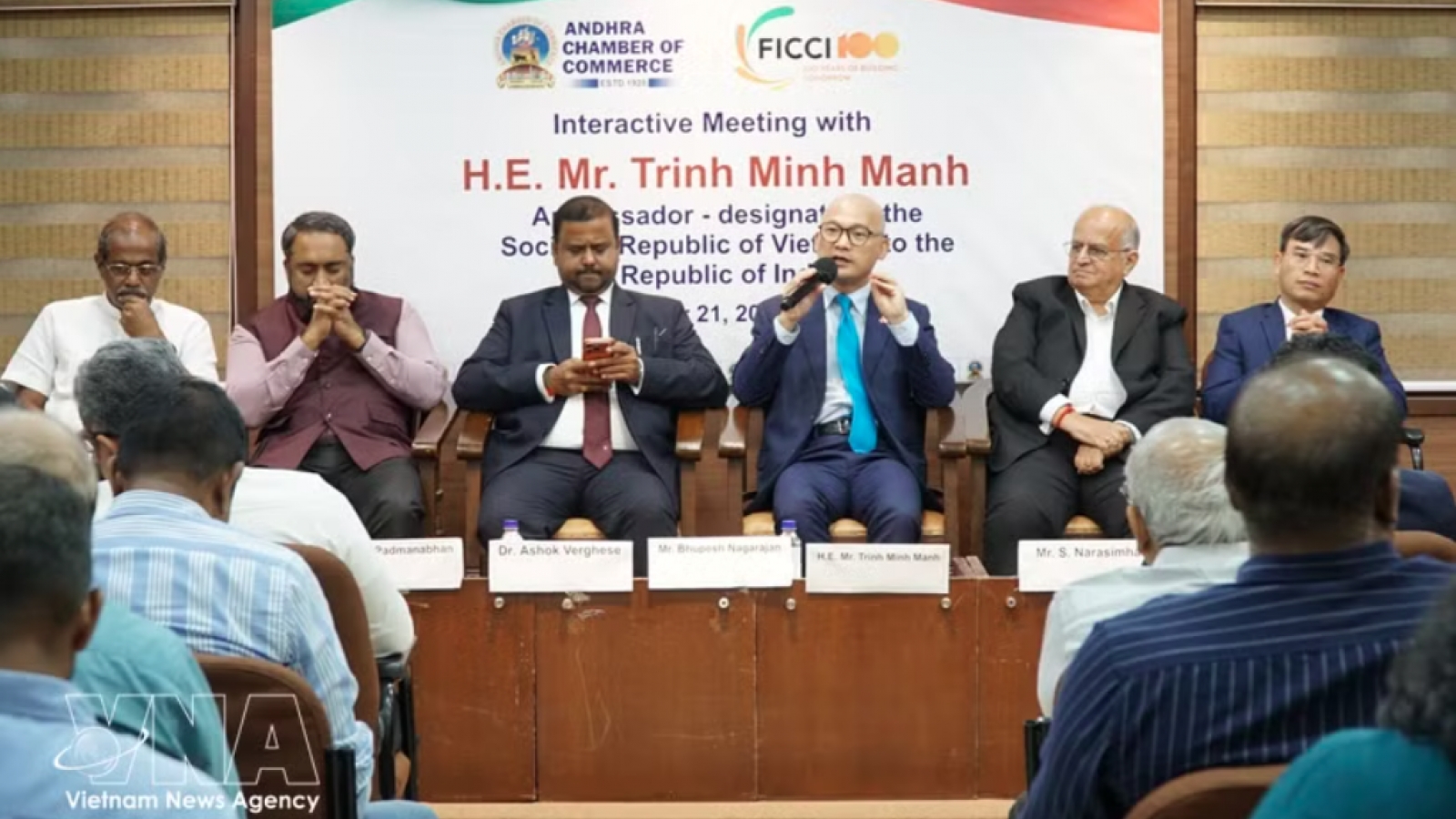
Vietnam expands cooperation with India's Tamil Nadu
Vietnam is seeking to attract more investment from businesses in India's Tamil Nadu in electronics, semiconductors, IT, artificial intelligence (AI), engineering-manufacturing, clean energy, pharmaceuticals and other sectors.