Da Nang postpones Ngoc Linh Ginseng International Festival to 2026

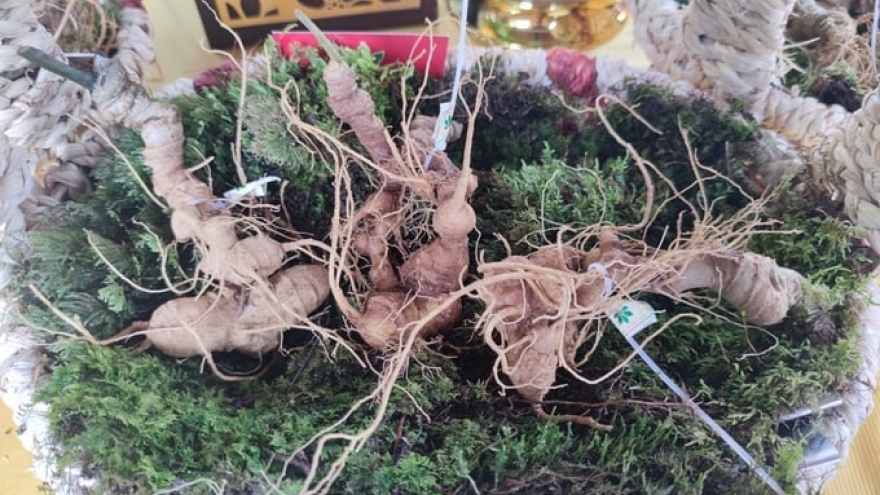
VOV.VN - The city of Da Nang will postpone the first Ngoc Linh Ginseng and Medicinal Herbs International Festival, originally planned for 2025, to a more suitable time in 2026, according to the Da Nang Department of Agriculture and Environment.

Previously, the festival was scheduled to take place from August 1–3, 2025, at 24-3 Square of former Quang Nam province. However, following the recent administrative merger in which Quang Nam was incorporated into Da Nang, the Da Nang People's Committee officially agreed on July 7 to postpone the festival to 2026.
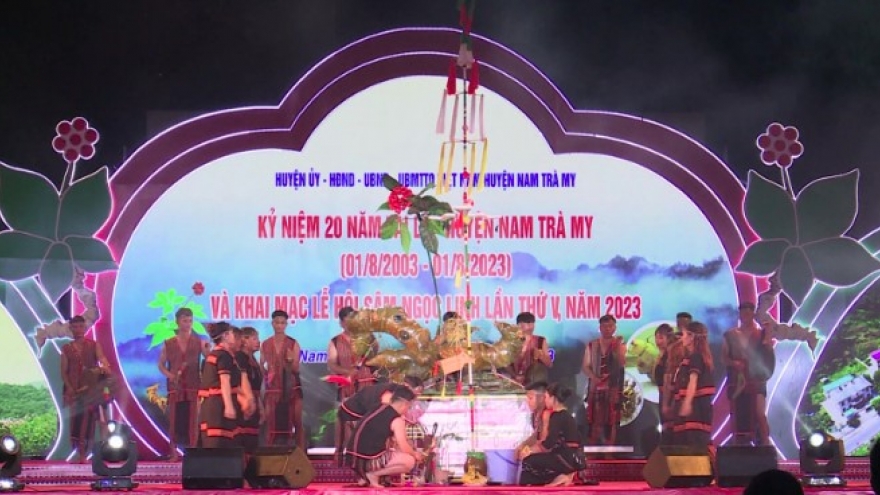
The festival aims to honuor the unique value of Ngoc Linh Ginseng, a rare and precious medicinal herb native to Vietnam. It also serves to promote the brand, boost product consumption, develop tourism, and stimulate the local economy. Festival activities will be tied to the preservation of traditional knowledge, cultural exchange, and empowering local communities.
This event is also expected to promote the role of Ngoc Linh Ginseng in transforming Da Nang into a national medicinal herb hub by 2030.
This will be the first time a locality organises a specialized, internationally-scaled festival dedicated to ginseng and medicinal herbs, reflecting a strong commitment to positioning Ngoc Linh Ginseng as a global brand and a symbol of Vietnamese medicinal heritage on the world stage.
Statistics show the former province of Quang Nam has designated over 15,500 hectares for the conservation and development of Ngoc Linh Ginseng, of which about 13,000 hectares lie at an ideal altitude of 1,200–2,000 meters. In Nam Tra My, known as the "capital of Vietnamese ginseng," 1,243 hectares have been planted.
Over 10 enterprises are actively involved in the production, processing, and distribution chain. The regular markets held in Nam Tra My continue to sell an average of 30 kg of fresh ginseng per session, showing that the market is becoming well-established and moving toward sustainability.
The locality is also increasing cooperation with countries that have a strong ginseng cultivation tradition and advanced technology, such as the Republic of Korea and China, to expand technical collaboration, share experience, and connect with international markets.
International Ngoc Linh ginseng festival set for 2025
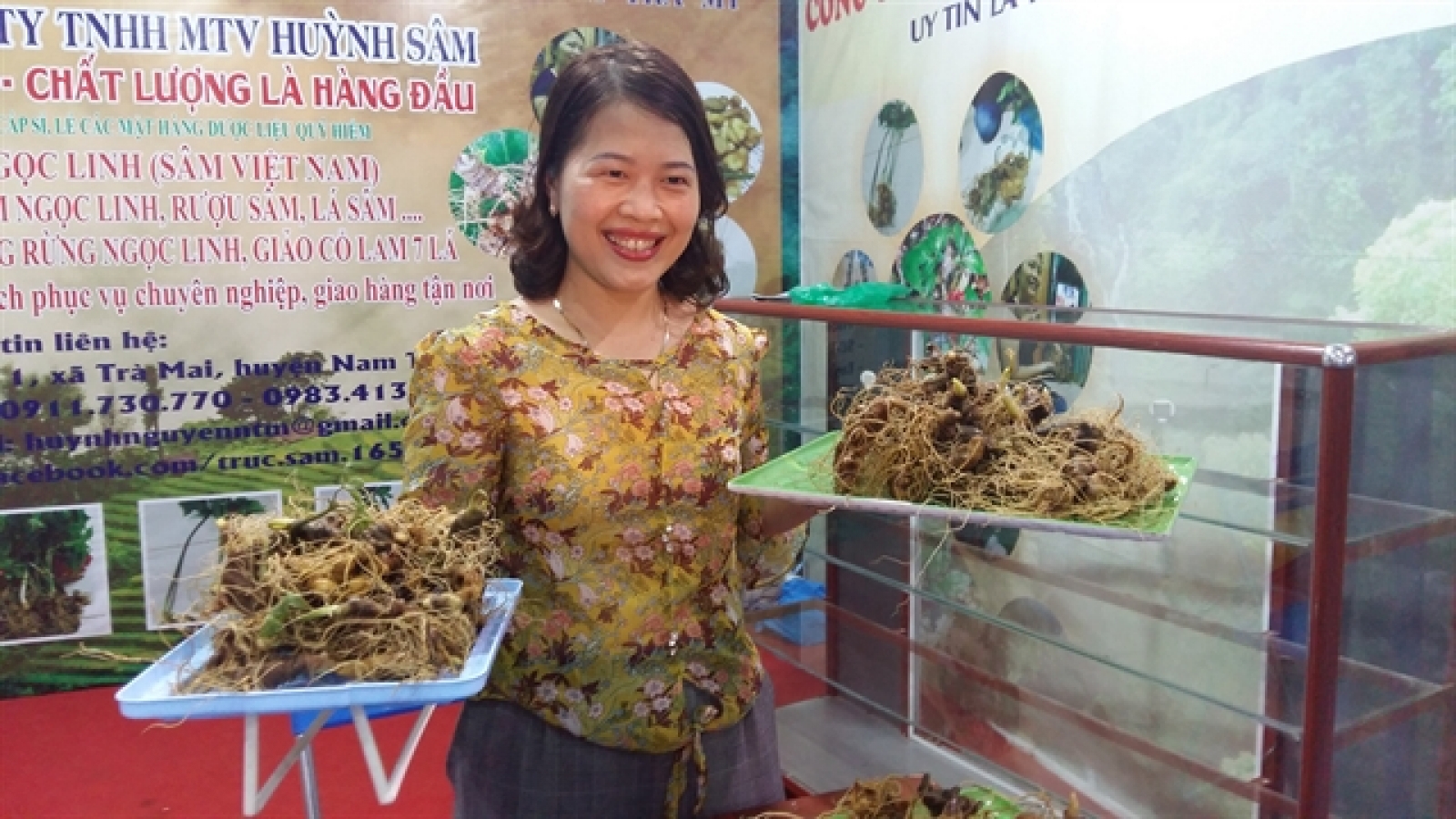
The central province of Quang Nam has proposed hosting the first ever international Ngoc Linh ginseng (Panax vietnamensis, or Vietnamese ginseng) festival next year – an event to push the brand and promote investment opportunities for international partners in the central province.