ADB lifts Vietnam’s growth outlook to 7.8% for 2026

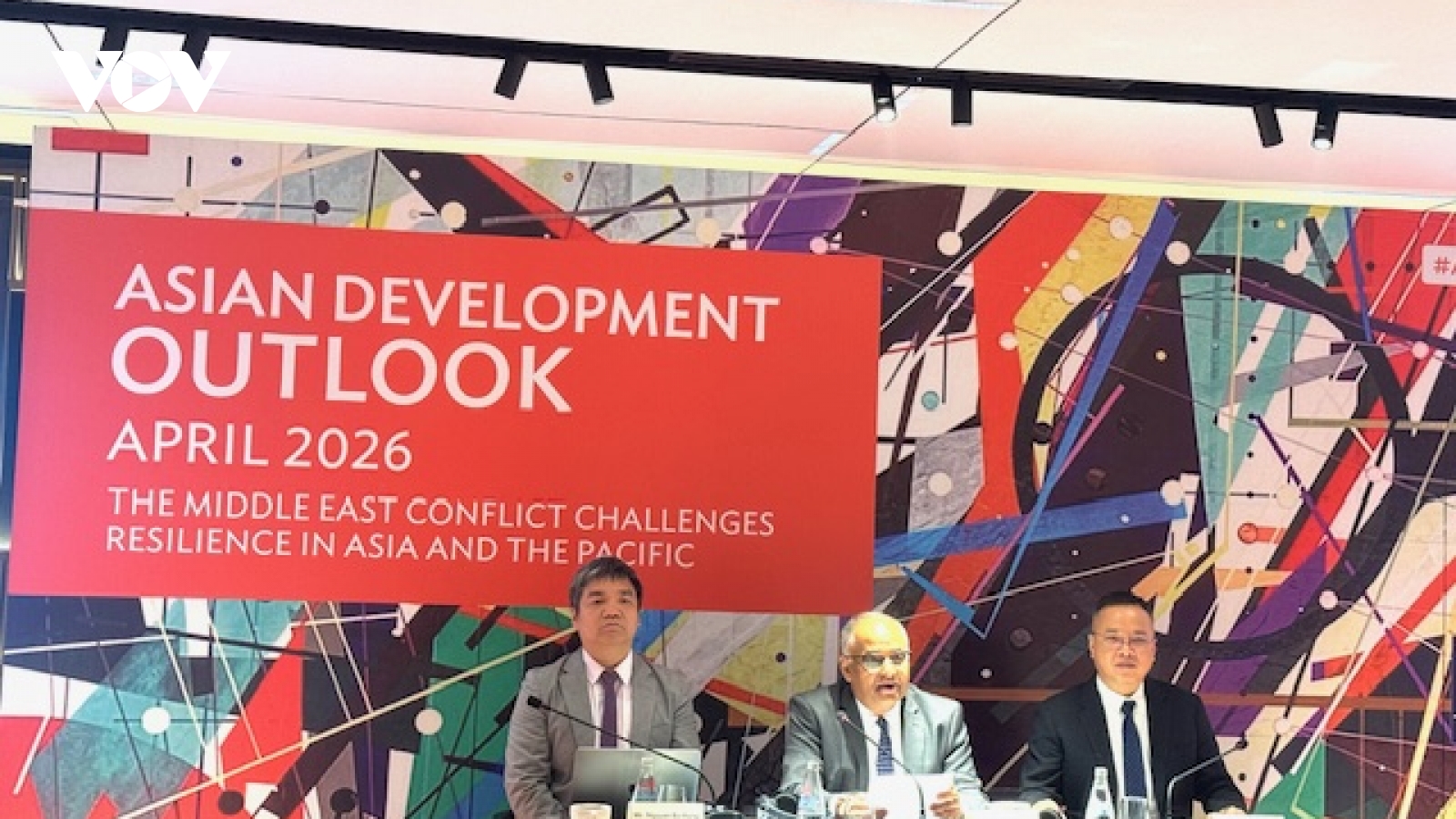
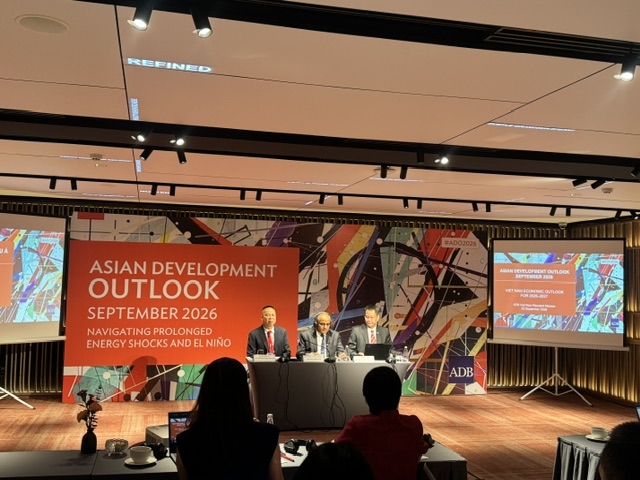
VOV.VN - The Asian Development Bank (ADB) has revised up its growth forecast for Vietnam to 7.8% in 2026 and 7.6% in 2027, citing stronger-than-expected economic performance in the first half of the year, according to the Asian Development Outlook (ADO) September 2026 released on September 23.
Vietnam’s economy maintained robust and broad-based momentum in the first half of the year, with gross domestic product expanding by 8.2%, up from 7.5% in the same period in 2025. Growth was underpinned by continued expansion in manufacturing, buoyant domestic consumption and sustained foreign direct investment.
The 2026 growth forecast was raised from 7.2% in the ADO July 2026, while the 2027 projection was lifted from 7.0%, reflecting stronger domestic demand, accelerated investment and robust manufacturing.
Shantanu Chakraborty, ADB Country Director for Vietnam, said the strong first-half performance demonstrated the economy’s resilience and potential to sustain robust growth.
“To maintain this momentum and achieve high-quality growth, Vietnam will need prudent macroeconomic management to contain inflation, safeguard financial stability, and accelerate structural reforms while ensuring that investment-led growth translates into productivity gains,” he said at a press briefing in Hanoi on September 23.
Inflation is projected at 4.3% in 2026 and 4.0% in 2027, amid sustained demand pressures and higher energy and import costs.
Despite the robust near-term outlook, risks remain tilted to the downside. Weaker global demand and heightened external uncertainty could weigh on growth, while higher energy prices and tighter global financial conditions could add to inflation and exchange-rate pressures. Rapid domestic credit growth could also amplify financial-sector vulnerabilities, while smaller firms continue to face financing constraints.
According to the ADB Country Director for Vietnam, safeguarding macroeconomic stability will be therefore important. This includes maintaining prudent macroeconomic and financial policies, closely monitoring credit quality, and continuing efforts to contain inflation and exchange-rate pressures.
Public investment should continue to support the economy, with a strong focus on efficiency, project readiness, and implementation quality. Well-targeted investment can help address infrastructure bottlenecks, attract private investment, and strengthen the economy’s productive capacity.
Ultimately, the challenge is not only to sustain high growth but also to improve its quality and resilience. Continued reforms will be essential for Vietnam to boost productivity, strengthen the domestic economy, and move closer to its goal of becoming a high-income economy.
The ADO September 2026 also underscored the importance of maintaining macroeconomic stability, improving public investment execution, deepening capital markets, strengthening the private sector, and boosting productivity to support Vietnam’s transition toward high-income status.

ADB maintains Vietnam as Southeast Asia’s fastest-growing economy
VOV.VN - The Asian Development Bank (ADB) has maintained its forecast for Vietnam's economic growth at 7.2% in 2026 and 7.0% in 2027, reaffirming the country as Southeast Asia's fastest-growing economy, according to the July 2026 update of its Asian Development Outlook (ADO) released on July 8.