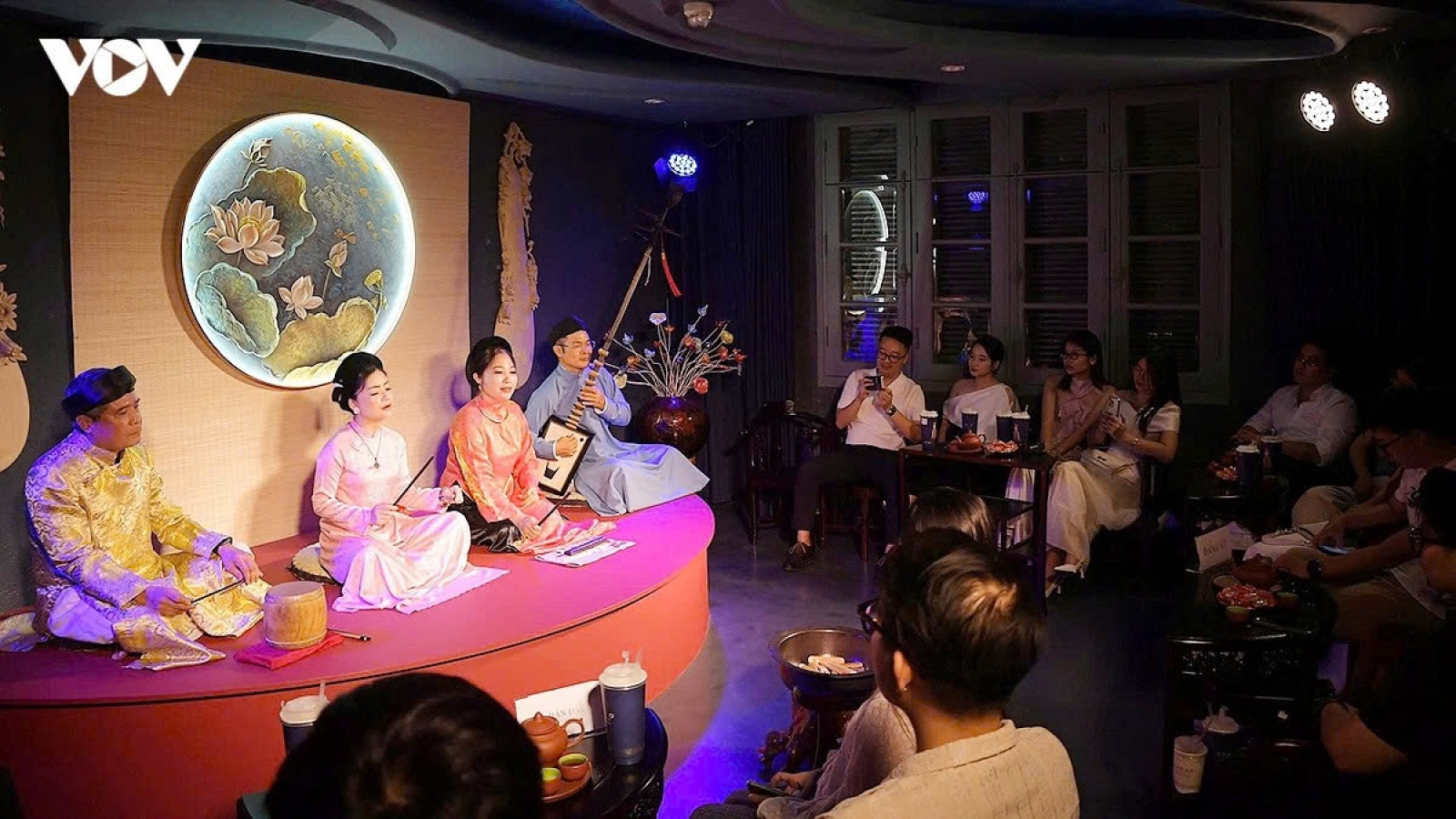
Hanoi moves to revive 131 historic railway arches

VOV.VN - More than a century old, the stone arches beneath Hanoi’s Hanoi–Dong Dang railway line are being studied and renovated as potential cultural, commercial, service and tourism spaces, offering a new way to tell the story of the capital’s history and urban life.
A century of stories beneath the railway

Walking along Phung Hung Street, past Gam Cau toward Long Bien Station, visitors can easily spot a long row of stone arches beneath the railway. The succession of arches forms a distinctive architectural structure in the heart of Hanoi, quietly standing witness to more than a century of changes in the city.
The elevated railway structure was built during the French colonial period, around 1900–1902, to carry the railway from the Long Bien Station area toward central Hanoi. Over time, the stone arches became part of the cityscape and a reminder of a Hanoi that was gradually transformed by the arrival and development of the railway.
The line has 131 arches, as they are commonly counted today. Many were once sealed off, turning a structure originally defined by a series of interconnected openings into rows of stone walls hidden behind the rhythm of urban life.
Yet what once seemed to have disappeared from view is now being seen in a different light.
Hanoi is studying plans to renovate and develop cultural, commercial and service spaces around the 131 railway arches, as part of efforts to preserve, enhance and promote the value of the Old Quarter within the capital’s broader cultural heritage landscape. It is also a story about awakening a forgotten part of Hanoi’s heritage.
From sealed stone arches...
For many years, the arches were a familiar but largely overlooked part of Hanoi. Some spaces underneath were used by local residents for daily activities and businesses, while many arches remained sealed.
In 2020, Hanoi piloted the opening of several arches along Phung Hung Street as part of efforts to create a cultural and pedestrian space. However, the work was not fully completed, leaving the project unfinished.
In recent years, the arches have once again become part of discussions on preserving and promoting Hanoi’s urban heritage.
Rather than viewing them simply as structural elements of the railway, the city is seeking to reorganise the area around different themes and strengthen connections between the arches, Phung Hung Street, the Old Quarter, Gam Cau and the area around Long Bien Bridge.
It is an approach worth noting, preserving the old structure while giving it a new life.
...to a cultural space in the heart of the Old Quarter
Under the overall plan approved in principle by Hanoi, the area around the 131 arches is envisioned as a cultural, commercial and service space, with different sections being studied and organised around specific themes.
If implemented in a coordinated manner, the line of arches could become a rich experiential space where visitors can not only see a historic structure, but also explore Hanoi’s culture, arts, cuisine and everyday life.
The arches would no longer be merely the “back side” of the city. They could become places to stop, creative spaces and venues for telling stories about the city’s history.
In particular, connecting the area with Phung Hung Street and the spaces around Long Bien Bridge could create a new visitor route through Hanoi’s Old Quarter, where history, architecture and contemporary urban life meet.
The arches begin to open up
The idea is gradually taking shape on the ground. In the latest phase, Hanoi has opened five arches, numbered 79 to 83, along the section between Hang Cot and Hang Giay streets. The five arches represent different structural conditions, including arches sealed at both ends with earth and rubble inside, as well as sealed arches with hollow interiors.
Reopening these spaces is about more than construction. With each arch that is opened, more of the structure’s original form becomes visible. Layers of stone, curved vaults and spaces that were once hidden are once again becoming part of the urban landscape.
And from here, the story of the 131 arches can begin to be told through the structures themselves.
On one side are traces of Hanoi from more than a century ago. On the other is a city changing day by day. Between these two layers of time stand the arches.
Heritage is more than something to look at
The value of the arches lies not only in their age or architectural structure. They are connected to the history of Hanoi’s railway development, the emergence of a new urban landscape and generations of changes in the area south of Long Bien Bridge.
The challenge, therefore, is not simply to make the arches “look better.” More importantly, it is to find a way for this historic structure to continue living in a modern city without losing the traces of its past.
A cultural space can only truly come alive when local residents can use it, artists can create in it, visitors can explore it and historical stories can be retold in a language that resonates with today’s generations.
That is why the plan to promote the value of the 131 arches is being considered in connection with the preservation of the Old Quarter and the development of cultural, commercial, service and tourism spaces.
A new face for an old memory
From stone arches that were once hidden from view to the idea of creating a new cultural space, the story of the 131 arches reflects a different approach to urban heritage.
Heritage does not necessarily have to be turned into static “artifacts.” It can be preserved by bringing it back into everyday life.
The more-than-century-old arches therefore stand at the threshold of a new chapter: they will continue to bear the traces of Hanoi’s railway history and the old capital, while potentially becoming venues for cultural and artistic activities, services and experiences in a modern city.
From spaces that were once sealed off, Hanoi is seeking to open up new possibilities.
And as the old arches are rediscovered, connected and given new functions, a part of the city’s memory that once seemed forgotten may find its way back into contemporary life.
The 131 arches, 131 spaces bearing the marks of time, may no longer be merely stone vaults beneath the railway, but could become a new part of Hanoi’s cultural and experiential map.
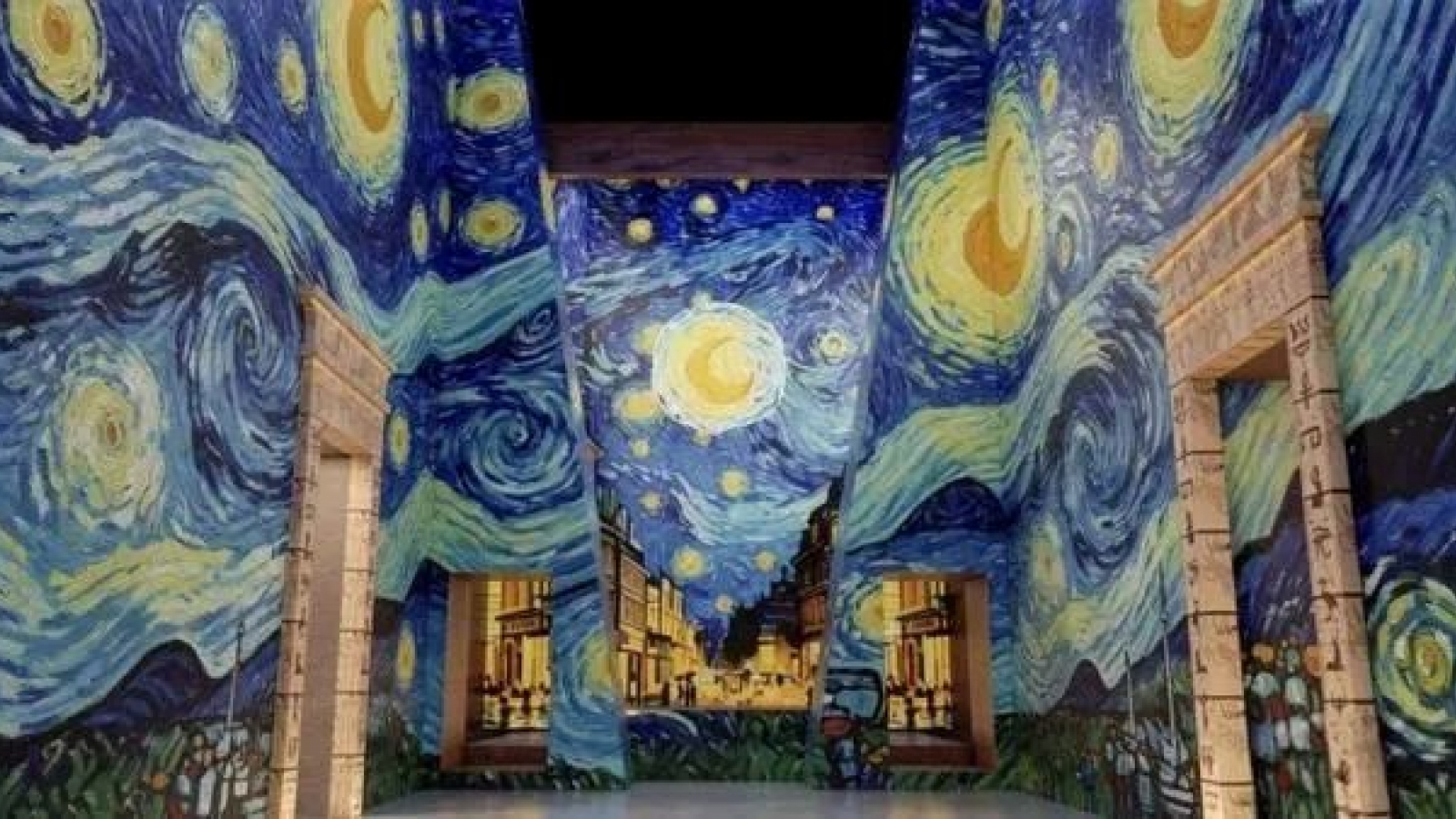
Hanoi to host Van Gogh immersive multi-sensory exhibition
VOV.VN - An immersive multi-sensory exhibition dedicated to Dutch master Vincent van Gogh will open in Hanoi on August 12 at the UDIC Westlake Building.